


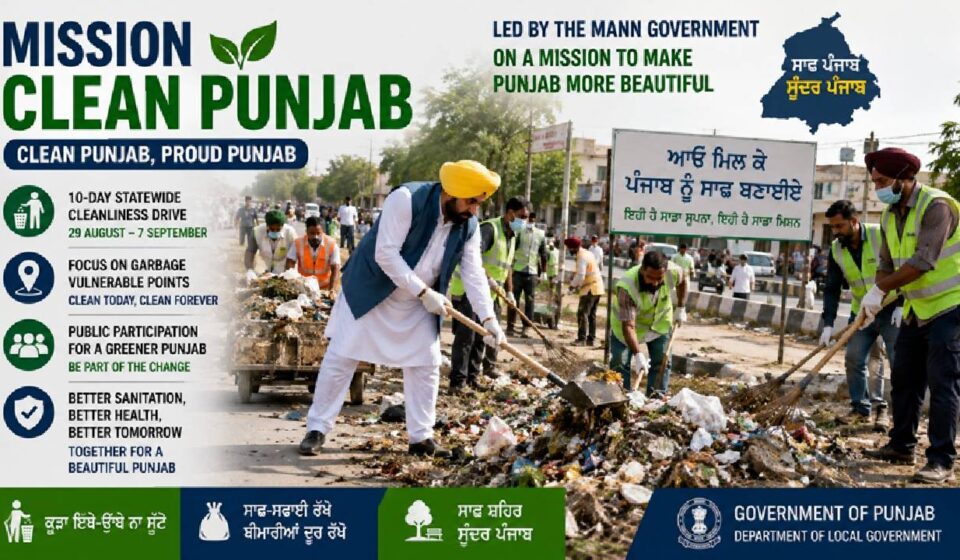
Mann Government Intensifies Cleanliness Campaign Across Punjab Under Mission Clean Punjab

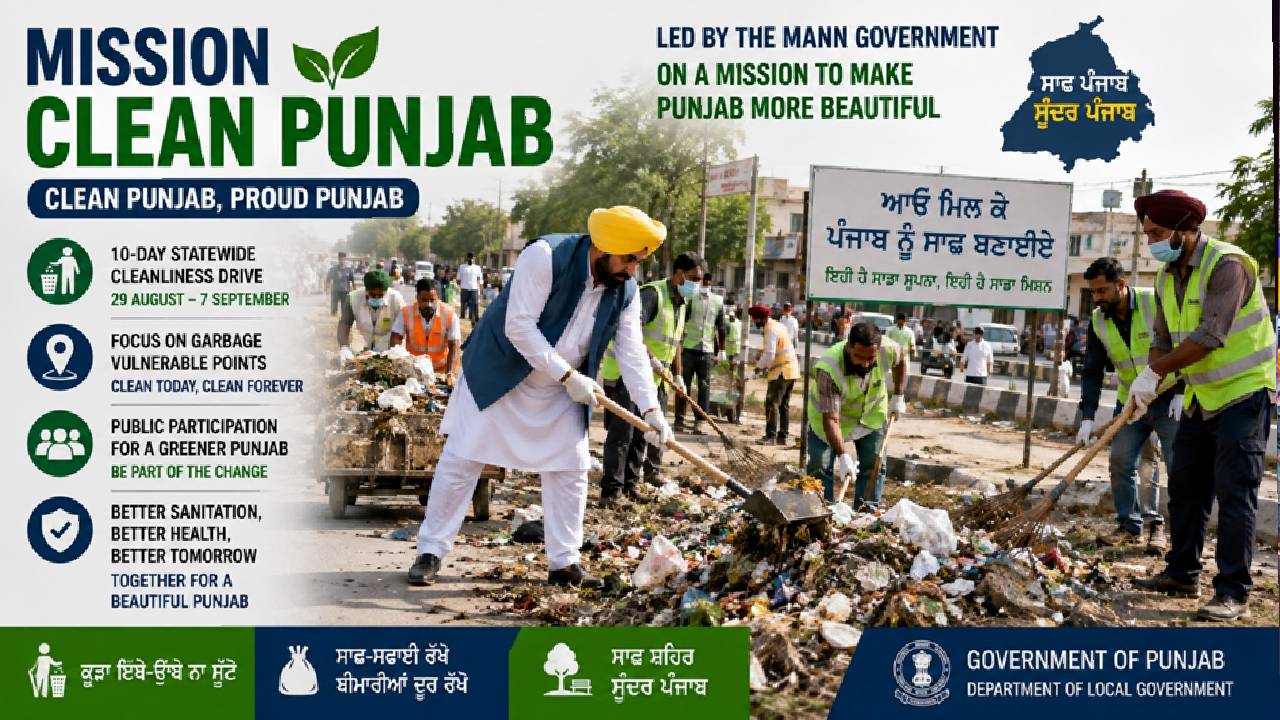
Punjab: The Punjab Government has launched a 10-day statewide cleanliness campaign under Mission Clean Punjab, aiming to improve sanitation, remove accumulated waste from vulnerable locations and create cleaner public spaces across the state.
Table Of Content
The campaign began on August 29, 2026, and will continue until September 7. Cabinet Ministers, MLAs, mayors, municipal councillors, senior officials and civic bodies are participating in the drive and monitoring sanitation activities at the ground level.
The initiative is being carried out under the broader vision of “Clean Punjab, Proud Punjab”, with special attention being given to Garbage Vulnerable Points (GVPs) — areas where waste is frequently dumped and accumulates repeatedly.
Focus on Garbage Vulnerable Points
A major objective of the campaign is to move beyond simply removing existing garbage. Authorities are being encouraged to identify why waste continues to accumulate at particular locations and take corrective measures to prevent these areas from becoming dumping points again.
Special cleanliness teams are being deployed at identified locations to remove accumulated waste and improve the surrounding areas. Local authorities are also expected to monitor these sites after cleaning operations are completed.
The approach places emphasis on both immediate action and sustainable sanitation practices.
Ministers and Officials Take Part
Local Government Minister Harjot Singh Bains has been leading the statewide cleanliness initiative, with elected representatives and officials participating in activities across different cities and towns.
The involvement of senior officials and public representatives is intended to strengthen monitoring and accountability. Field inspections allow authorities to assess sanitation conditions directly and identify areas where municipal services require improvement.
In Patiala, Health Minister Dr Balbir Singh participated in a cleanliness activity under the campaign and highlighted the importance of making cleanliness a regular part of civic behaviour.
Similar cleanliness activities are being carried out in different parts of Punjab as part of the 10-day campaign.
Public Participation Considered Important
The government has also stressed the role of residents in maintaining cleaner surroundings. Municipal sanitation services alone cannot prevent repeated dumping if waste continues to be thrown in open spaces.
Residents can contribute by avoiding open dumping, using designated waste-collection systems, following waste-segregation practices and reporting locations where garbage is repeatedly being deposited.
Public participation can also help civic bodies identify recurring sanitation problems and respond more effectively at the local level.
Health and Environmental Benefits
The campaign is not limited to improving the appearance of streets and public places. Accumulated waste can create unpleasant surroundings and contribute to sanitation concerns by attracting insects and stray animals.
Removing garbage from vulnerable locations and improving waste-management practices can therefore provide wider environmental and public-health benefits.
Cleaner markets, roads, neighbourhoods and public spaces can also improve the overall appearance of urban areas and create a more pleasant environment for residents and visitors.
Technology and Field Monitoring
Mission Clean Punjab also builds on the state’s broader efforts to improve municipal sanitation through stronger monitoring, field inspections and accountability.
The emphasis on direct supervision is aimed at ensuring that sanitation work is actually carried out on the ground and that recurring problems are addressed instead of being treated as isolated complaints.
Municipal bodies are expected to focus on regular waste collection, proper disposal, segregation and prevention of illegal dumping as part of the longer-term sanitation effort.
The Challenge Beyond the 10-Day Drive
While the 10-day campaign can help remove accumulated waste and improve vulnerable locations, maintaining those improvements will be the bigger challenge.
For cleaned areas to remain free of garbage, municipal bodies will need to ensure regular collection, adequate waste-processing arrangements, effective monitoring and action against repeated open dumping.
The campaign therefore places equal importance on changing waste-management practices and improving civic behaviour.
Mohali and other cities across Punjab are also expected to intensify sanitation activities during the campaign, with local authorities identifying garbage-prone areas and taking corrective measures.
A Wider Cleanliness Mission
The direct participation of ministers, MLAs, mayors and senior officials is intended to reinforce the message that cleanliness is a shared civic responsibility. It also places greater emphasis on accountability among local administrations.
For residents, the campaign provides an opportunity to support government efforts by adopting responsible waste-disposal practices and helping keep public spaces clean.
With Mission Clean Punjab continuing until September 7, the immediate focus remains on removing garbage from vulnerable locations and improving sanitation across the state.
The longer-term success of the initiative, however, will depend on whether the cleaned areas remain well maintained after the campaign ends. Consistent municipal services, responsible waste disposal, public participation and regular monitoring will be essential to turning the 10-day drive into lasting improvements.
Mission Clean Punjab is therefore being positioned not only as a short-term clean-up exercise, but as part of a wider effort to promote cleaner public spaces, stronger civic responsibility and healthier communities across Punjab.