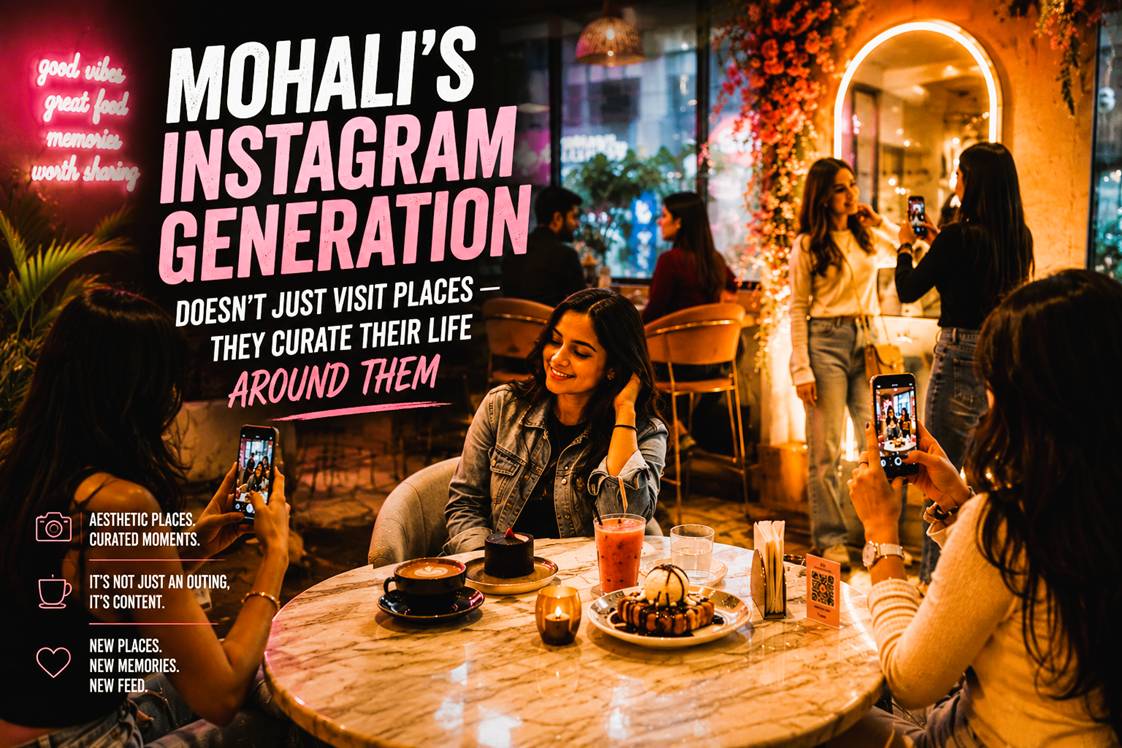
Spend one evening around Mohali’s newer café pockets or busy social spaces and you’ll notice something interesting very quickly. Half the crowd is not even fully sitting in the moment. Someone is fixing table placement before food arrives. Someone is waiting for better lighting before clicking pictures. Another group is recording slow-motion entry videos while their coffee gets cold beside them.
And nobody finds this behaviour unusual anymore.
That’s because Mohali’s younger generation no longer experiences places passively. They experience them through how they look, how they feel online, and how well they fit into their personal aesthetic.
A café today is not just somewhere to eat or sit.
It becomes part of identity.
That shift is visible all across the city now. People choose places according to mood, interiors, crowd type, music, rooftop lighting, parking aesthetics, mirror quality, colour palette, and whether the place “looks like somewhere they’d post.”
Even the same city gets socially divided this way.
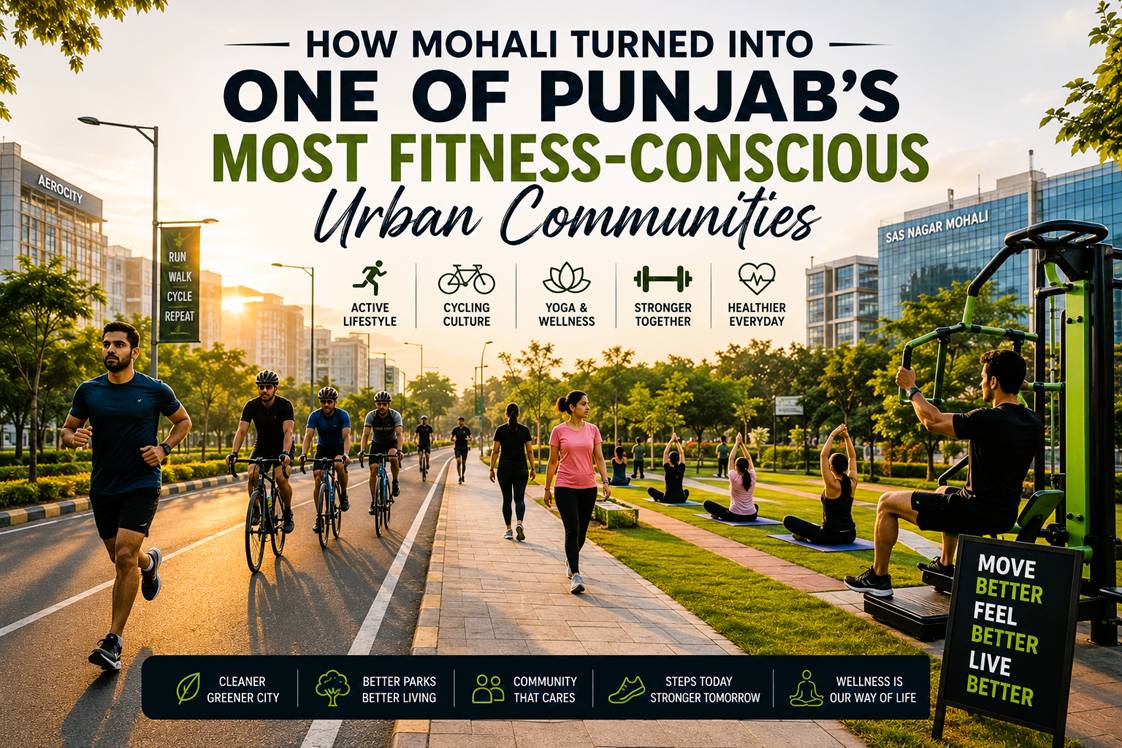
From Gyms To Recovery Studios: The Evolution Of Wellness In Mohali
A few years ago, most fitness conversations in Mohali started with one thing — workouts. Today, they often…
Continue readingSome cafés become “date places.” Some become “gym crowd cafés.” Some become “soft luxury spots.” Some become “reel cafés.” Some become “late-night vibe places.” The city’s younger crowd has subconsciously assigned personalities to locations.
And Instagram is driving most of it.
People increasingly discover places through reels before real life. Entire weekend plans now start with “reel mein dekha tha.” A dessert suddenly trends because enough people posted it. A rooftop becomes famous because sunset stories from there start circulating repeatedly.
What’s interesting is that Mohali businesses understand this behaviour extremely well now.
Many newer cafés and lifestyle spaces are no longer designed only around food or comfort. They are designed around visibility. Warm lighting. Minimal interiors. Oversized mirrors. Neutral tones. Styled plating. Clean branding. Open seating. Every detail quietly supports content culture.
Because in Mohali today, people don’t only consume experiences.
They document them constantly.
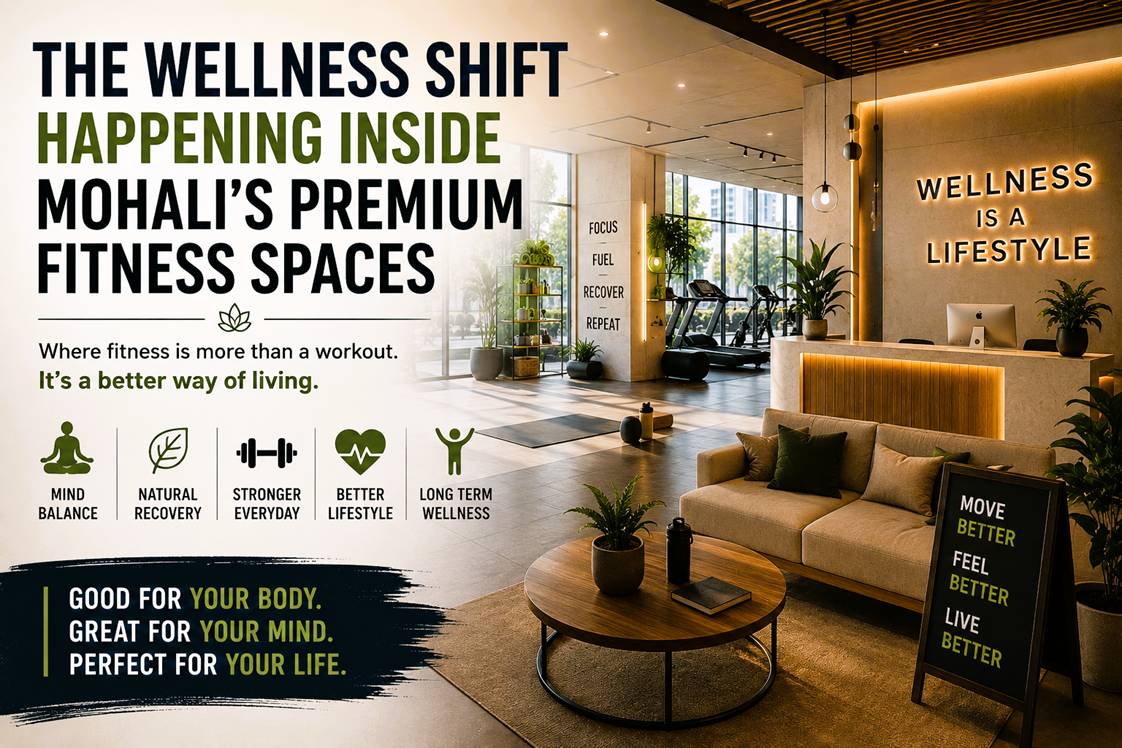
Beyond Weight Loss: What Fitness Means To Mohali’s New Urban Generation
Ask most young people in Mohali why they started focusing on fitness, and very few will say it…
Continue readingEven friend circles behave differently because of this shift. Earlier, outings were remembered later. Today, they’re edited, uploaded, archived, and socially validated in real time. Stories, dumps, reels, “photo bhej,” “mera angle acha nahi aya,” and “wait candid le” have become part of the outing itself.
And this isn’t influencer behaviour anymore.
College students do it. Working professionals do it. Couples do it. Gym groups do it. Even people who claim they “don’t care about Instagram” still unconsciously choose places that feel visually presentable.
That’s how deeply aesthetic culture has entered urban life.
But beneath all the content creation, there’s also something emotionally important happening. People today want spaces that help them express a version of themselves. Public places are no longer just functional spaces — they’ve become extensions of personality, mood, and social identity.
And maybe that’s why Mohali’s social culture feels so visually active right now.
The city’s younger crowd isn’t simply hanging out anymore.
They’re curating how life feels, how memories look, and how everyday moments get remembered online.One story upload at a time.

Comments