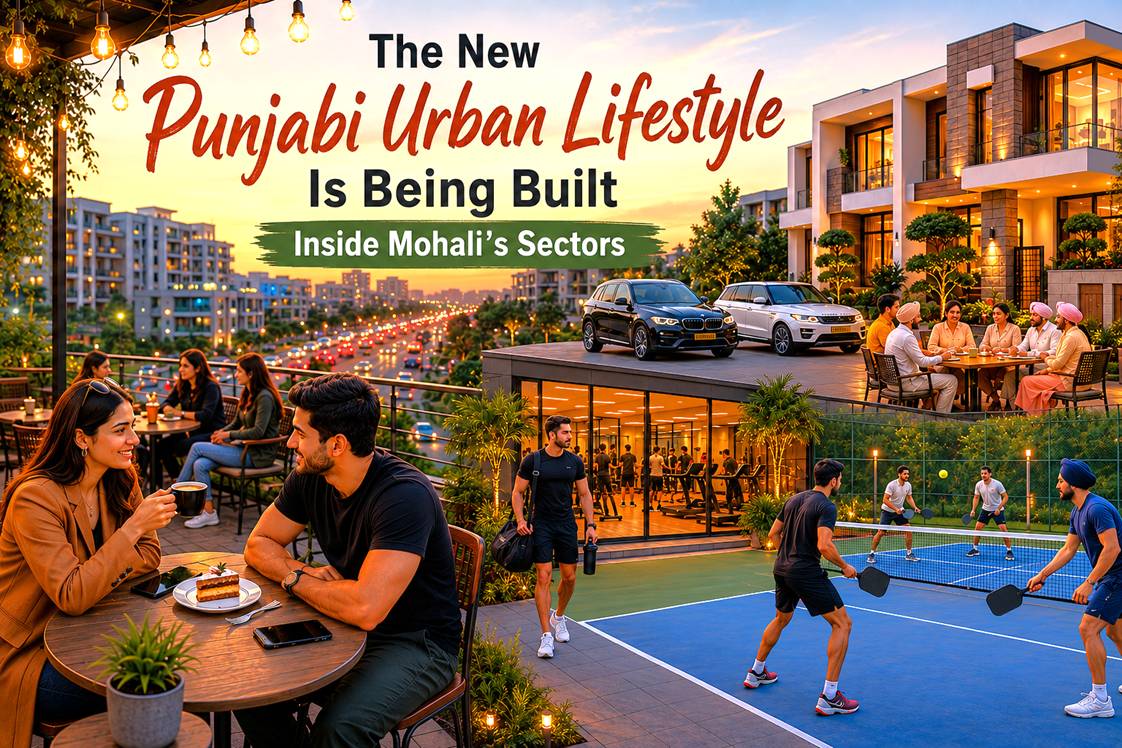
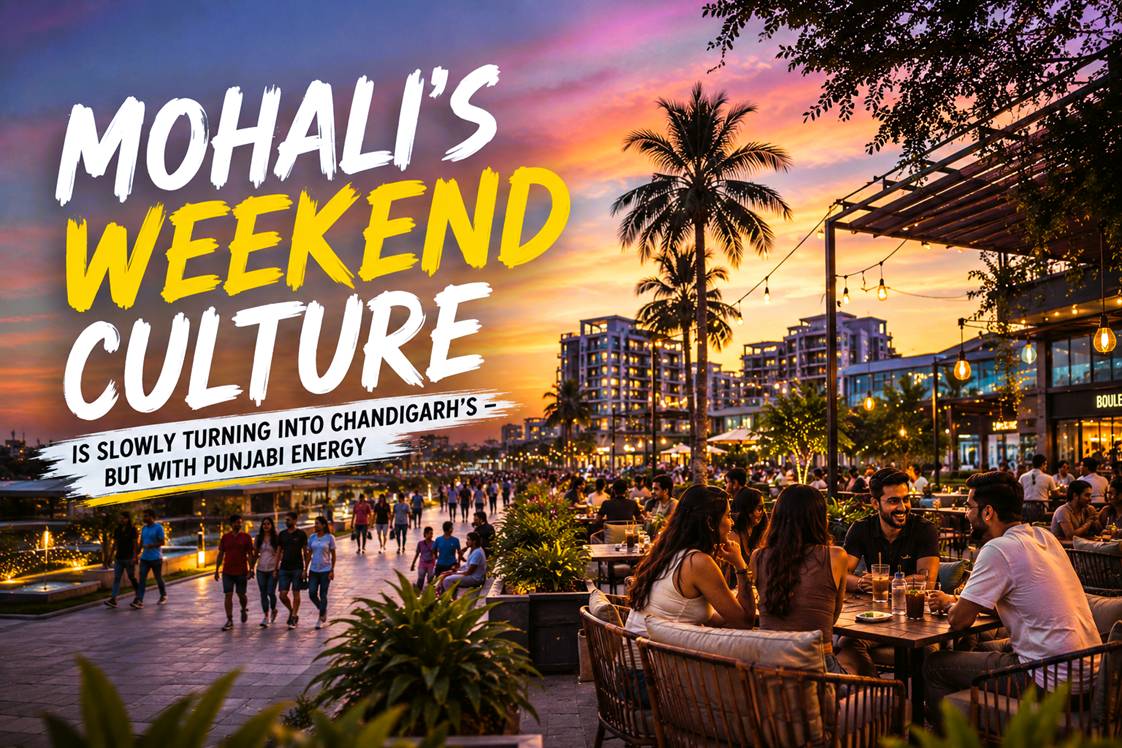
A lifestyle where rooftop cafés exist five minutes away from family kothis. Where gym culture, luxury perfumes, and pickleball plans coexist with Punjabi households discussing shaadi functions and property rates at dinner tables. Where people speak Punjabi naturally but live increasingly global lifestyles.
That is modern Mohali right now.
And maybe no other city in Punjab reflects this cultural transition more clearly.
What makes Mohali interesting is that the city doesn’t feel traditionally metropolitan in the usual sense. It still carries strong Punjabi social structure, family presence, local familiarity, and residential warmth. But inside that framework, an entirely new urban lifestyle has quietly emerged over the last few years.
And most of it is being built inside the sectors themselves.
Not through giant landmarks or iconic city centers.
Through everyday routines.
The Rise of Late-Night Mohali: Gyms, Dessert Runs, Drives & 1 AM Hunger
After long office hours, nighttime becomes the only part of the day that actually feels theirs. So people…
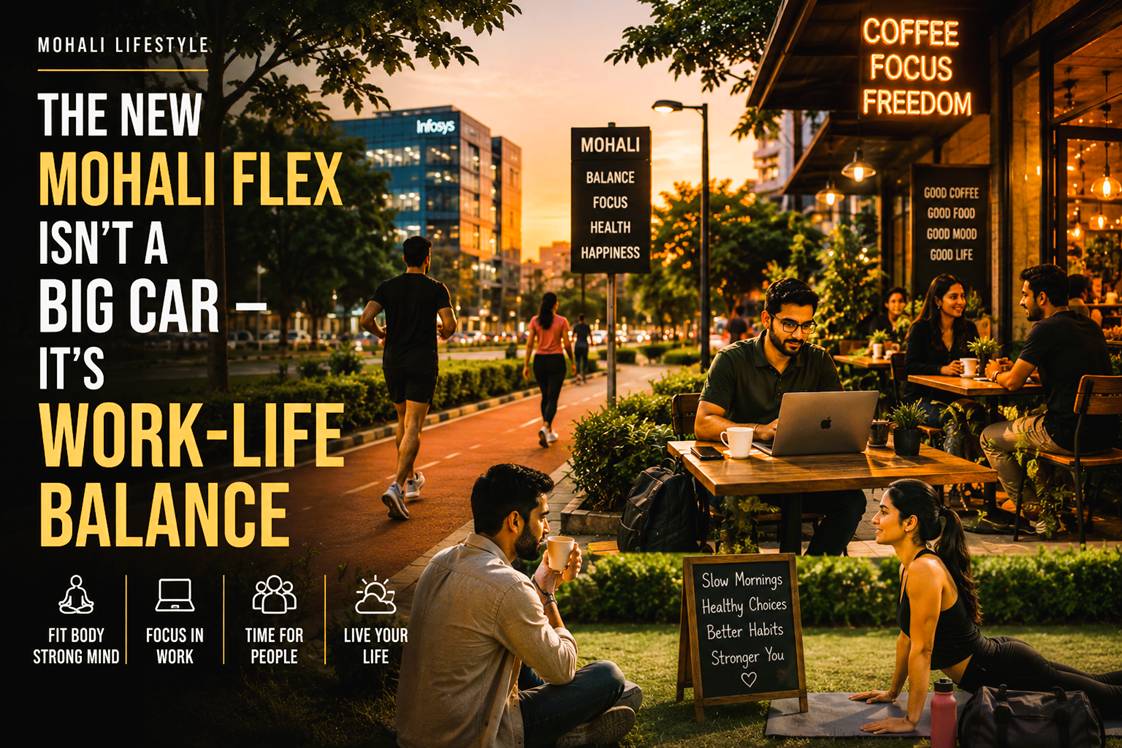
Continue readingMorning scenes across Mohali already feel very different from older Punjab city patterns. Young professionals leave homes carrying MacBooks, gym bags, and protein shakers. Cafés open early with remote workers attending meetings. Fitness culture starts before office hours. Luxury cars stand outside wellness studios while aunties casually discuss relatives and wedding plans nearby.
The old Punjab and new urban Punjab now exist side by side in the same spaces.
And evenings make this contrast even more visible.
Friend groups gather at cafés instead of traditional family restaurants. Young couples spend hours casually sitting in public spaces. Rooftops stay active late into the night. Weekend plans revolve around brunches, dessert runs, shopping, drives, fitness sessions, and social experiences instead of only weddings or festivals.
Social life itself has become more urban and lifestyle-oriented.
At the same time, Mohali hasn’t lost its Punjabi emotional identity.
Families remain deeply involved in people’s lives. Punjabi is still the dominant emotional language. Appearance matters. Cars matter. Weddings remain massive social events. Parents still discuss careers, Canada plans, and rishtas during gatherings. Even modern lifestyles here continue carrying strong Punjabi energy underneath them.
That balance is what makes Mohali culturally unique.
Why Mohali’s New Generation Dresses Like They’re Always Heading to a Brunch
Walk through any busy market, café cluster, gym lane, or shopping area on weekends and you’ll notice how…
Continue readingThe city feels modern without feeling emotionally disconnected.
And social media has accelerated this transformation massively.
Instagram aesthetics, sneaker culture, wellness trends, café culture, skincare routines, global fashion, and content creation habits now blend naturally into everyday city life. Younger generations consume international culture online while still living deeply local lives offline.
That creates a very specific kind of urban identity.
You’ll see someone discussing startup ideas in Punjabi while sitting at a minimalist café. Someone wearing oversized Korean-style streetwear while heading to a family jagran later at night. Someone balancing fitness goals, social media aesthetics, and traditional family expectations all at the same time.
This isn’t old Punjab anymore.
But it’s not fully metro-city culture either.
It’s a new Punjabi urban lifestyle being shaped in real time — sector by sector, café by café, routine by routine. And Mohali is slowly becoming its natural capital.

Comments