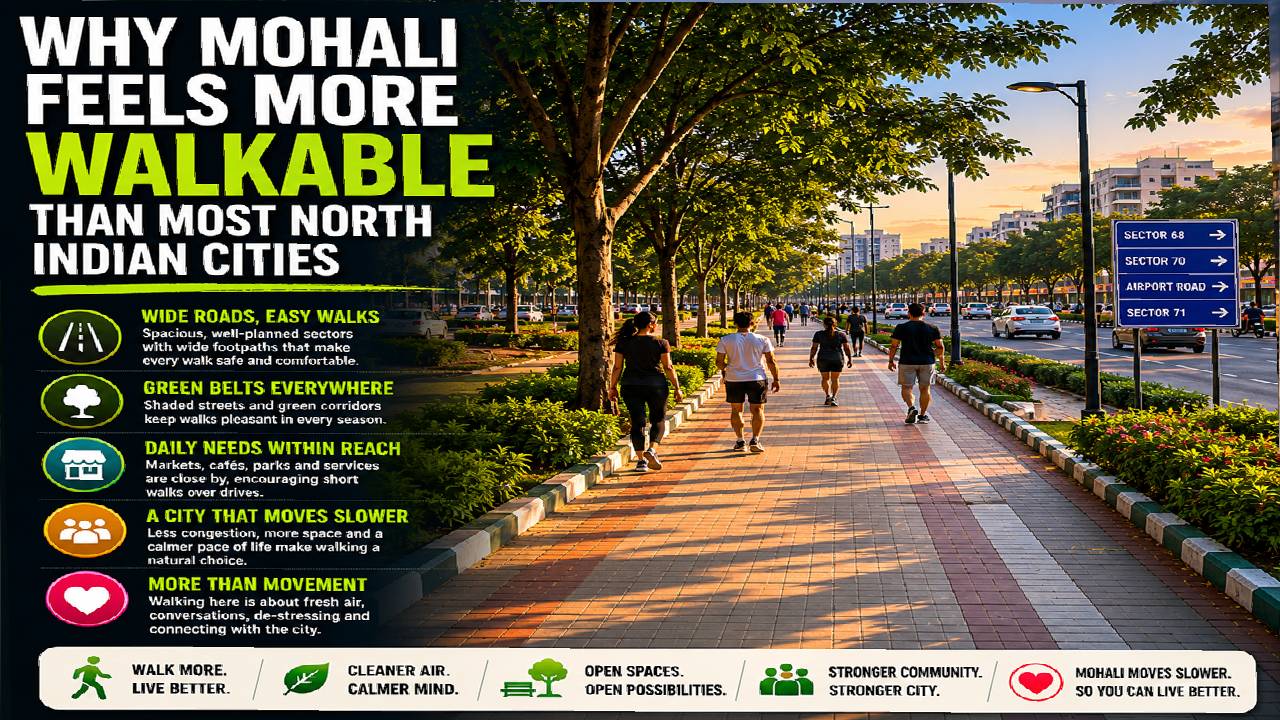
In most North Indian cities, walking often feels like compromise.
You walk because traffic is impossible.
Because parking is unavailable.
Because the destination is nearby.
Very rarely does walking itself feel comfortable enough to become part of daily lifestyle.
Mohali feels different.
Not because it was designed as a “walking city” in the modern European sense, but because the city’s structure accidentally created an environment where people actually enjoy being outdoors for short-distance movement.
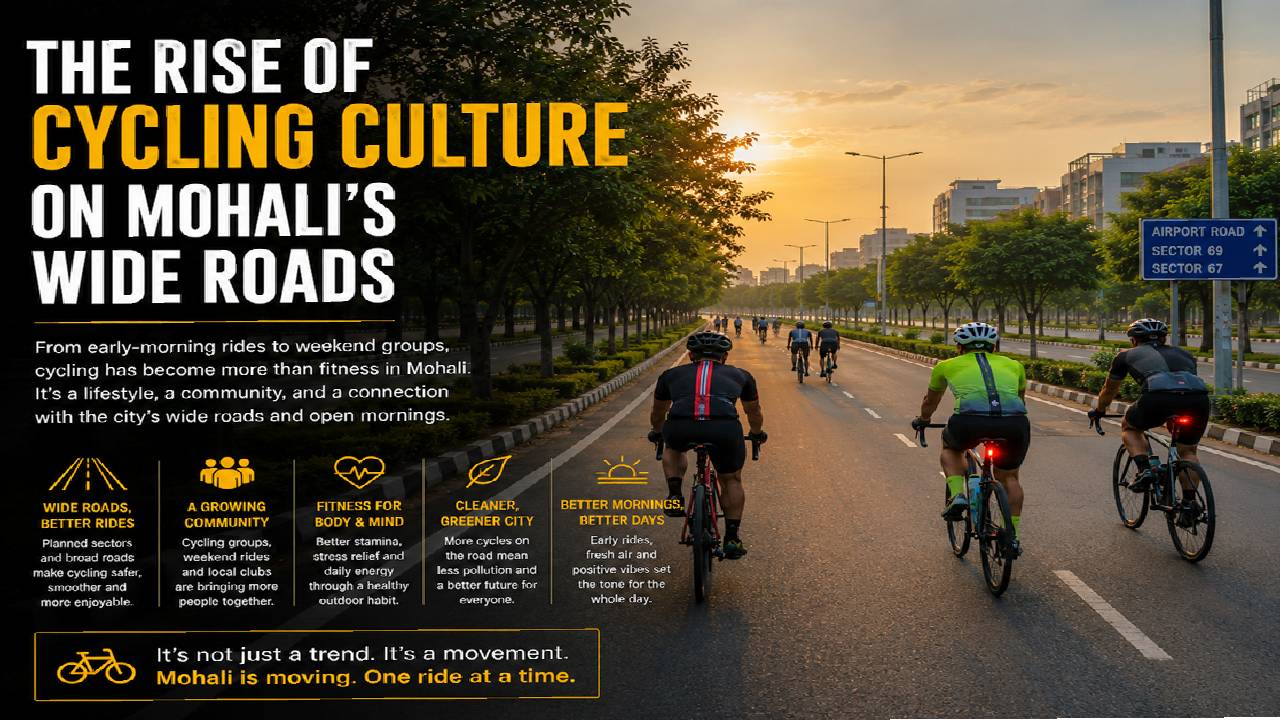
Wide sector roads, green belts, internal walking stretches, lower pedestrian congestion, and relatively organized urban planning all contribute to that experience.
The result is something you notice almost immediately after spending time in the city.
People walk more here.
You see it during every part of the day.
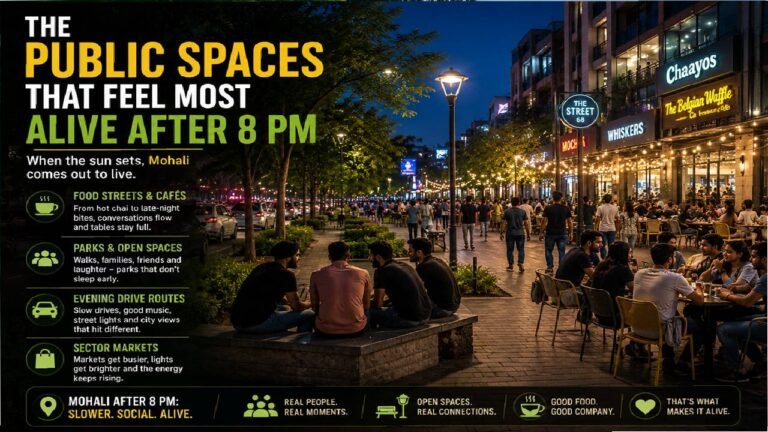
The Public Spaces That Feel Most Alive After 8 PM
Mohali changes character after 8 PM. During the day, the city feels functional — offices, schools, coaching institutes,…
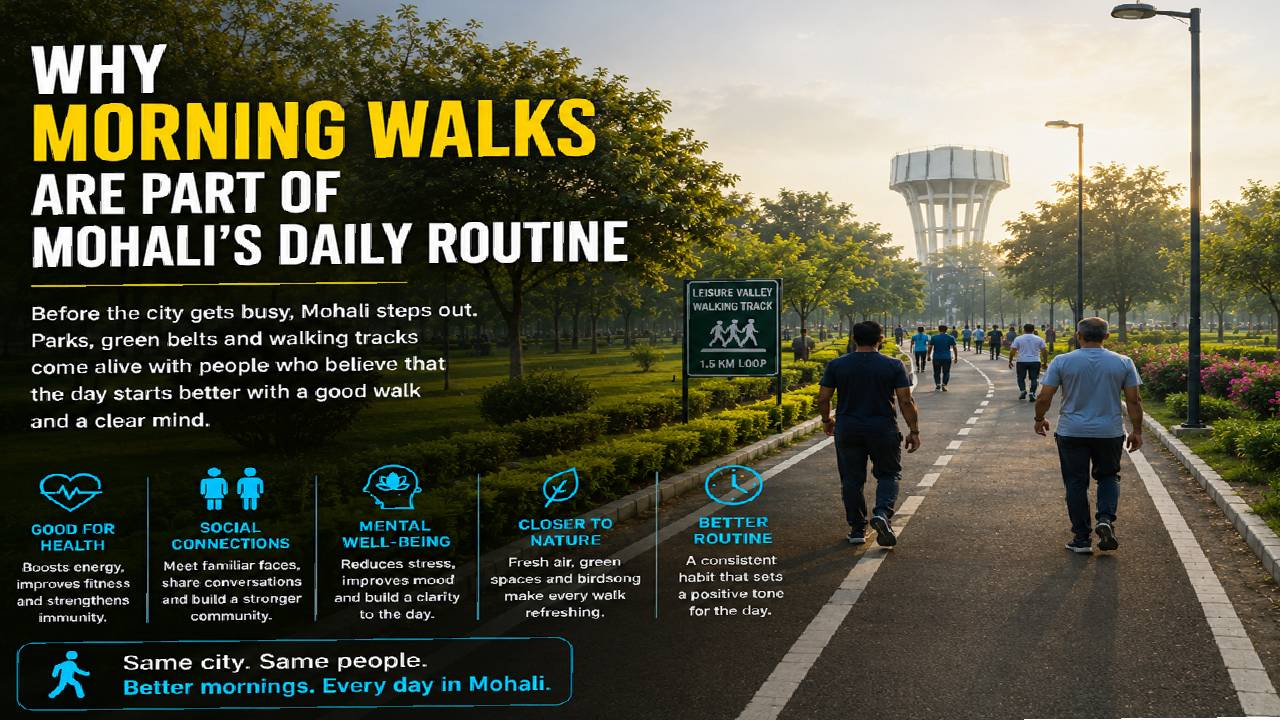
Continue readingMorning walkers along tree-lined roads.
Students walking between coaching centres and markets.
Families taking post-dinner rounds.
Office-goers walking through sector plazas instead of immediately driving home.
Even routine movement feels slower and less stressful compared to many nearby cities.
That changes public behavior more than people realize.
Because when walking feels physically comfortable, people naturally spend more time outside. Public spaces stay active longer. Casual interaction increases. The city begins feeling socially visible instead of purely traffic-driven.
Mohali’s sector-based planning plays a major role in this.
Most daily necessities remain relatively spread out and accessible within sectors. Parks, local markets, open commercial stretches, and residential pockets exist close enough to encourage short walking movement instead of forcing constant vehicle dependency.
The green belts also matter.
Walking through shaded roads feels psychologically different from walking beside exposed traffic-heavy stretches. Even during warmer months, the greenery softens the experience enough to keep outdoor movement active during mornings and evenings.
That’s why walking in Mohali often feels less functional and more habitual.
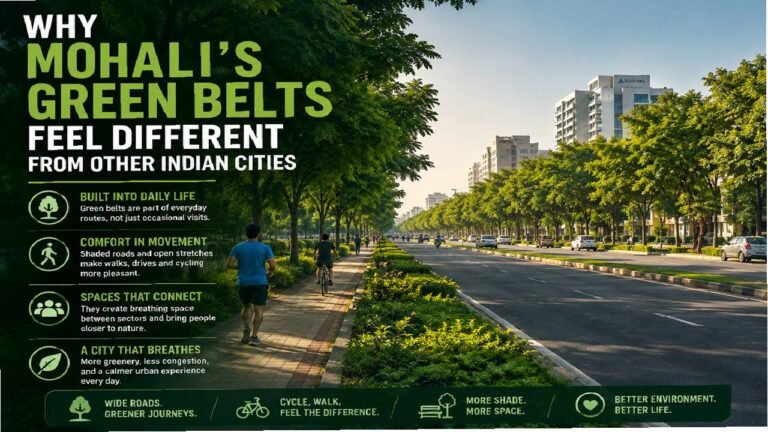
Why Mohali’s Green Belts Feel Different From Other Indian Cities
Most Indian cities have greenery. But in many places, it feels disconnected from everyday life — small parks…
Continue readingPeople don’t only walk to reach somewhere.
They walk to decompress.
To continue conversations.
To spend time outside after long indoor routines.
And unlike larger metro cities where public movement often feels rushed and crowded, Mohali still retains enough openness to make walking feel relaxed rather than exhausting.
The city moves at a different pace.
That slower rhythm became part of Mohali’s identity, especially for younger residents and families who increasingly value outdoor lifestyle over constant indoor commercial environments.
Even the city’s evening culture reflects this walkability.
Sector markets stay active because people comfortably move around them on foot. Parks remain socially connected to surrounding roads. Public spaces blend into each other instead of feeling isolated.
As a result, Mohali feels less like a city built only for transit and more like a city people actively experience while moving through it.
That’s rare in rapidly growing North Indian urban environments. And it’s one of the biggest reasons Mohali continues feeling more livable than its size might suggest.

Comments