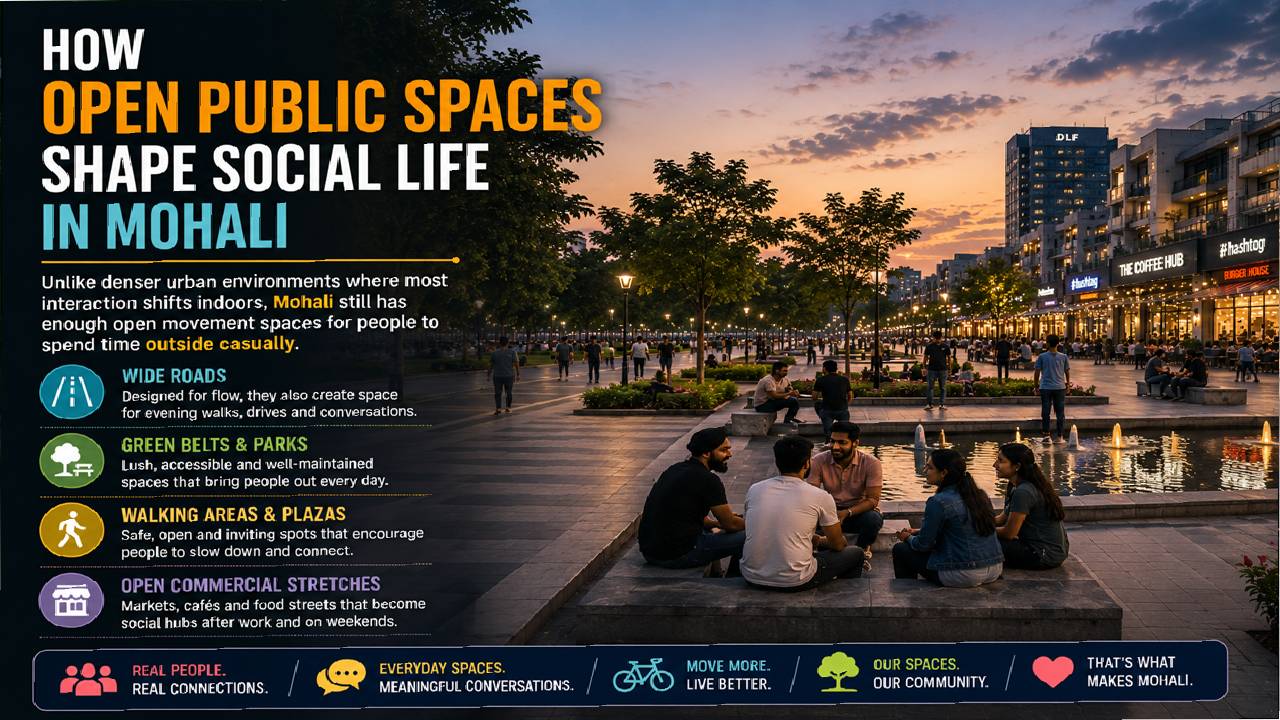
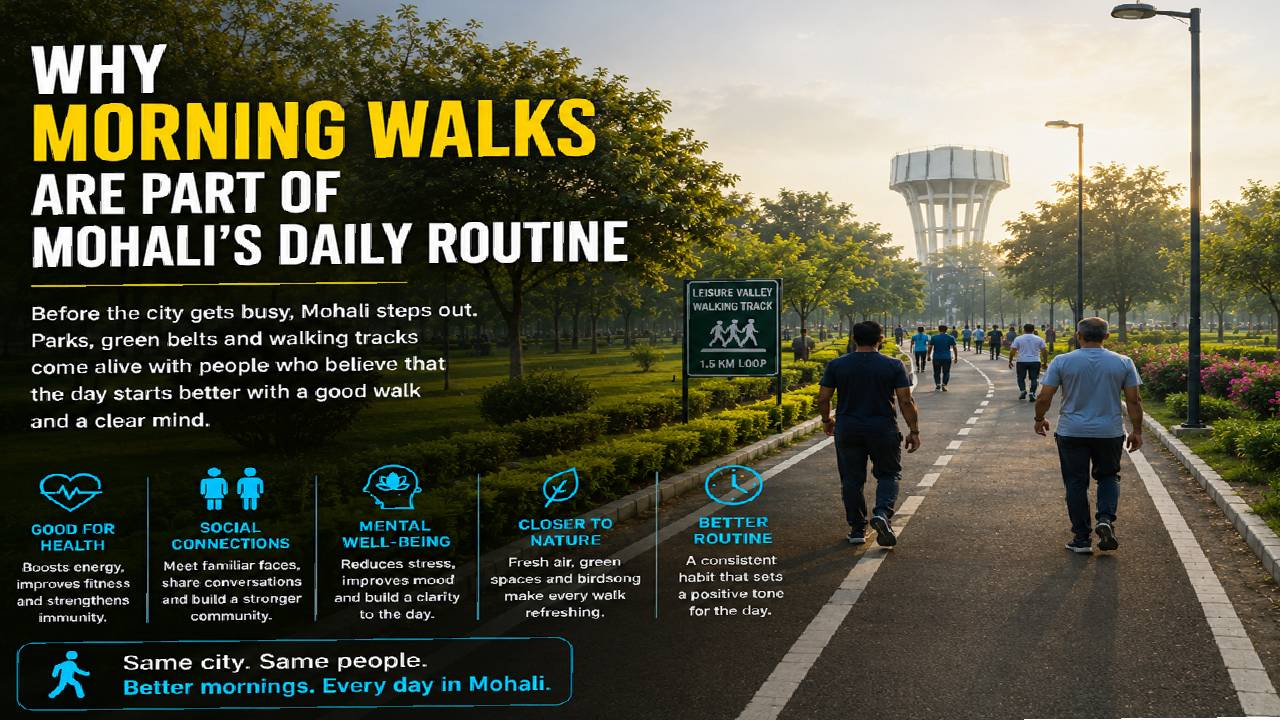
Unlike denser urban environments where most interaction shifts indoors, Mohali still has enough open movement spaces for people to spend time outside casually. Wide roads, green belts, sector parks, walking areas, public plazas, and open commercial stretches all contribute to a city culture that feels socially visible.
You constantly see people outside.
Not necessarily doing anything major — just existing in public space.
People walking after dinner.
Friends standing near parked cars.
Families sitting in parks late into the evening.
Students gathering after coaching classes.
Cyclists slowing down near tea stalls during morning rides.
That visibility changes how the city feels emotionally.
In many modern urban environments, social life has become increasingly private and indoor. Most interaction now happens inside cafés, apartments, offices, or through screens. Mohali still retains spaces where people casually spend time without needing a formal destination.
And over time, those repeated outdoor routines started shaping the city’s social culture itself.
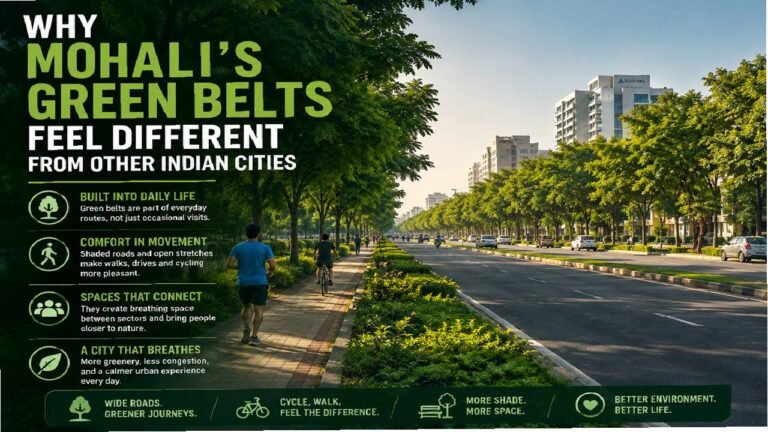
Why Mohali’s Green Belts Feel Different From Other Indian Cities
Most Indian cities have greenery. But in many places, it feels disconnected from everyday life — small parks…
Continue readingA wide road becomes an evening drive route.
A sector market becomes a daily meet-up point.
A green belt becomes part of somebody’s decompression routine after work.
The public space slowly becomes emotional space.
That’s what makes Mohali’s outdoor culture interesting. Most of its social energy doesn’t come from major landmarks or nightlife districts. It comes from ordinary spaces being used repeatedly by ordinary people.
The city feels socially active because movement remains visible.
You see conversations happening in real time.
You see groups extending plans outdoors instead of immediately leaving.
You see people staying outside longer simply because the environment feels comfortable enough to remain there.
That comfort matters more than it seems.
Because open public spaces influence behavior quietly. When roads feel walkable, people walk more. When parks feel safe and accessible, people use them regularly. When public environments feel relaxed instead of stressful, social interaction becomes more natural.
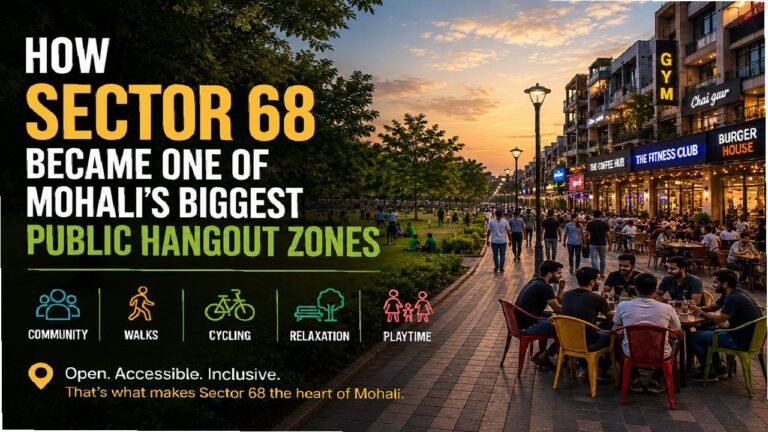
How Sector 68 Became One of Mohali’s Biggest Public Hangout Zones
A lot of public spaces in cities are planned intentionally. Sector 68 doesn’t feel like one of them.…
Continue readingMohali’s structure supports that rhythm.
The sectors are spread out enough to avoid constant overcrowding, but active enough to keep public life visible. Green stretches soften movement between commercial areas and residential zones. Evening traffic slows into social movement instead of only transit pressure.
As a result, many residents experience the city collectively rather than privately.
Even people who don’t consciously think about urban design still build emotional routines around these spaces. Specific roads become associated with late-night drives. Certain parks become linked to family evenings. Particular sectors start feeling connected to conversations, walks, or weekend routines.
The city becomes emotionally mapped through public behavior.
And in a time where digital life increasingly dominates attention, that kind of visible outdoor social culture feels increasingly valuable.
Because public spaces in Mohali are not just shaping movement. They’re shaping how people connect with the city — and with each other.

Comments