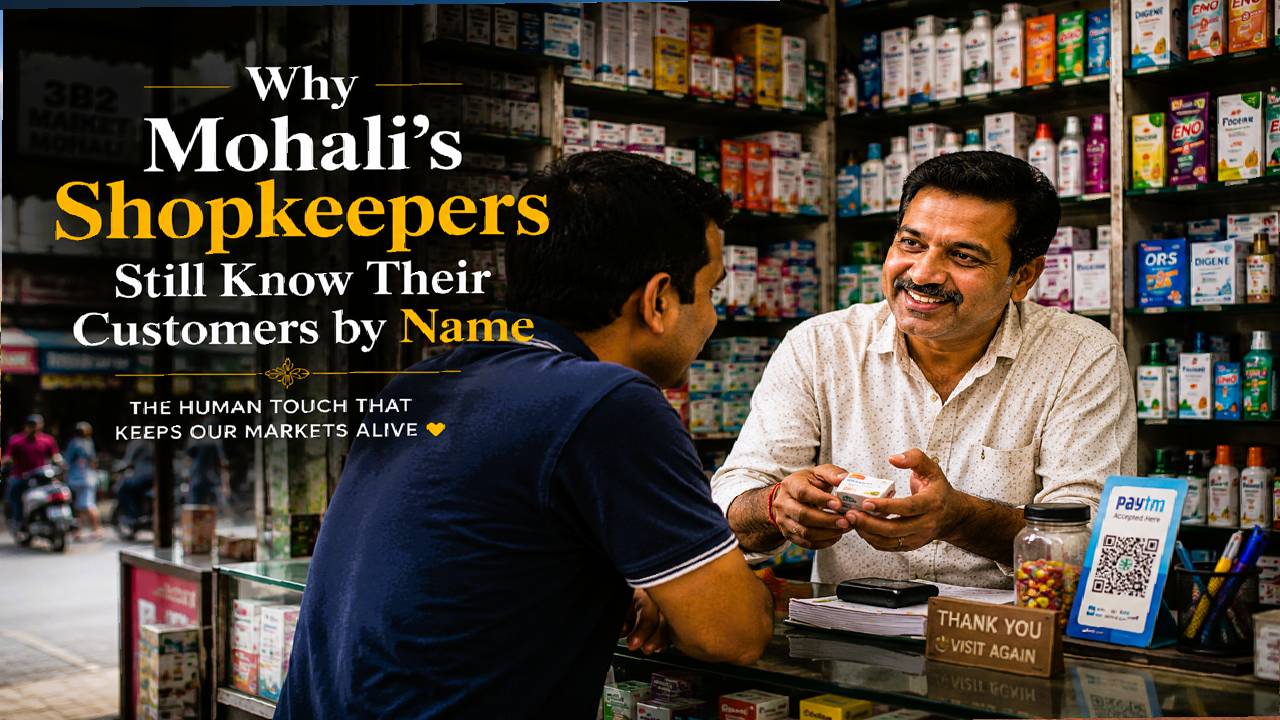
In an age of online deliveries, self-checkout counters, and algorithm-driven recommendations, there is something increasingly unusual about walking into a shop and being greeted before you say a word.
Yet in many parts of Mohali, that still happens every day.
A chemist asks about a family member’s health. A baker remembers which cake you ordered last year. A garment shop owner pulls out the same size without needing to ask. A grocery store owner knows which products a household buys regularly.
The transaction begins with recognition.
And that’s something many residents still value.
One of the most overlooked aspects of Mohali’s shopping culture is how personal it remains. Despite the growth of malls, branded retail chains, and online commerce, a significant portion of everyday shopping still happens through businesses where relationships matter almost as much as the products being sold.
Part of this comes from how the city grew.
Unlike cities where rapid expansion disconnected neighborhoods from local businesses, Mohali developed through sectors and community-based commercial areas. Residents often used the same markets repeatedly for years, sometimes decades. As families settled into neighborhoods, shopkeepers became familiar faces within the community.
Over time, those repeated interactions created trust.
And trust became a competitive advantage.
A customer may be able to find the same product elsewhere. They may even find it cheaper online. Yet many continue returning to the same stores because they know what to expect. They know the quality. They know the service. More importantly, they know the people behind the counter.
How Aerocity Is Building Mohali’s Next Shopping & Lifestyle Hub
For years, Mohali’s shopping map was relatively easy to understand. If you wanted established retail, you went to…
Continue readingThat familiarity changes the nature of shopping.
The interaction becomes less transactional and more conversational.
Recommendations are personalized. Small requests are accommodated. Products are sometimes kept aside for regular customers. Shopkeepers offer suggestions based on previous purchases rather than generic promotions.
The relationship develops gradually through hundreds of ordinary visits.
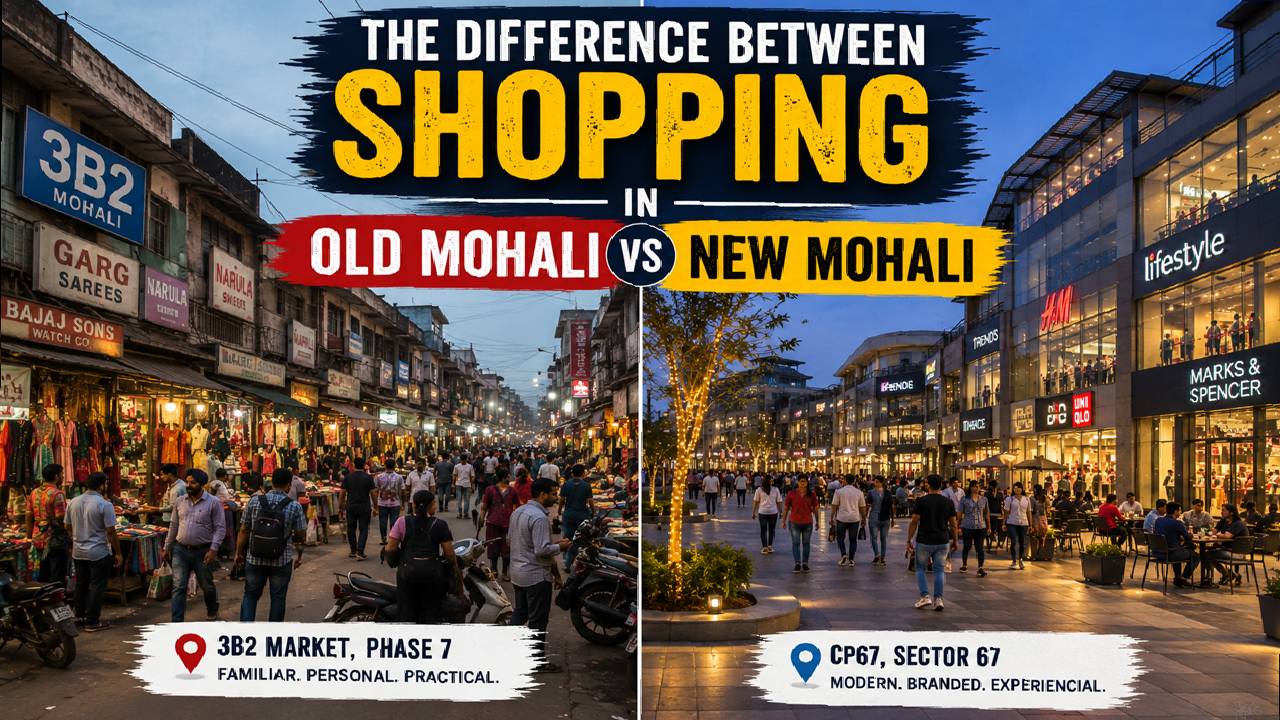
This is especially visible in older commercial areas such as 3B2, Phase 7, and long-established sector markets. Many businesses there have served the same neighborhoods for years. Some have watched children who once came shopping with their parents return later as customers themselves.
Few modern retail experiences create that kind of continuity.
The phenomenon is not limited to older markets either.
Across Mohali’s sector markets, local bakeries, pharmacies, grocery stores, stationery shops, salons, and specialty retailers continue building customer relationships in remarkably traditional ways. Technology may have changed how payments are made, but in many cases the social nature of the interaction remains unchanged.
That human connection becomes especially valuable during important moments.
When someone needs urgent medicine.
When a last-minute birthday cake is required.
When a customer is searching for something difficult to find.
How Sector 82 Became Mohali’s Fastest Growing Retail Zone
Ten years ago, very few people would have described Sector 82 as one of Mohali’s important shopping destinations.…
Continue readingWhen advice matters more than selection.
In those situations, people often rely on individuals they trust rather than systems they don’t know.
This is one reason local businesses continue thriving despite increasing competition from larger retail formats.
They offer something that cannot be packaged, delivered, or automated.
Familiarity.
A city is often measured by its infrastructure, buildings, and commercial growth. But its character is usually found elsewhere—in the everyday interactions that happen between people.
And in Mohali, many of those interactions still happen across shop counters.
A quick conversation.
A familiar greeting.
A customer remembered by name.
Small moments, perhaps. But together, they help explain why Mohali’s markets continue feeling less like shopping destinations and more like extensions of the communities around them.

Comments