Most markets tend to have a clear identity.
Some are known for groceries and daily essentials. Others revolve around restaurants, cafés, and lifestyle spending. A few become shopping destinations where people deliberately travel from across the city.
Sector 68 sits somewhere in between.
And that’s exactly what makes it interesting.
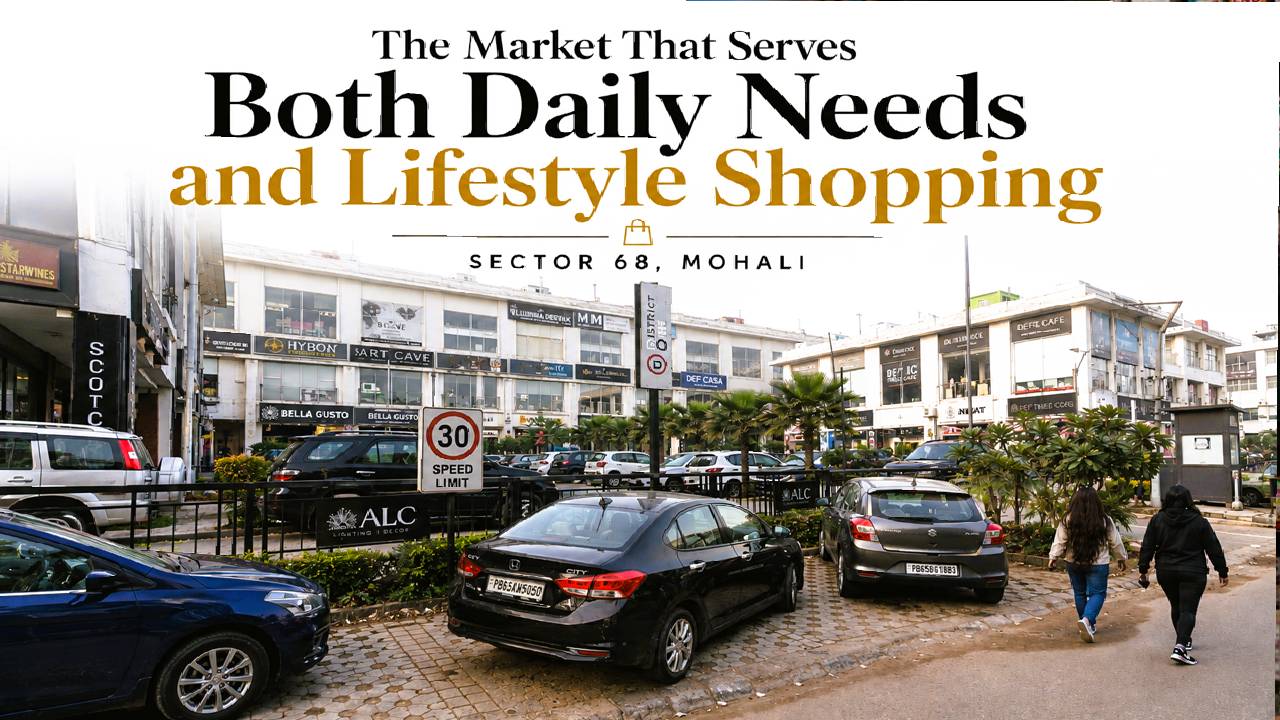
Unlike many of Mohali’s older markets that were built primarily around everyday retail, Sector 68 has gradually evolved into a commercial space where practical shopping and lifestyle spending exist side by side. Within a relatively compact area, residents can buy vegetables, pick up medicines, visit a hardware store, shop for household goods, stop for coffee, have dinner, or browse newer commercial developments.
The market serves multiple purposes at the same time.
For residents living in and around the sector, that convenience is one of its biggest strengths.
A typical visit to Sector 68 rarely involves just one errand. Someone might begin by buying groceries, stop at a pharmacy, visit a supermarket for household items, and finish the evening with a meal at a nearby restaurant. What starts as a routine shopping trip often extends into something more social.
How Aerocity Is Building Mohali’s Next Shopping & Lifestyle Hub
For years, Mohali’s shopping map was relatively easy to understand. If you wanted established retail, you went to…
Continue readingThat’s a pattern becoming increasingly common in Mohali.
As the city grows, residents are looking for places that combine convenience with experience. They want access to everyday necessities, but they also want cafés, restaurants, bakeries, and modern retail options within the same environment.
Sector 68 has gradually developed in that direction.
The traditional side of the market remains strong. Local grocery stores, fruit and vegetable vendors, dairy booths, pharmacies, and service businesses continue attracting regular customers throughout the day. These are the establishments that keep the market connected to the everyday needs of surrounding neighbourhoods.
At the same time, newer commercial activity has introduced a different layer to the area.
Large-format retail, branded outlets, restaurants, cafés, and contemporary commercial developments have expanded the market’s role beyond simple utility shopping. Residents no longer need to leave the sector to access many of the services and experiences that were once concentrated in larger commercial hubs.
This combination creates a shopping environment that feels both familiar and modern.
Older residents can still complete the errands they’ve been making for years.
Younger residents can meet friends for coffee, browse retail stores, or spend an evening exploring newer commercial spaces.
How Hyperlocal Sector Markets Quietly Run Everyday Life in Mohali
A resident runs out of milk at 8 PM. Someone remembers they need medicines before the next morning.…
Continue readingFamilies often do both during the same visit.
The result is a market that reflects how Mohali itself is changing.
The city is no longer defined entirely by traditional sector markets, nor is it becoming exclusively mall-driven. Instead, many commercial areas are evolving into mixed spaces where convenience, retail, food, and social activity overlap.
Sector 68 may be one of the clearest examples of that transition.
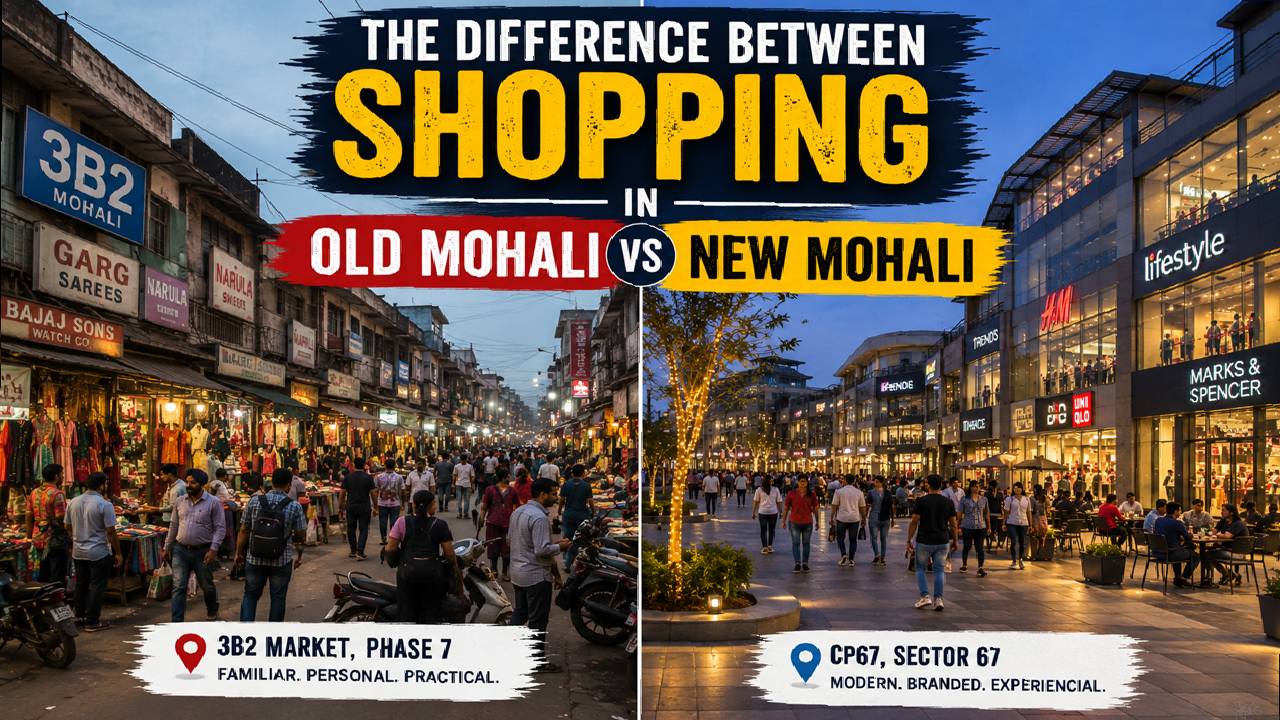
It doesn’t have the legacy status of 3B2.
It doesn’t have the scale of CP67.
And it doesn’t function like a weekly market.
Its importance comes from something simpler.
It successfully serves the everyday requirements of local residents while also offering the lifestyle options expected from a growing modern city. And in many ways, that balance may represent the future of shopping in Mohali.


Comments