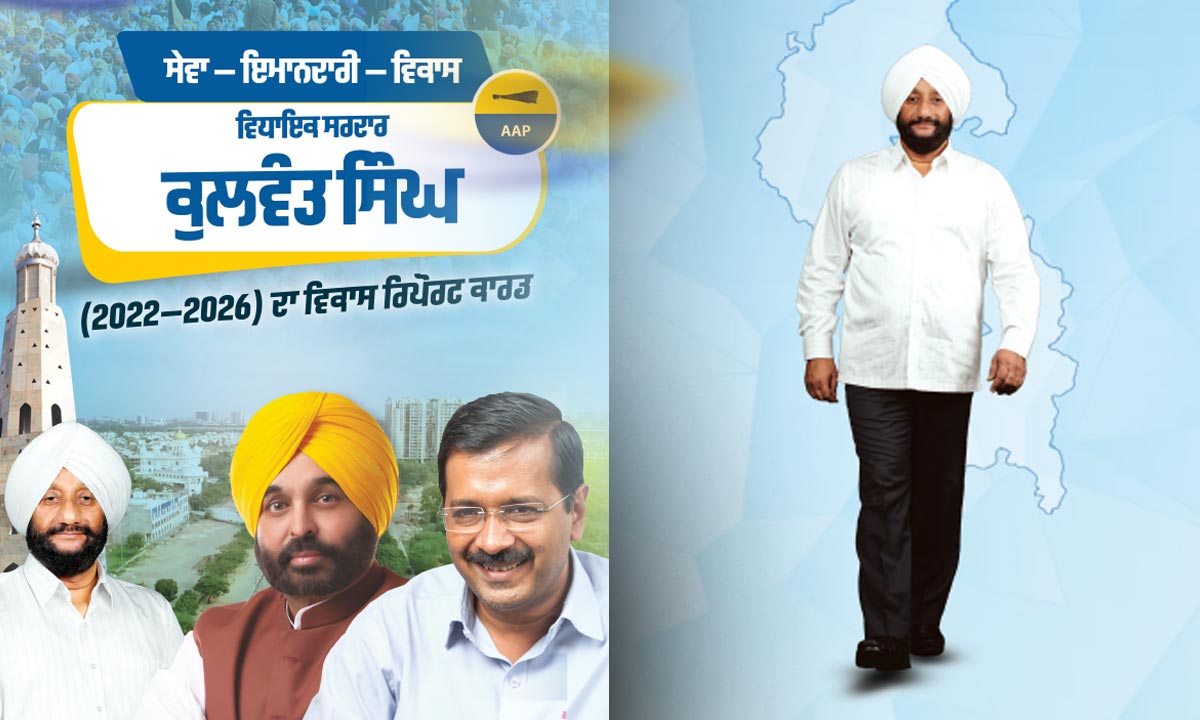
Four years ago, the people of Punjab gave a strong mandate with new hope and elected the Aam Aadmi Party government. Carrying forward that trust, today the government is working with a new vision and clean intent — where governance is not just about power, but about honest public service and ensuring equitable development for every section of society.
Under the leadership of Punjab Chief Minister Sardar Bhagwant Singh Mann, for the first time, the common citizen truly feels that the government stands with them, listens to them, and acts on their concerns.
Where earlier development works remained stuck in files and people had to struggle for their rights, today a clear transformation is visible in the system. Pending projects have moved forward, new projects have gained momentum, and accountability in governance has increased.
This change is clearly visible in the Mohali Assembly constituency as well. MLA Kulwant Singh has remained actively connected at the grassroots level over the past four years and has ensured that development is carried forward without showmanship, and that government schemes reach every section of society.
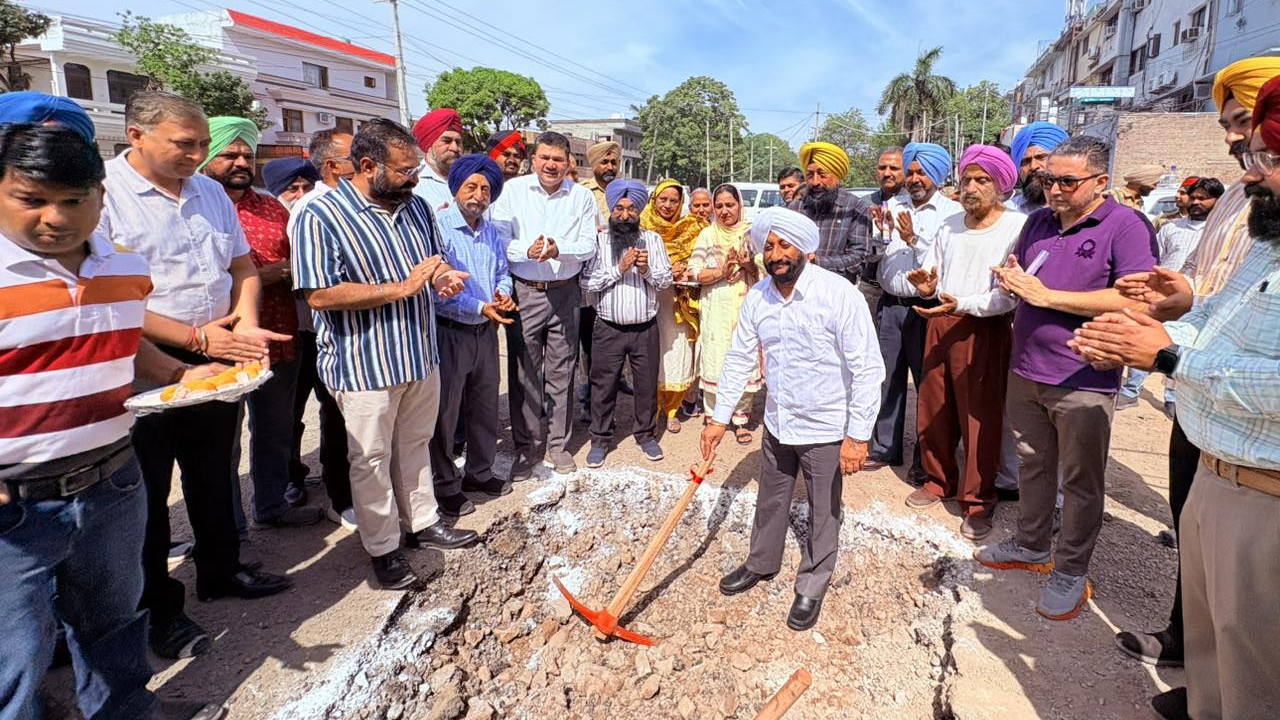
Today, development in Mohali is not limited to paperwork but is visible on the ground in the form of roads, education, healthcare services, basic amenities, and employment opportunities. Development has accelerated in both urban and rural areas, directly benefiting the people.
In this context, a detailed report card of the past four years of development in Mohali has been released, presenting work done across sectors in a structured manner.
Key Development Works (In Brief)
Infrastructure Development – Roads and Connectivity
Over the past four years, large-scale work has been undertaken on roads and connectivity in Mohali city and villages. 33 roads were completed at a cost of ₹19.62 crore, and 33 new roads worth ₹18.15 crore were approved. Additionally, repair, widening, and construction of roads across different parts of Mohali city were completed.
Education and Knowledge Infrastructure
To strengthen education, a new School of Eminence was constructed in Phase 11. Smart classrooms were introduced in government schools across Dau, Ramgarh, Gobindgarh, Chapparchiri Kalan, Chapparchiri Khurd, Phase 6, and Phase 11. Libraries costing ₹35 lakh each were also built in Mojpur, Bhagomajra, Bakarpur, Balongi, and Manakpur Kallar.
Improvement in Healthcare Services
The Advanced Liver Institute project was restarted, mohalla clinics were established, improvements were made in Civil Hospital using ₹30 lakh from personal funds, multiple dispensaries were upgraded, and thousands of people were connected with health insurance schemes up to ₹10 lakh.
Urban Infrastructure and Transport
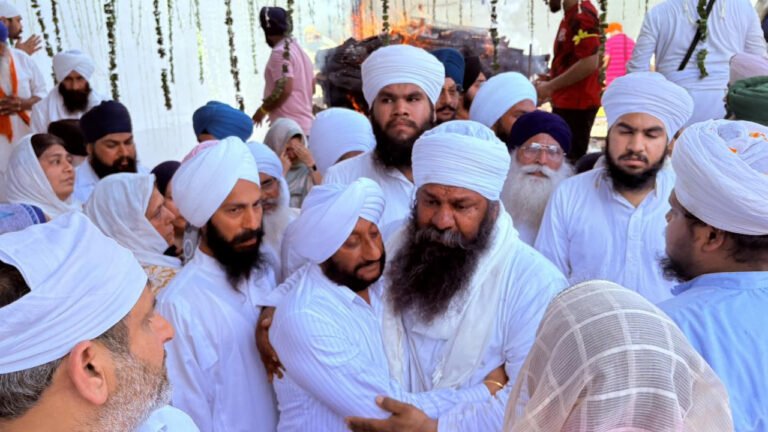
MLA Mohali Kulwant Singh Pays Tribute to Sant Baba Mahender Singh Ji at Final Farewell Ceremony
In a moment of deep sorrow and reverence, MLA Mohali Kulwant Singh today attended the final farewell ceremony…
Continue readingMore than 350 CCTV cameras were installed, an Integrated Command Center was set up in Sector 79, roundabouts were constructed at major intersections, roads were upgraded, airport connectivity improved, and expansion of bus services is ongoing.
Sewerage, Drainage, and Waste Management
A 15 MGD sewage treatment plant, ₹2 crore storm pipeline in Phase 11, and new sewer lines across Phase 3B2, Phase 1, Balongi, and other areas were developed. Drainage improvements and waste management projects strengthened sanitation systems.
Water Supply and Drainage Development
Work on water supply, UGSR facilities, urban pipelines, and drainage was undertaken. Ponds were cleaned in Bhagomajra, Ballomajra, Balongi, Landran, Mataur, and Sohana. New tubewells were installed in Dau, Ramgarh, Jujharnagar, Badmajra, Landran, Sohana, Siaau, Bakarpur, Alipur, Tdauli, Balongi, and Jagatpura to improve drinking water supply.
Power Supply and Infrastructure Strengthening
Under a ₹728 crore plan, power infrastructure was strengthened through substation upgrades, network improvements, better supply for industrial and IT sectors, and upgrading of transformers and feeders.
Law & Order, Public Safety, and Drug Control
Anti-drug campaigns with public participation were conducted, strict action was taken against offenders, and law and order was strengthened through CCTV monitoring, public hearings, and local dispute resolution.
Investment, Employment, and Economic Growth
Expansion of IT City and Aerocity, a ₹300 crore Infosys campus, expansion of municipal limits, development of new markets and commercial zones, and growth in employment opportunities have positioned Mohali as an emerging economic hub.
Women and Social Welfare
Under social welfare efforts, 32 families received up to ₹2 lakh per family under the Rangla Punjab scheme, 39 families received ₹1.20 lakh per family under PMAY, along with skill development, anganwadi improvements, and employment support through MGNREGA.
Workers and Sanitation Staff Welfare
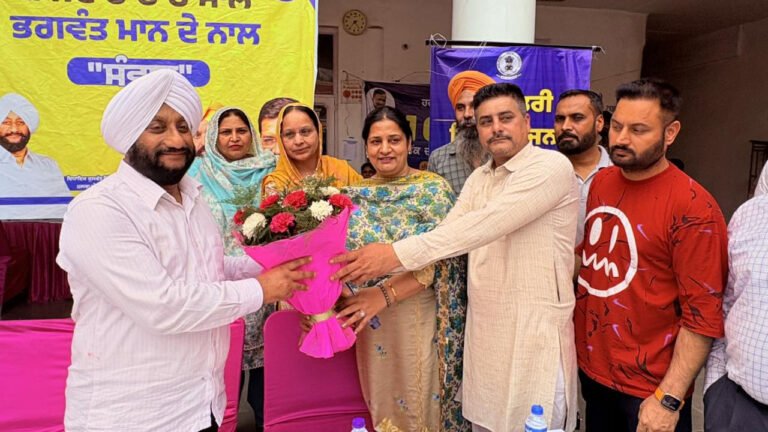
MLA Mohali Kulwant Singh Addresses ‘Dialogue’ Program in Madanpur, Highlights Four Years of Development
In a continued effort to connect with the public and share the progress of governance, MLA Mohali Kulwant…
Continue readingSteps were taken to improve safety, wages, and working conditions of sanitation workers, along with regular engagement to address their concerns.
Social and Religious Infrastructure
Over 57 families were provided houses through personal funds worth approximately ₹1 crore, 144 houses were upgraded with assistance exceeding ₹2.5 crore, and relief material was distributed during floods. Community halls and religious sites across Mohali were also upgraded.
Parks, Playgrounds, and Community Spaces
Sports grounds were developed, open gyms installed (Gige Majra, Manak Majra, Manakpur Kallar, Sector 70, etc.), parks improved, and playgrounds worth over ₹10 crore were constructed in more than 30 villages.
Disaster Management and Relief
Relief material was distributed through multiple trucks during the floods. Additionally, during normal times, assistance was provided through administrative coordination and collaboration with NGOs, along with a system for swift response in any emergency situation.
Governance and Grievance Redressal
Ground-level inspections and public outreach were carried out, enhancement charges were reduced, and key issues such as Motor Market delays, shortage of health staff, urban infrastructure, waste management, and group housing were raised in the Assembly. Coordination with GMADA and other departments was also undertaken to resolve urban issues, including traffic.
Conclusion
Over the past four years, Mohali has not just heard about change but has experienced it on the ground. Under the leadership of Chief Minister Sardar Bhagwant Singh Mann and the grassroots engagement of MLA Kulwant Singh, development has gained a new momentum.
Improvements in roads, healthcare, education, electricity, water, and employment have created new opportunities for the youth.
Today, Mohali stands on a strong foundation. The goal ahead is clear — to accelerate development further and ensure its benefits reach every village, every sector, and every family.
Building the Future.

Comments