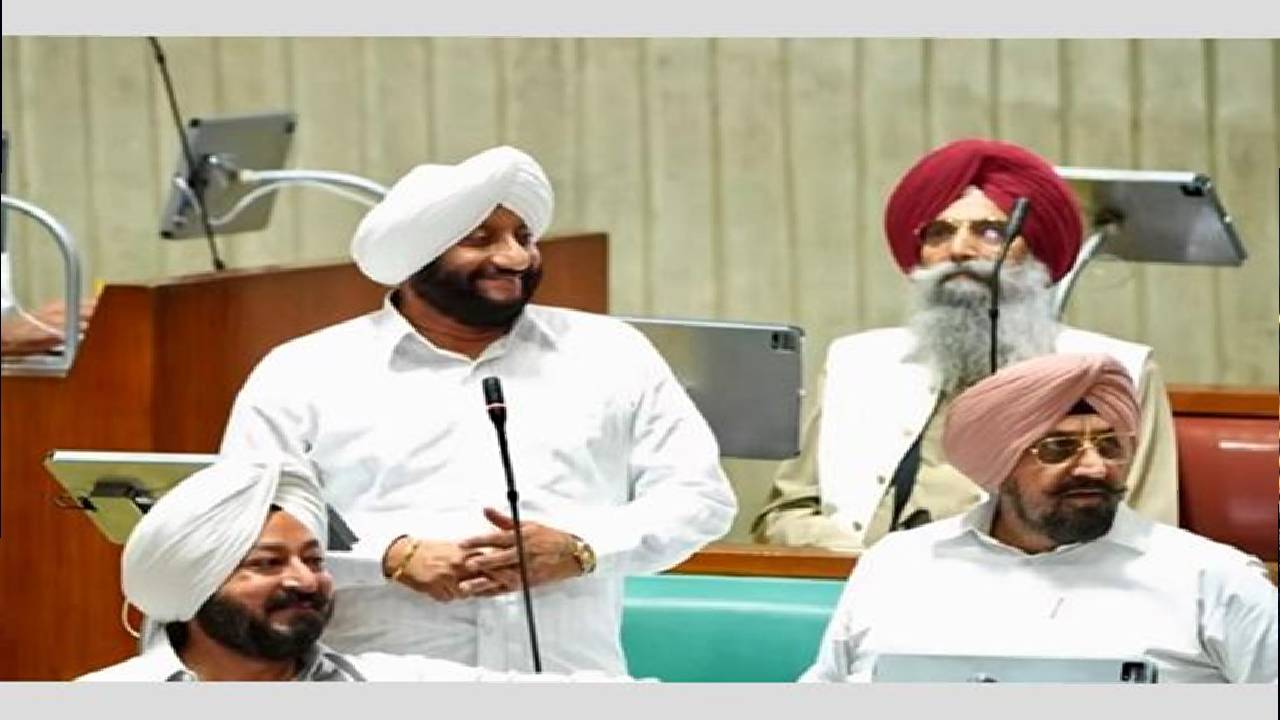
Mohali MLA Kulwant Singh raised the long-standing issue concerning residents of Low Income Group (LIG), Middle Income Group (MIG), Economically Weaker Section (EWS), and other government-developed housing schemes during the Punjab Assembly session, urging the state government to introduce a comprehensive Need-Based Housing Policy for residential flats.
While addressing the Assembly, MLA Kulwant Singh highlighted the practical challenges faced by thousands of families living in government-allotted housing colonies across Mohali. He stated that many residents have made minor structural modifications over the years to accommodate growing families and changing household requirements. However, in the absence of an updated policy, many such alterations remain outside the existing building regulations, creating uncertainty for homeowners.
He informed the House that the issue has remained unresolved for several years and continues to affect a large number of residents living in LIG, MIG, EWS, and other government housing projects. According to him, these modifications were undertaken primarily to meet genuine residential needs rather than for any commercial purpose.

Punjab Government Schools Get New Focus Under Mann Government’s Education Reforms
Punjab News: Government schools across Punjab have witnessed significant changes in recent years as the state government has…
Continue readingMLA Kulwant Singh said that residents have repeatedly approached public representatives seeking a practical and transparent policy that would permit need-based extensions and provide a mechanism for the regularisation of eligible constructions, while ensuring compliance with structural safety standards and urban planning regulations. He urged the government to adopt a balanced approach that protects planned development while addressing the legitimate concerns of homeowners.
He further noted that the proposed Need-Based Policy would provide much-needed clarity on issues relating to building approvals, property documentation, and the regularisation process. A clear policy framework, he said, would also help resolve difficulties faced by many homeowners in property transactions, financial services, and other legal formalities arising from deviations from the original building plans.
Speaking during the discussion, MLA Kulwant Singh emphasised that a transparent and citizen-centric policy would offer significant relief to middle-class and economically weaker families while strengthening confidence in the housing approval system. He added that any future policy should safeguard public safety, preserve planned urban development, and ensure adherence to essential construction norms.
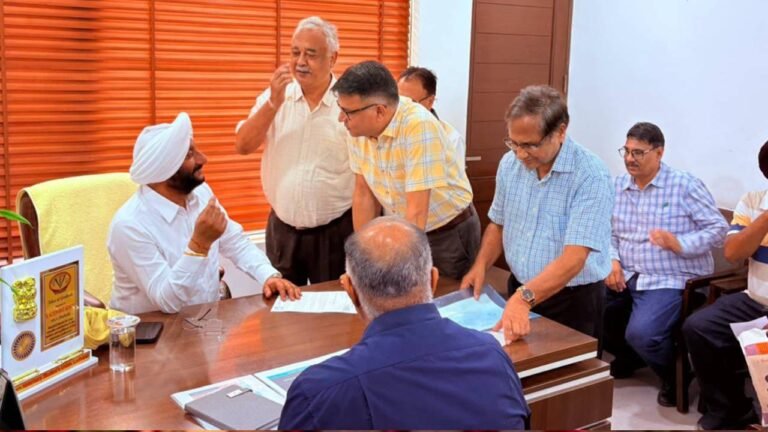
Kulwant Singh Interacts with Residents, Assures Resolution of Genuine Public Issues
Mohali: MLA Kulwant Singh met residents from different parts of the Mohali constituency during a public interaction programme…
Continue readingThe MLA also pointed out that several government-developed housing colonies in Mohali were built decades ago, and the original flat designs often no longer meet the space requirements of present-day families. As household sizes and living needs have evolved, many residents have found it necessary to undertake limited modifications to make their homes more functional and suitable for modern living.
The issue has remained a recurring concern among residents of several sectors in Mohali, where demands for a practical Need-Based Housing Policy have been consistently raised over the years. Housing and urban planning experts have also observed that a well-defined regulatory framework would help reduce unauthorised construction, encourage compliance with approved norms, and provide greater transparency in the approval process.
The discussion in the Punjab Assembly has renewed hope among residents that the government will consider introducing a revised policy to address these long-pending concerns. Although no final decision has been announced, the matter receiving attention at the legislative level is being viewed as a positive step towards resolving one of Mohali’s significant urban housing issues.
If implemented, the proposed Need-Based Housing Policy is expected to benefit thousands of homeowners by providing a transparent, regulated, and legally compliant framework for need-based modifications. The initiative would also simplify property-related procedures, facilitate smoother documentation, and strengthen confidence among residents living in government-developed housing colonies across Mohali.


Comments