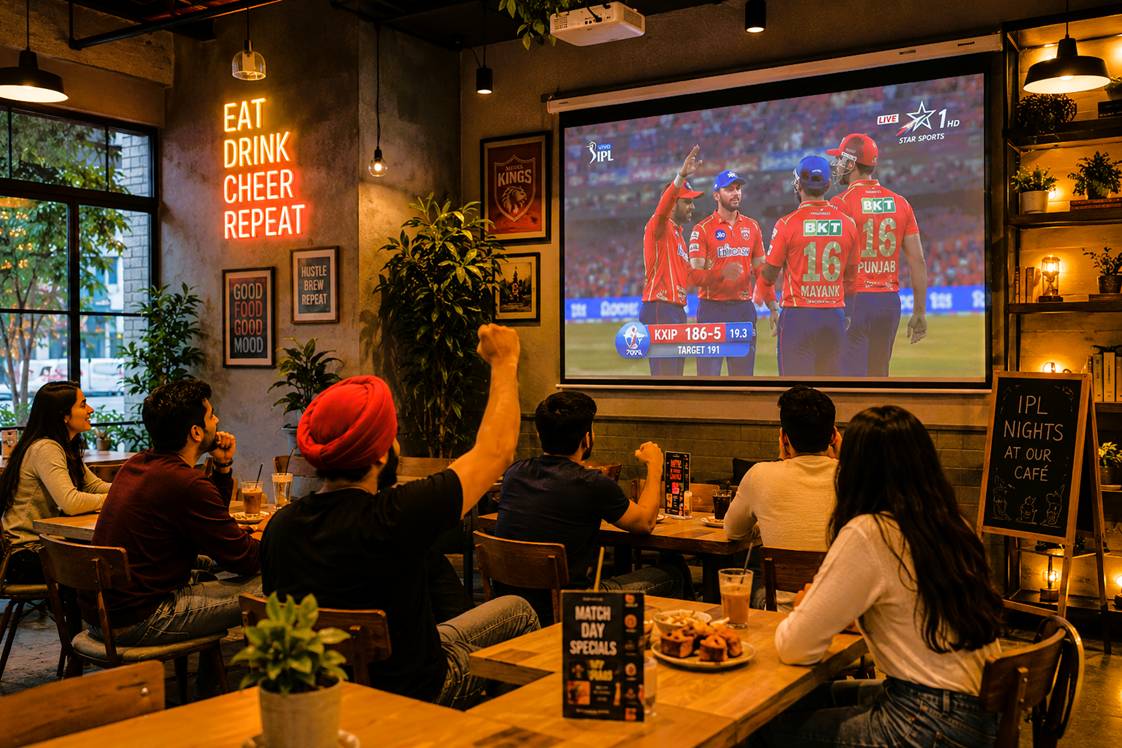
There are two versions of Mohali cafés during IPL season.
The normal version lasts till around 6 PM — people working on laptops, small meetings happening over coffee, couples sitting quietly in corners, somebody pretending to study while scrolling Instagram for forty minutes straight.
And then the toss happens.
Suddenly, entire cafés begin changing personality. Chairs get dragged closer to projector screens. Staff members start adjusting volume levels like match technicians. Friend groups arrive five minutes before the first over as if they’re entering an actual stadium. Orders become louder. Reactions become public. And for the next three hours, half the café behaves like it collectively owns the cricket team playing that night.
The IPL hasn’t just become something Mohali watches anymore.
It has become something the city socially experiences together.
Over the last few years, café screening culture has quietly exploded across Mohali and the tricity. During big matches — especially Punjab Kings games, CSK matches, RCB games, or India-heavy rivalries — cafés stop functioning like cafés and start operating like mini sports arenas with coffee machines.
People don’t even go only for cricket now.
They go for the atmosphere.
That’s the real shift.
Mohali’s New Weekend Entertainment Isn’t Planned Anymore — It’s Whatever Pop-Up Event Everyone Suddenly Shows Up To
Somebody suddenly uploads an Instagram story from a rooftop flea market. Another person shares a café hosting a…
Continue readingBecause in Mohali, IPL nights are less about sitting silently and watching a game and more about participating in a social event. Somebody keeps explaining fantasy league points nobody asked about. One person becomes emotionally unstable every over. Someone screams “out hai!” before the umpire even reacts. Another group starts chanting player names like they personally trained them in childhood.
And somehow complete strangers begin talking to each other by the second innings.
The city’s café culture was almost designed for this kind of entertainment.
Mohali already had the ingredients — open seating spaces, rooftop cafés, projector-friendly interiors, young crowds, and a population that loves both cricket and social outings equally. IPL simply merged everything together.
Now entire weekends are planned around match schedules.
You can actually feel the difference in the city on major match nights. Roads become slightly emptier during big overs. Delivery orders spike during innings breaks. Last-minute calls start happening around 7:15 PM:
“Screening kidhar dekhni hai?”
“Kis café mein crowd acha hai?”
“Reservation karwai?”
And the funniest part is that people often spend more time reacting to each other than the actual match itself.
Some groups barely watch the game continuously. Half the entertainment comes from arguments, memes, overreactions, score predictions, and dramatic declarations after every wicket. One six changes the entire mood of the table. One dropped catch ruins ten minutes for somebody emotionally invested far beyond reasonable limits.
That’s what IPL culture in Mohali has become:
part cricket,
part social gathering,
part public drama.
Even cafés understand this now.
Why Mohali’s Gen-Z Is Choosing Karaoke Nights, Open Mics & Activity Cafés Over Clubs
The loudest nights in Mohali are no longer happening inside clubs. They’re happening inside karaoke rooms, tiny cafés,…
Continue readingMany places no longer treat screenings as side activities. During IPL season, screenings become the main attraction. Bigger screens appear. Special menus get introduced. Outdoor seating fills faster. Some cafés almost turn into fan zones with cheering crowds, coordinated jerseys, and tables booked hours in advance.
And unlike traditional nightlife, IPL café culture feels open to everyone.
College students come. Corporate employees show up after work. Couples treat screenings like casual date nights. Entire friend groups land up in matching team colors. Even people who barely follow cricket end up getting pulled into the energy because the atmosphere itself becomes entertaining.
Social media has amplified this culture massively.
Every major match night now creates its own visual language across Mohali. Neon café lights. Slow-motion crowd reactions. Boomerangs of cheering tables. Stories with Punjabi songs layered over sixes. Somebody filming the exact moment an entire café explodes after a last-over finish.
For a few hours, cricket stops being background entertainment.
It becomes the city’s collective mood.
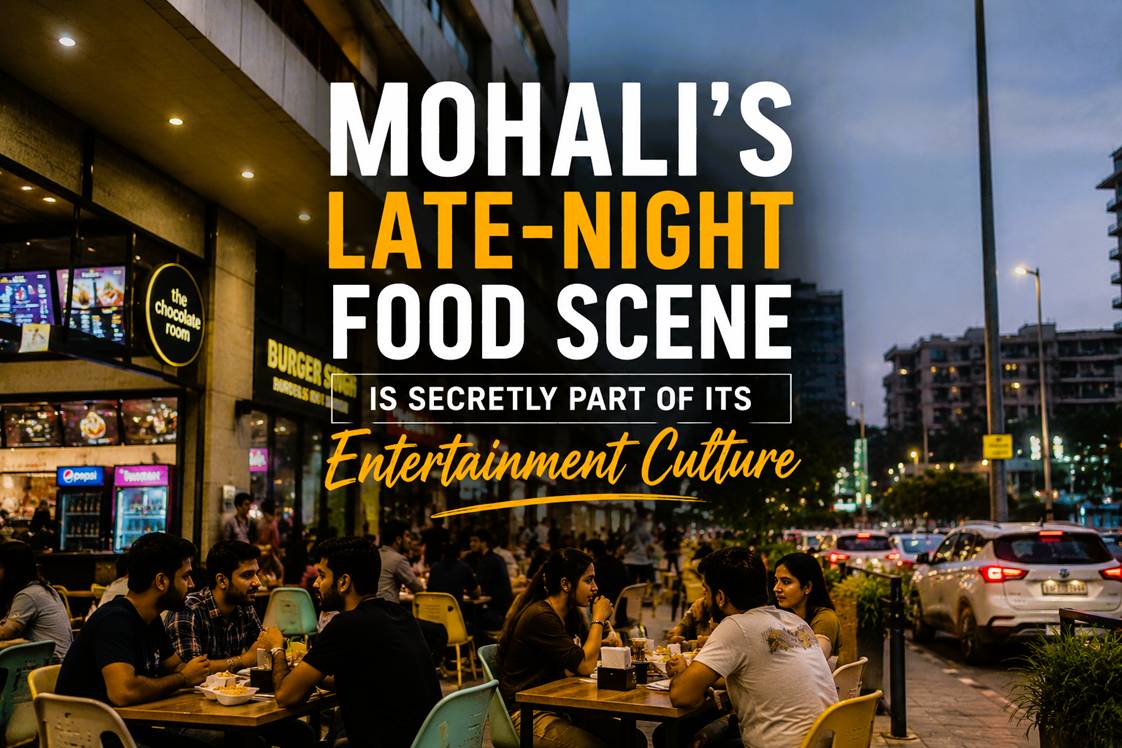
And maybe that’s why IPL season feels unusually alive in Mohali compared to many other cities. The tricity already has the social infrastructure for shared entertainment — cafés, open spaces, rooftop culture, late-night food, and highly active youth crowds. Cricket simply gives everyone a reason to gather at the same time.
By the final overs, most cafés no longer feel like cafés anyway.
They feel like temporary stadiums built out of coffee cups, projector screens, loud opinions, and emotional overinvestment in teams people promised they’d stop supporting years ago. And the next evening, the entire cycle starts again.

Comments