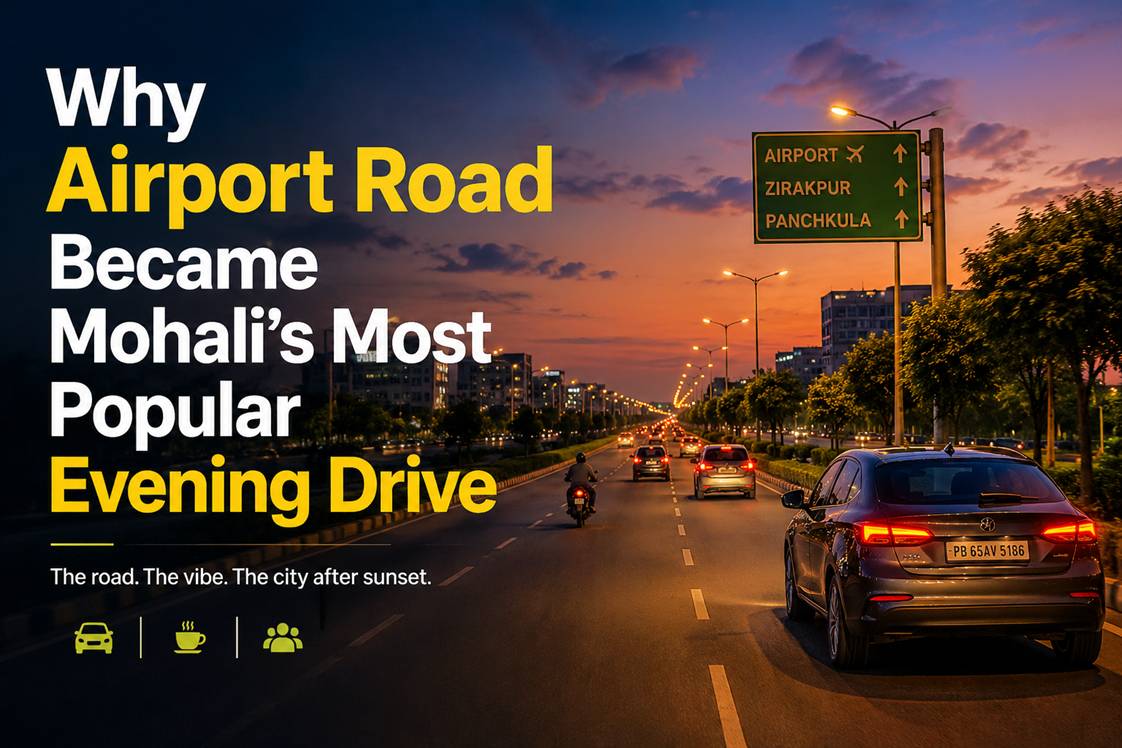
For a city that doesn’t have a Marine Drive, a Bandstand, or massive public plazas, Mohali created its own version of an evening social route — and it happened on a road.
Not inside a mall.
Not around a monument.
Not even around a specific destination.
Just long stretches of wide lanes, moving headlights, tea stops, parked conversations, and people driving with nowhere urgent to be.
That road became Airport Road.
Somewhere over the years, it stopped feeling like just infrastructure.
It started feeling like part of Mohali’s social life.
After sunset, the behavior of the road changes completely.
Office traffic fades.
Music gets louder inside cars.
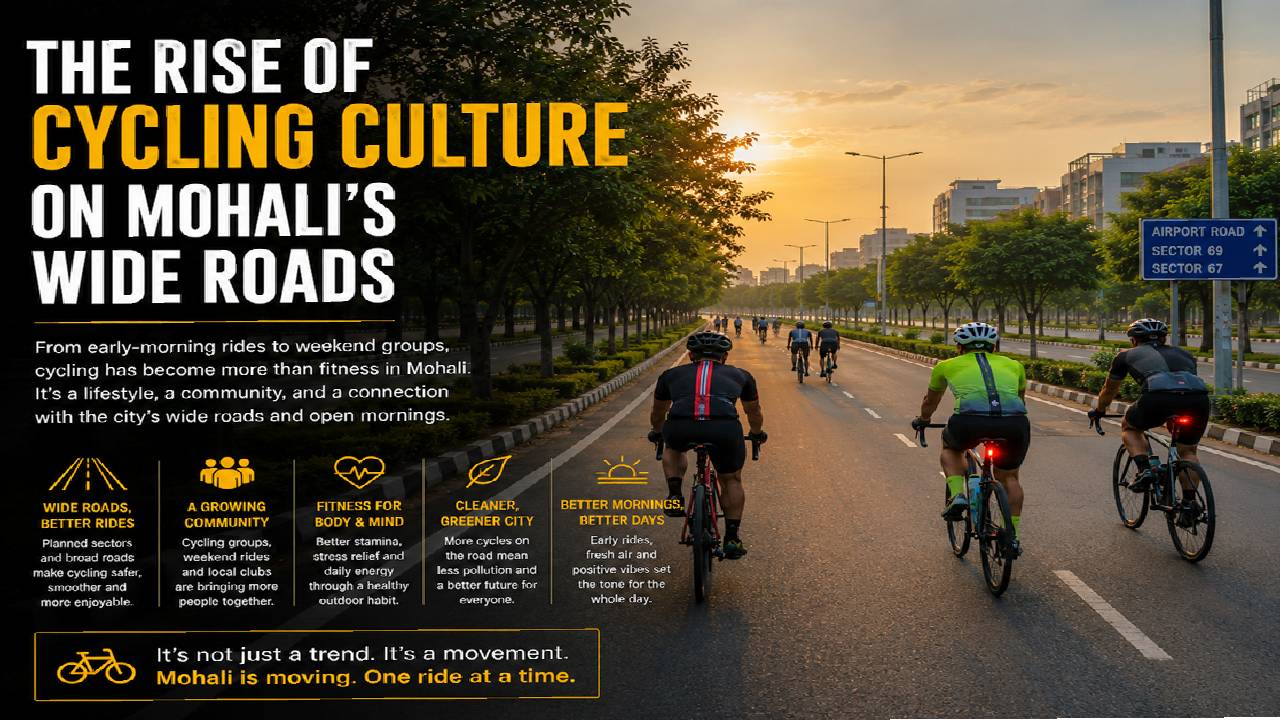
Groups on bikes start appearing near service roads.
People slow down instead of rushing home.
Friends go out “just for one round” and somehow stay out for hours.
And without officially planning it that way, Mohali turned a road into one of its biggest public spaces.
That’s what makes Airport Road culturally interesting.
People don’t come here for one attraction.
They come for the feeling of movement.
For many young people in Mohali, especially in a city built around sectors and wide urban spacing, the evening drive became its own social routine.
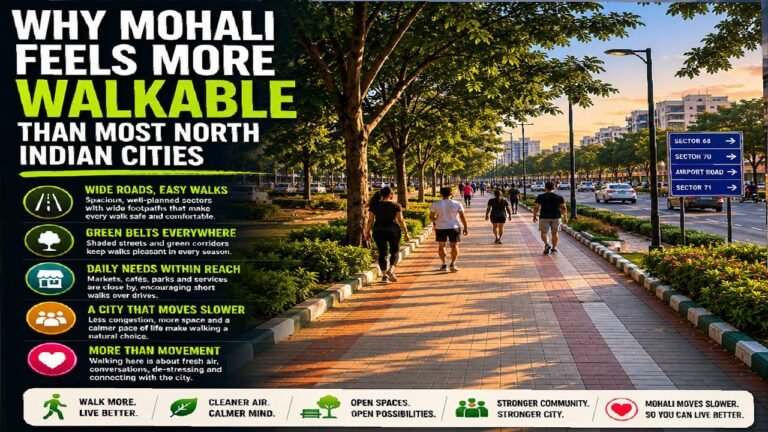
Why Mohali Feels More Walkable Than Most North Indian Cities
In most North Indian cities, walking often feels like compromise. You walk because traffic is impossible.Because parking is…
Continue readingNot everybody wants crowded cafés or loud nightlife every day.
Sometimes people just want:
music,
cold air through half-open windows,
a quieter city,
and someone sitting in the passenger seat while the road keeps moving.
Airport Road quietly became the place for that.
Part of it comes from the design of the road itself.
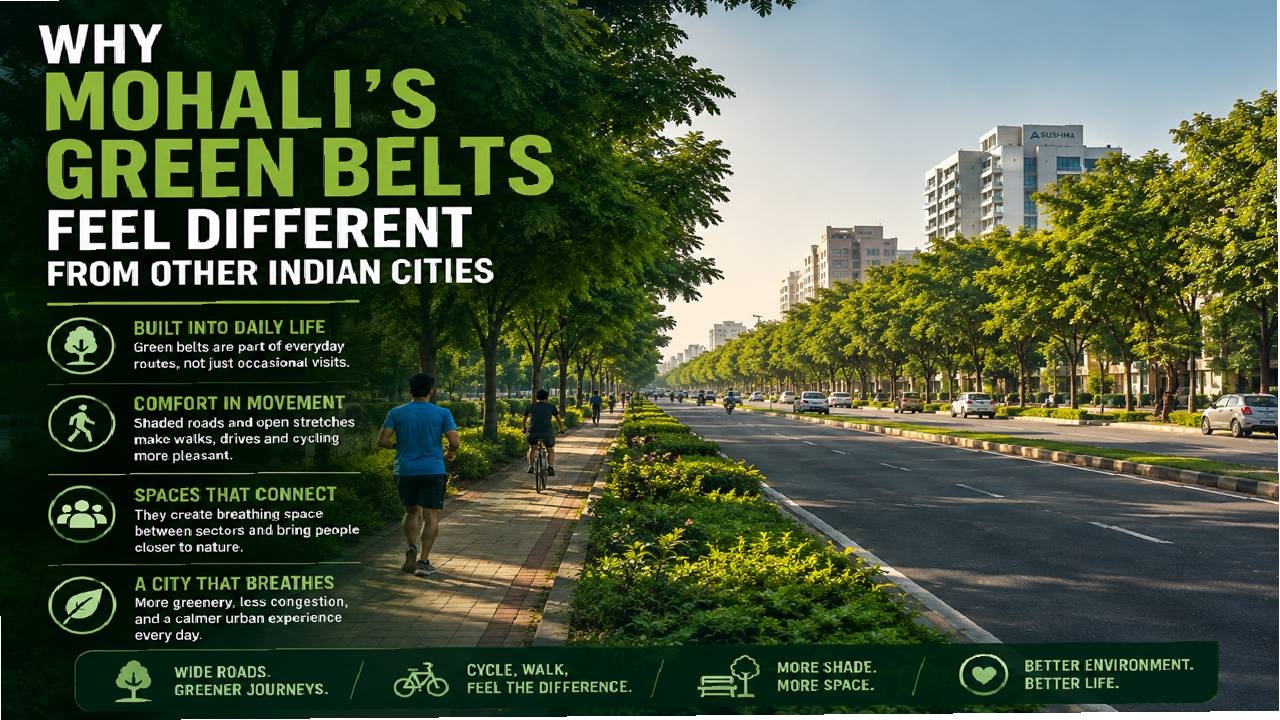
Unlike older Indian city roads that feel compressed and chaotic, Airport Road feels visually open. The width of the lanes, central greens, cleaner stretches, lighting, and smoother traffic flow create a completely different psychological experience.
You don’t feel trapped on the road.
You feel relaxed on it.
That emotional difference matters more than people realize.
In many cities, driving feels exhausting.
In Mohali, this road slowly became associated with decompression.
You see it in the routines people have built around it.
Quick chai stops near the side lanes.
Late-night food runs.
Cars parked briefly for conversations.
Groups pulling over after dinner.
Bike riders taking repeated loops.
People driving slower than necessary just to stay outside a little longer.
The road created its own rhythm.
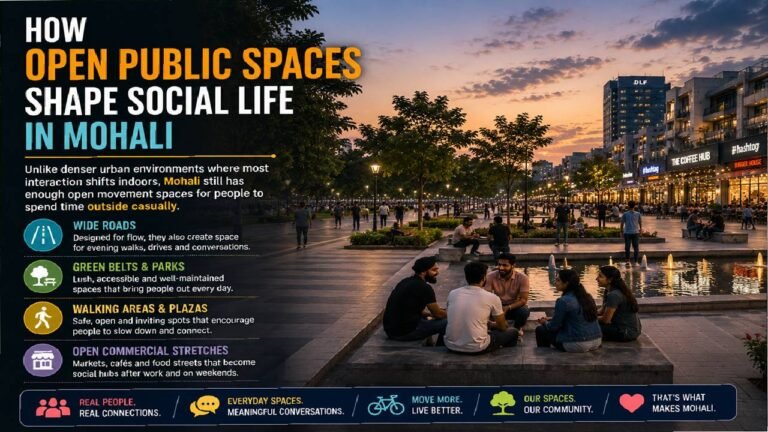
How Open Public Spaces Shape Social Life in Mohali
Unlike denser urban environments where most interaction shifts indoors, Mohali still has enough open movement spaces for people…
Continue readingAnd unlike malls or commercial spaces, Airport Road offers something with very little pressure attached to it.
You don’t need reservations.
You don’t need to spend money constantly.
You don’t even need a plan.
You can simply exist there.
That’s why the road feels emotionally different from most public spaces in the city.
It became one of the few places where people could feel social without needing an event, a purpose, or a destination.
For a generation dealing with constant notifications, crowded schedules, and indoor routines, the evening drive became a surprisingly important form of urban escape.
Not dramatic.
Not cinematic in a Bollywood way.
Just deeply familiar.
A long road.
Good music.
Streetlights reflecting on the windshield.
A food stop somewhere along the way.
And the comfort of staying outside the house a little longer before the night ends.
That’s the real reason Airport Road became Mohali’s most popular evening drive.
The road was built for movement.
But the city slowly turned it into an emotion.

Comments