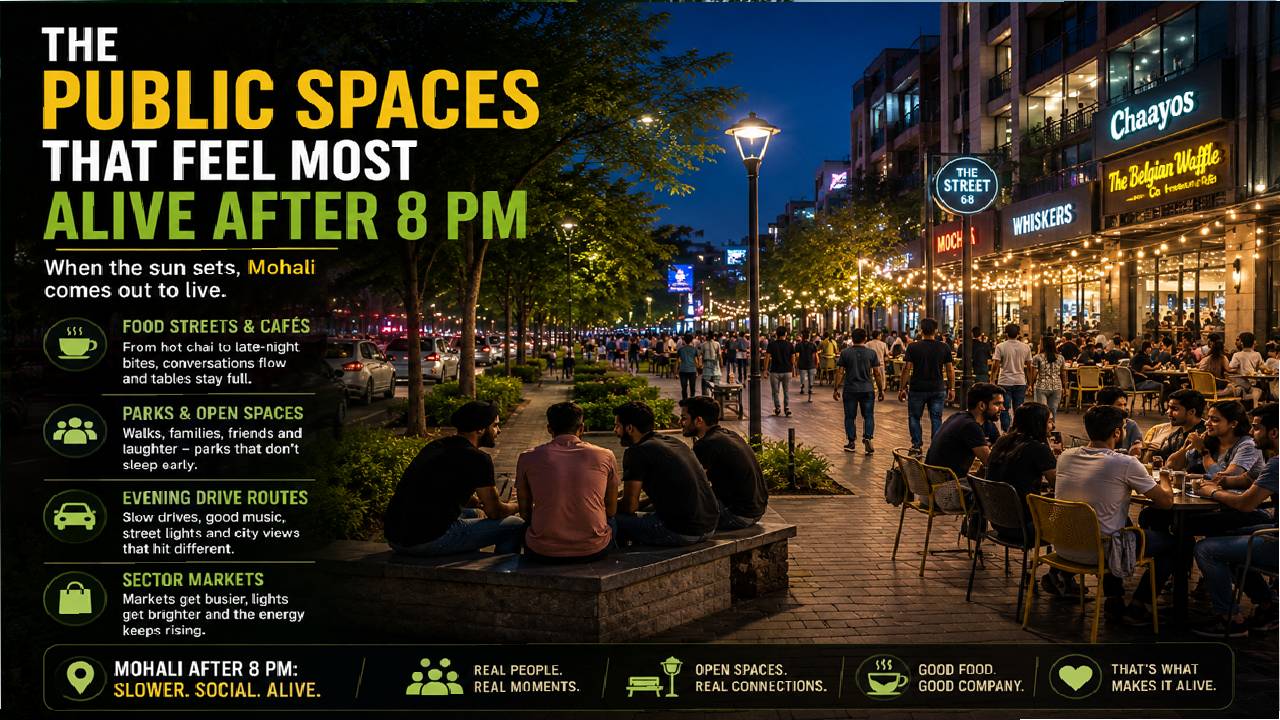
Mohali changes character after 8 PM.
During the day, the city feels functional — offices, schools, coaching institutes, traffic movement, errands, and routine activity dominate most public spaces. But once the evening settles in, a different version of the city slowly takes over.
Certain roads become more social than commercial. Parks remain active longer than expected. Food streets start filling up. Sector markets get louder. Open sitting spaces suddenly feel occupied by groups that weren’t there an hour earlier.
The interesting part is that Mohali’s nighttime public life is not concentrated in one entertainment district.
It spreads across multiple everyday spaces.
That’s what makes the city feel different from larger metro nightlife cultures. People here are not always looking for events, clubs, or planned outings. Most public activity after 8 PM revolves around casual presence.
People driving without urgency.
Friends standing around parked cars.
Families walking after dinner.
Students gathering after coaching classes.
Young professionals sitting outdoors before heading home.
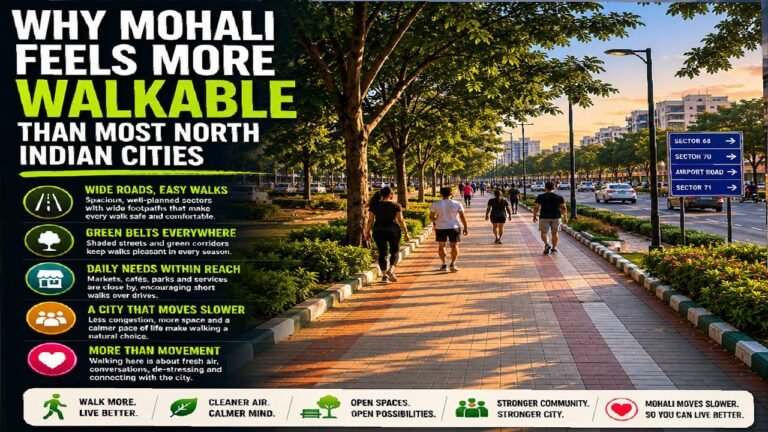
Why Mohali Feels More Walkable Than Most North Indian Cities
In most North Indian cities, walking often feels like compromise. You walk because traffic is impossible.Because parking is…
Continue readingThe city becomes slower and more conversational.
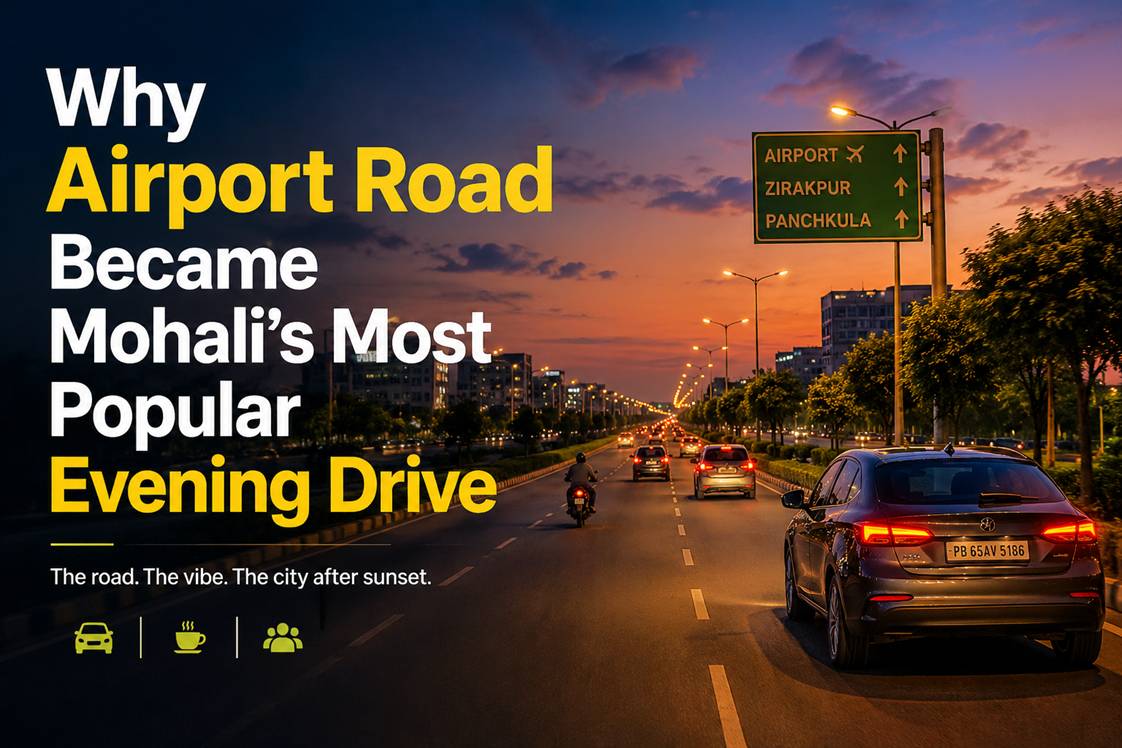
You can especially notice this around active sectors like 68, 70, parts of Airport Road, food streets, and larger public parks that stay busy during late evening hours. These spaces begin functioning less like transit zones and more like temporary social environments.
Even simple activities feel different at night.
Tea stalls become discussion spots.
Ice cream counters attract long queues.
Public benches stay occupied longer.
Wide roads turn into slow-drive routes instead of fast-connectivity corridors.
People start using the city emotionally instead of functionally.
That shift matters because modern urban life is becoming increasingly indoor and isolated. Most daily routines happen inside offices, apartments, malls, or on screens. Public nighttime spaces still provide opportunities for unplanned interaction.
You run into familiar faces unexpectedly.
Conversations continue longer outdoors.
Groups change plans spontaneously.
People stay outside simply because the atmosphere feels active.
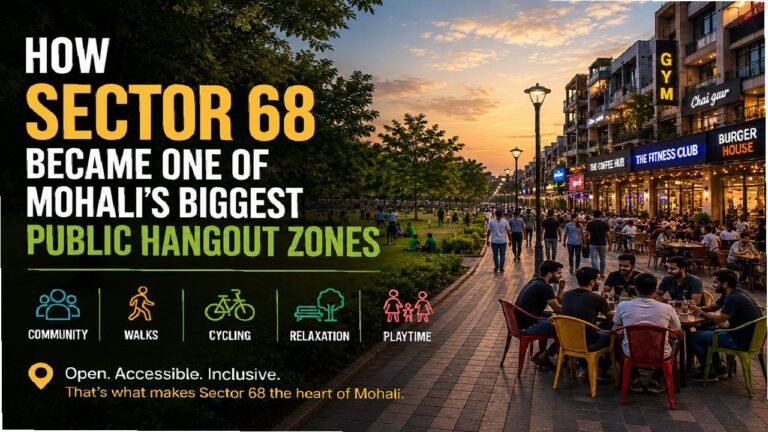
How Sector 68 Became One of Mohali’s Biggest Public Hangout Zones
A lot of public spaces in cities are planned intentionally. Sector 68 doesn’t feel like one of them.…
Continue readingThat unpredictability creates energy.
And unlike highly commercial nightlife in bigger cities, Mohali’s after-8 PM culture still feels relatively accessible. A lot of it exists in open public spaces rather than inside exclusive venues.
That’s why the atmosphere feels relaxed instead of performative.
People are not necessarily trying to “go out.”
They are just extending the day a little longer.
Over time, these repeated nighttime routines created their own version of public culture in Mohali. The city developed spaces that residents subconsciously associate with movement, conversation, food, drives, and outdoor social life after dark.
And even though Mohali is still considered quieter than many major cities, its public spaces after 8 PM rarely feel empty anymore. They feel lived in.

Comments