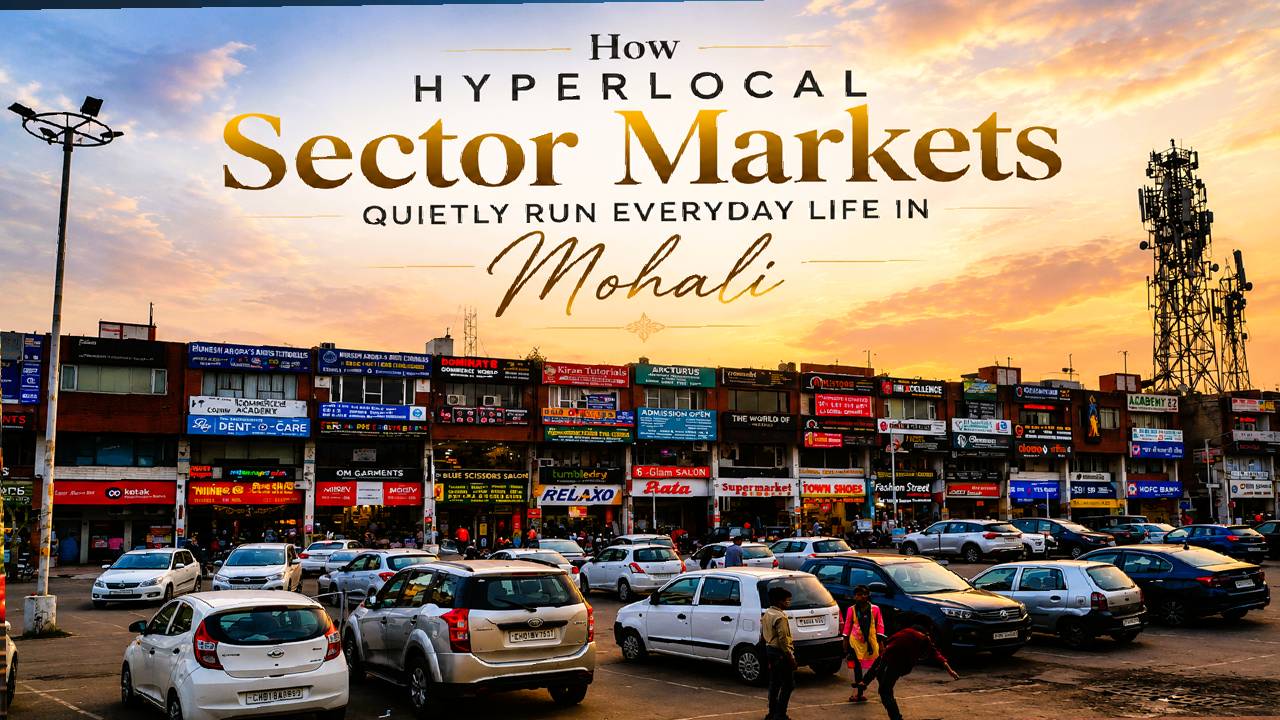
A resident runs out of milk at 8 PM.
Someone remembers they need medicines before the next morning.
A school project suddenly requires chart paper.
A gas lighter stops working.
A birthday cake needs to be picked up.
A parcel has arrived.
A shirt needs ironing.
A phone charger has stopped working.
In Mohali, most of these problems are solved within a five-minute walk.
Not because of a mall.
Not because of a major shopping destination.
But because almost every sector has a small market quietly handling the practical needs of everyday life.
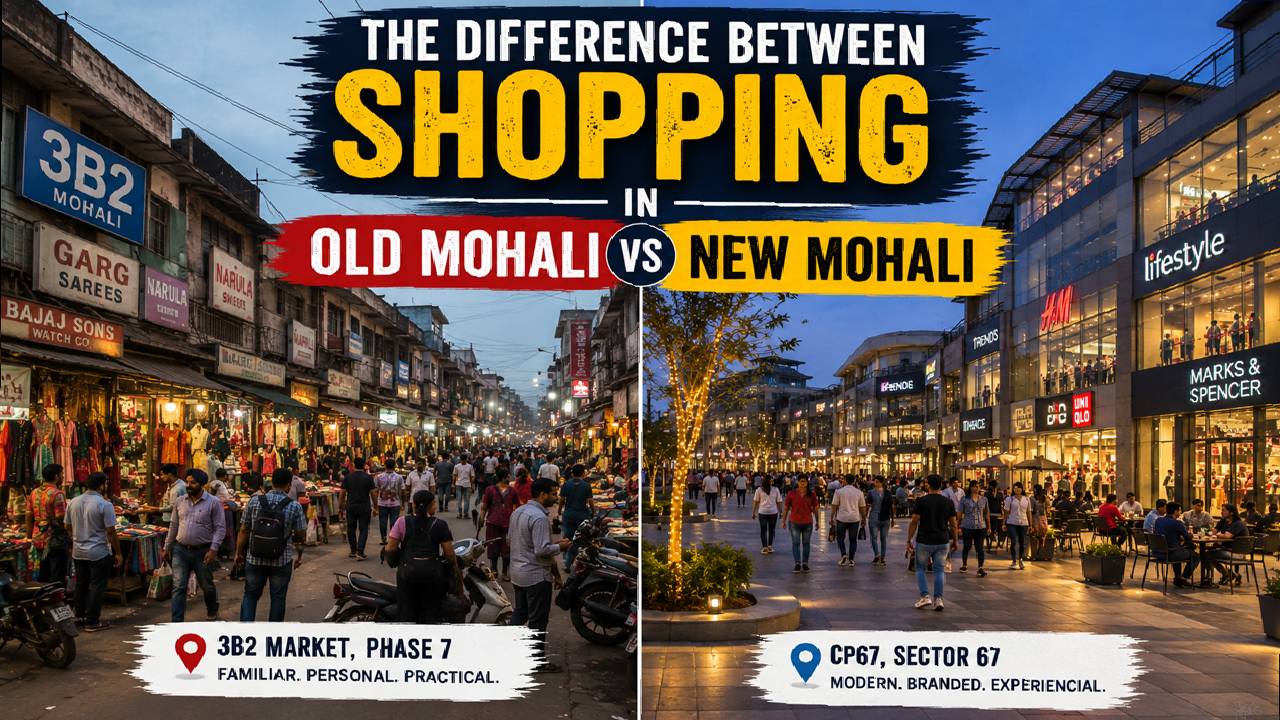
These markets rarely become part of conversations about the city. When people discuss shopping in Mohali, attention usually goes to places like 3B2, Sector 70, CP67, or newer commercial developments. They are more visible, more crowded, and easier to notice.
How Aerocity Is Building Mohali’s Next Shopping & Lifestyle Hub
For years, Mohali’s shopping map was relatively easy to understand. If you wanted established retail, you went to…
Continue readingYet the markets that residents use most frequently are often the ones closest to home.
Across Mohali, dozens of small commercial pockets sit inside or alongside residential sectors. Most are modest in scale. A row of booths. A handful of shops. A bakery. A chemist. A grocery store. A dairy booth. Maybe a salon, a stationery shop, and a small restaurant.
Nothing about them feels extraordinary.
Until you imagine the city without them.
Suddenly, every forgotten item becomes a longer journey. Every small errand requires getting into a vehicle. Every neighborhood loses a piece of its daily convenience.
That’s what makes these markets important.
They don’t attract people from across the city.
They serve the people who already live there.
And because of that, they become deeply woven into everyday routines.
The relationship residents have with these markets is different from the relationship they have with larger retail destinations. People don’t visit because they want an experience. They visit because life keeps generating small needs throughout the day.
The market becomes an extension of home.
Parents stop there while returning from school pickups. Office-goers visit on their way back from work. Elderly residents take evening walks that conveniently include a few purchases. Children are sent to buy bread, milk, or stationery.
Over time, the same faces keep appearing.
The bakery owner knows which family buys birthday cakes every year.
How Sector 82 Became Mohali’s Fastest Growing Retail Zone
Ten years ago, very few people would have described Sector 82 as one of Mohali’s important shopping destinations.…
Continue readingThe chemist recognizes regular customers before they reach the counter.
The fruit vendor notices when someone hasn’t visited for a few days.
These interactions are small, but they create something larger.
Familiarity.
And familiarity is one of the reasons Mohali continues to feel more neighborhood-oriented than many rapidly growing cities.
The city’s sector planning unintentionally helped create this culture. Instead of concentrating all commerce into a few large retail zones, Mohali evolved with dozens of distributed commercial pockets. Residents learned to depend on local markets first and larger destinations second.
Even today, most people probably visit their nearest sector market far more often than they visit a mall.
Which makes an interesting point.
The places that define a city’s image are not always the places that define how the city actually functions.
3B2 may shape Mohali’s retail identity.
CP67 may represent its newer lifestyle ambitions.
But the small sector markets scattered across the city quietly keep daily life moving.
And for most residents, they remain the most important shops in town.
This style feels much more like your strongest Public Spaces articles: it begins with a relatable urban observation, builds a narrative, and then arrives at the insight, rather than listing points one after another.

Comments