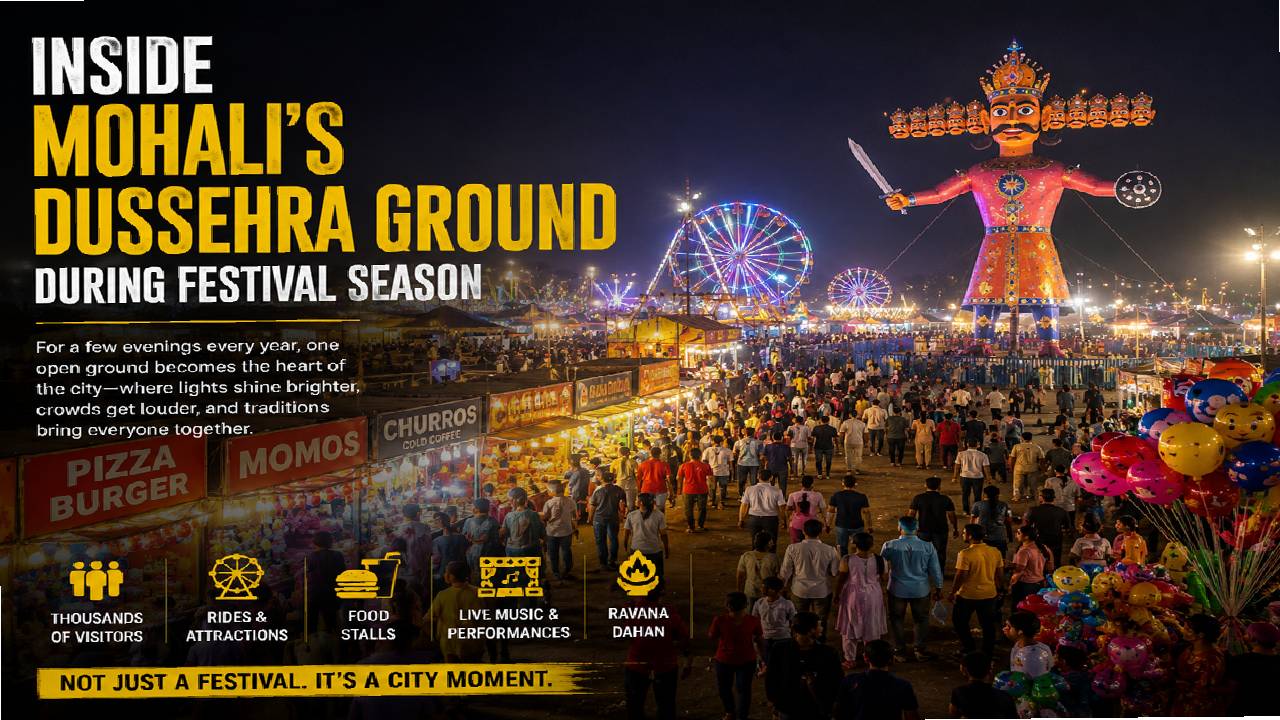
There’s a very specific moment when you realize Dussehra season has started in Mohali.
Not because of the calendar.
Because suddenly, empty grounds stop looking empty.
Metal ride structures begin appearing overnight.
Temporary lights start covering entry gates.
Food stalls line up along the edges.
Workers test giant speakers in the afternoon heat.
And every evening, more people start showing up “just to see what’s happening.”
Within a few days, the entire space transforms.
What was previously just an open ground becomes one of the busiest places in the city.
That transformation is the real story.
Because Mohali’s Dussehra grounds don’t operate like normal public spaces.
For most of the year, they stay quiet and functional.
During festival season, they become temporary cities.
You can feel it immediately after entering.
Children pulling parents toward giant rides before even crossing the gate properly.
Teenagers treating the mela like a social event more than a religious one.
Groups taking slow rounds without buying anything immediately.
Street food smoke mixing with loud Bollywood remixes from ride speakers.
Everything feels overstimulated in the best possible way.
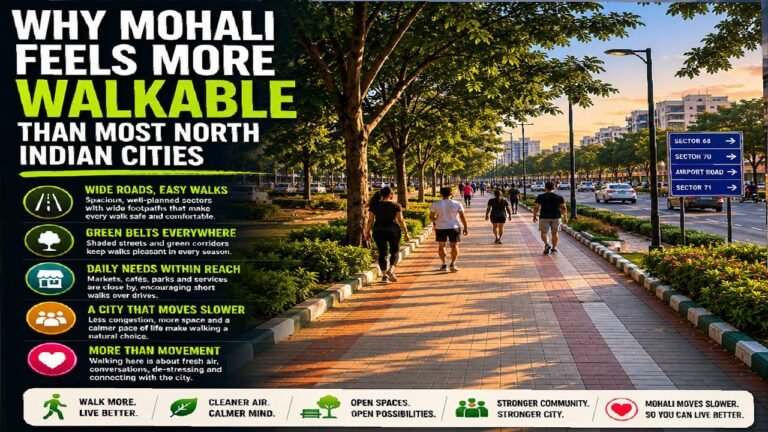
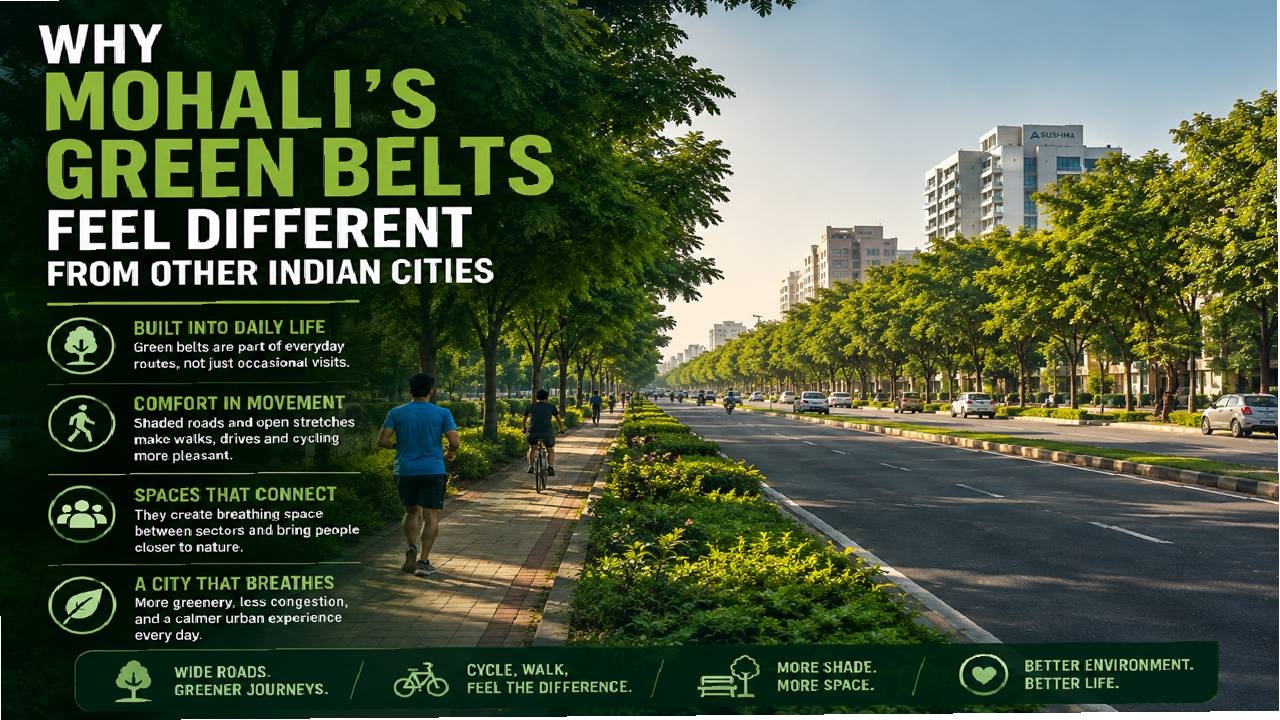
Why Mohali Feels More Walkable Than Most North Indian Cities
In most North Indian cities, walking often feels like compromise. You walk because traffic is impossible.Because parking is…
Continue readingAnd unlike malls or planned entertainment zones, there’s something slightly chaotic about the atmosphere.
That’s exactly why people enjoy it.
The grounds feel temporary.
Unpredictable.
Alive.
One evening, the place feels packed beyond capacity.
Another evening, it feels slower and more local.
Every visit feels slightly different.
That unpredictability is becoming rare in modern city life where most experiences are controlled, polished, and algorithmically repetitive.
Dussehra grounds still feel human.
People get lost in crowds.
Children disappear toward game stalls for five minutes and cause panic.
Someone always spends more money than planned.
Groups randomly run into people they haven’t seen in years.
The ground creates accidental interaction.
And maybe that’s why the atmosphere feels emotionally bigger than the festival itself.
Because for a few evenings every year, Mohali stops behaving like a structured city.
The sectors blur together.
Different age groups occupy the same space.
The city becomes noisier, slower, more public.
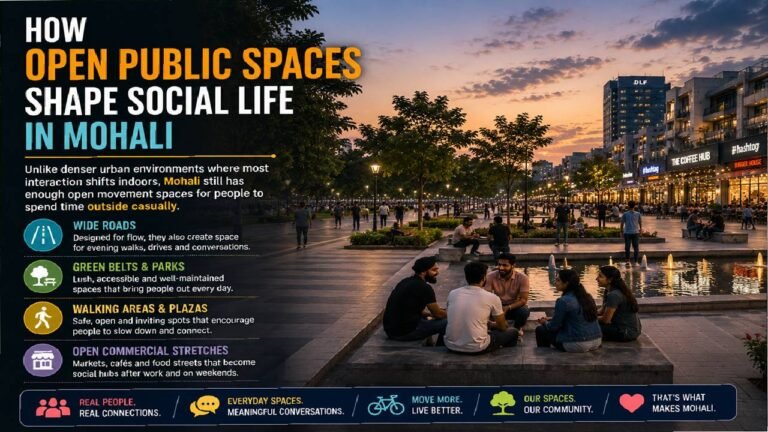
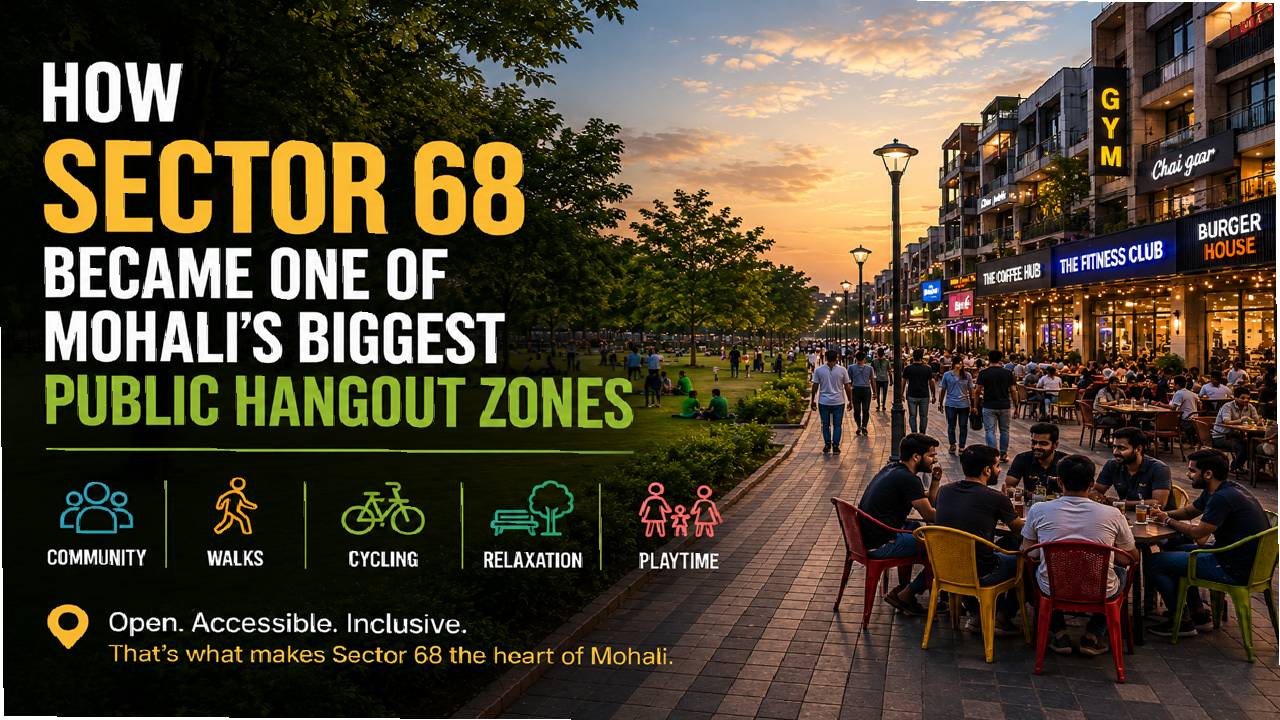
How Open Public Spaces Shape Social Life in Mohali
Unlike denser urban environments where most interaction shifts indoors, Mohali still has enough open movement spaces for people…
Continue readingEven people who don’t care much about Dussehra still end up visiting.
Not necessarily for Ravana dahan.
For the experience around it.
The lights.
The food.
The movement.
The feeling that something larger than daily routine is happening.
That collective energy is difficult to replicate digitally.
And in a time where most entertainment is personalized through screens, Dussehra grounds still force a shared public experience.
Everybody watches the same fireworks.
Walks through the same crowd.
Waits in the same food lines.
For a few hours, the city experiences the same atmosphere together.
That’s why Mohali’s Dussehra grounds remain culturally important.
Not just because festivals happen there.
But because they temporarily bring back something cities are slowly losing: shared public excitement.

Comments