As urban life becomes increasingly indoor and screen-based, parks have quietly become one of the few remaining public spaces where people can casually exist around others.
That shift is clearly visible across Mohali.
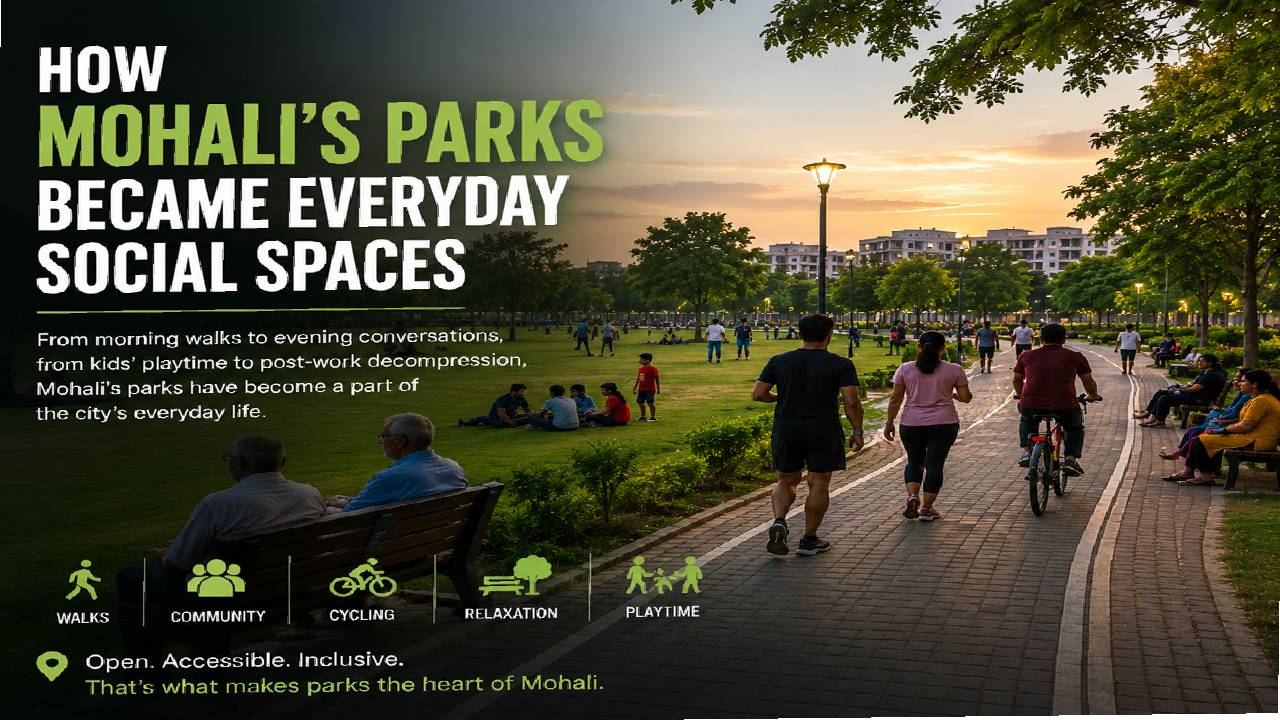
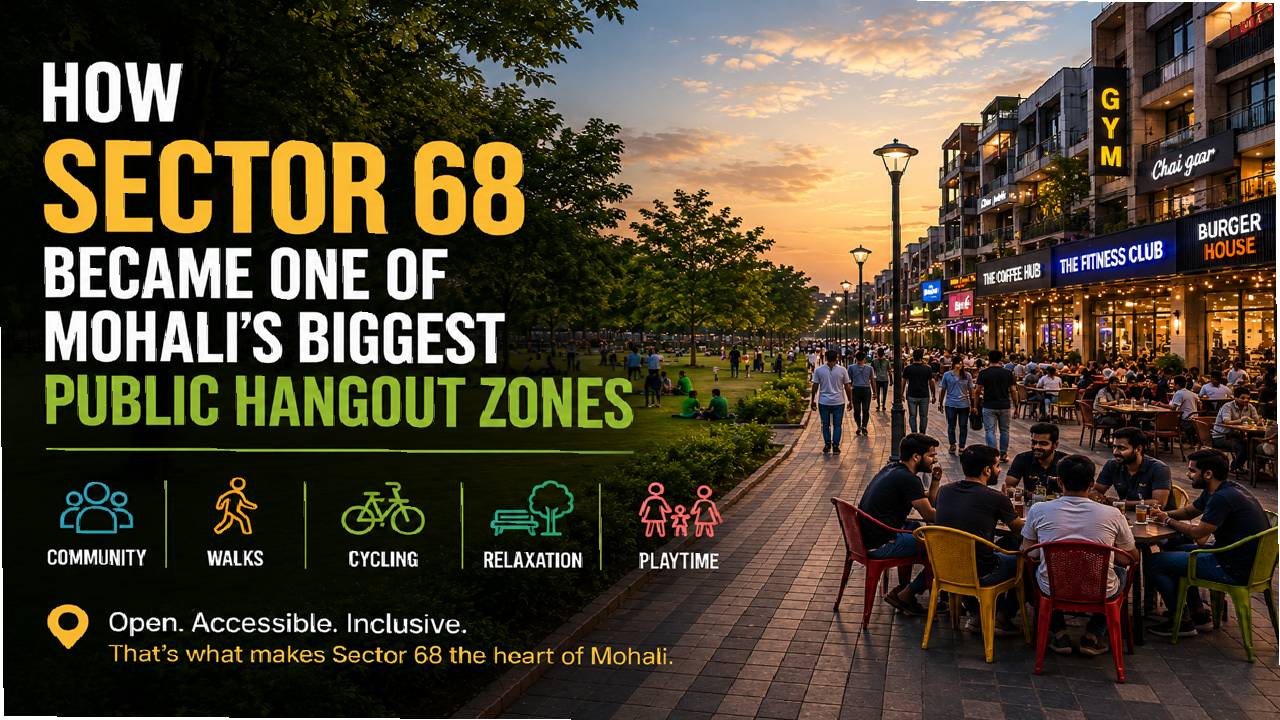
Every evening, sector parks begin filling up with people who are technically there for different reasons — walking, exercising, cycling, sitting, talking on calls, watching children play, or simply getting out of the house for a while.
But together, they create something larger.
The parks stop feeling like fitness spaces.
They start feeling social.
That’s what changed in Mohali over the years.
The city’s parks are no longer treated as occasional green spaces or morning-walk zones. They’ve become part of everyday urban routine.
People now use them the same way older generations once used neighborhood streets — as places to spend time, meet familiar faces, decompress after work, and remain connected to public life without needing a specific plan.
You can see it across almost every sector in the city.
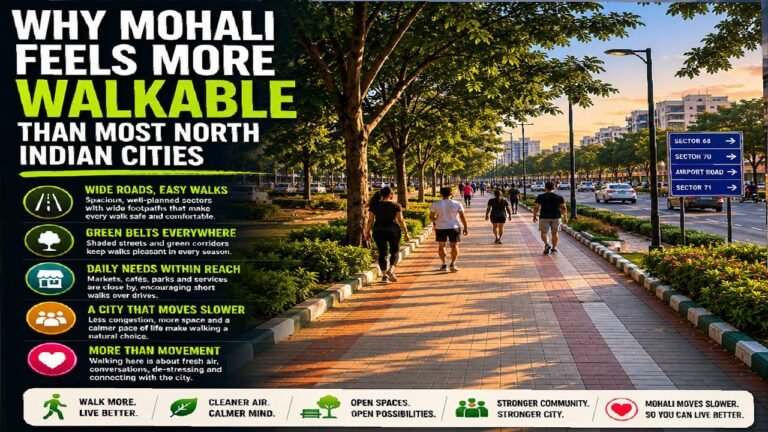
Why Mohali Feels More Walkable Than Most North Indian Cities
In most North Indian cities, walking often feels like compromise. You walk because traffic is impossible.Because parking is…
Continue readingWalking tracks become evening meeting points.
Parents gather while children play nearby.
Teenagers sit together after coaching classes.
Elderly groups occupy the same benches daily.
People walk slowly while finishing office calls before heading home.
Different age groups use the same space differently at the same time.
That balance is rare in modern cities.
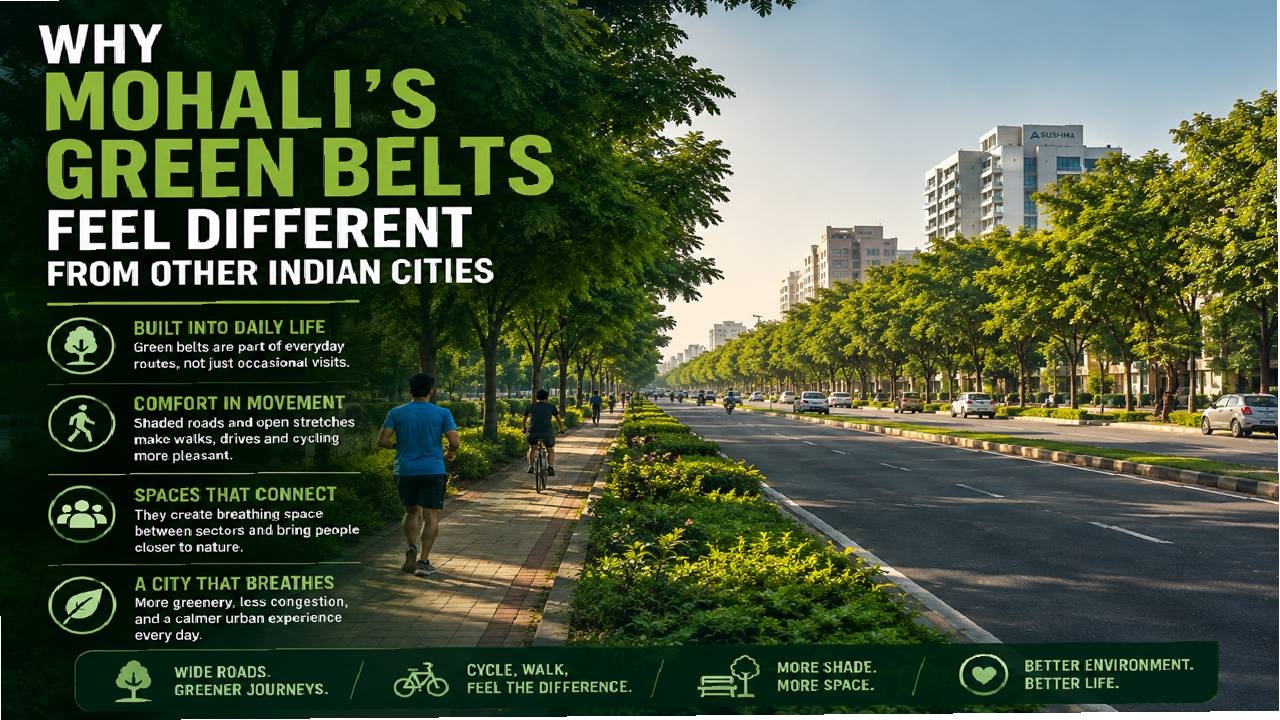
Another reason Mohali’s parks work socially is because of the city’s layout itself. Most residential sectors already include accessible green areas nearby, which makes parks feel integrated into daily life rather than separate destinations.
Residents don’t “plan” park visits.
They naturally end up there.
Morning walks before office hours.
Post-dinner strolls.
Weekend badminton games.
Casual evening conversations.
Over time, these repeated routines turned parks into social infrastructure.
And unlike cafés, malls, or commercial hangout spaces, parks feel low-pressure.
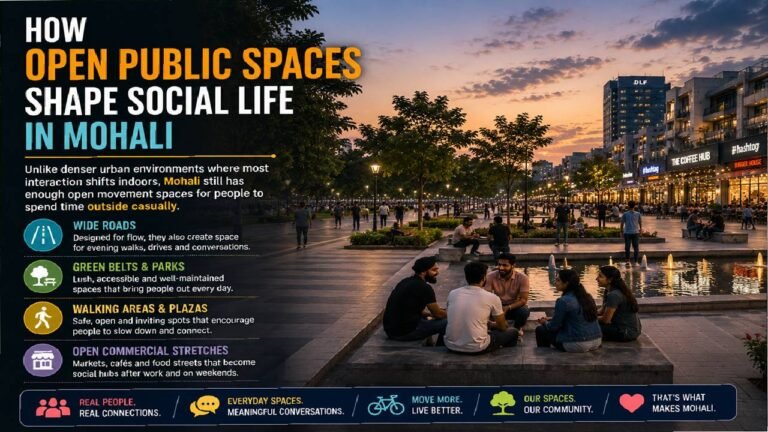
How Open Public Spaces Shape Social Life in Mohali
Unlike denser urban environments where most interaction shifts indoors, Mohali still has enough open movement spaces for people…
Continue readingYou don’t need reservations.
You don’t need to spend money.
You don’t even need a group.
You can simply sit there for twenty minutes and leave.
That simplicity is exactly why these spaces remain active.
In a city increasingly shaped by traffic, phones, office schedules, and indoor lifestyles, parks continue providing something basic but important — physical public life.
Not events.
Not entertainment.
Just people sharing space naturally.
That’s why Mohali’s parks continue feeling alive every evening.
Not because they are extraordinary spaces. But because the city genuinely uses them every single day.

Comments