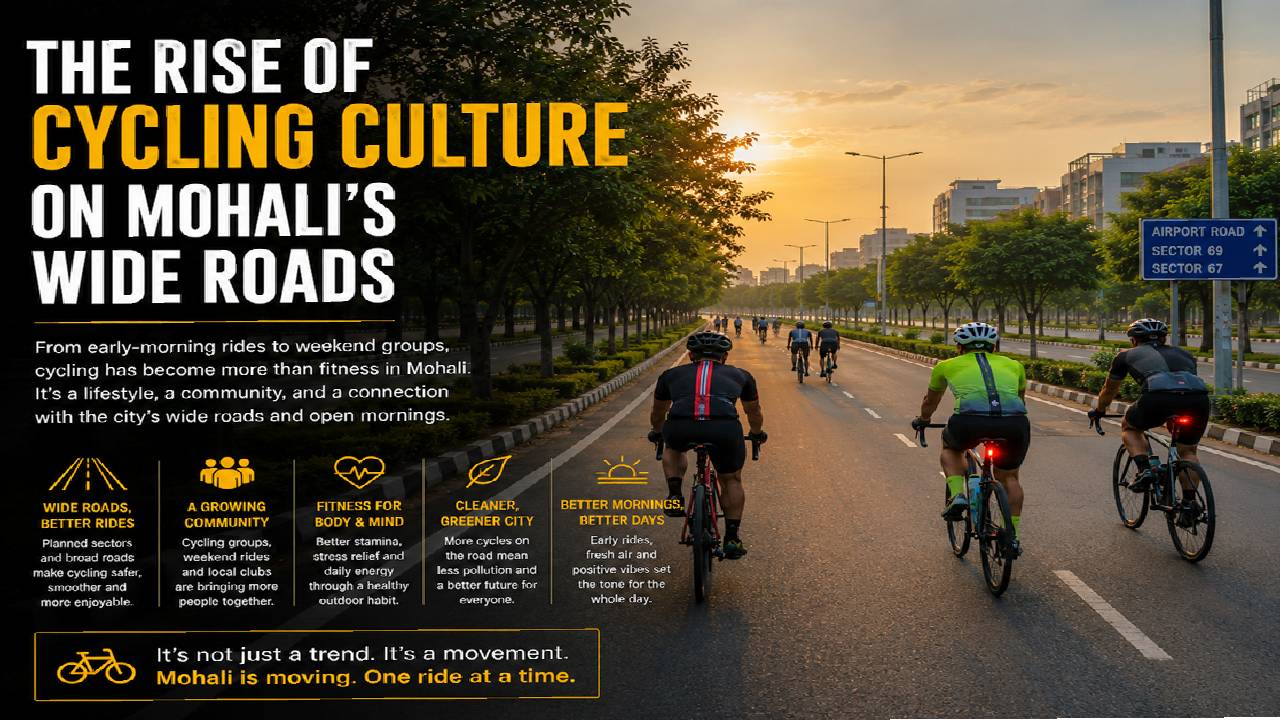
A few years ago, cycling in Mohali was mostly limited to children, fitness enthusiasts, or people training seriously on the outskirts of the city.
Now it’s become part of everyday urban movement.
Early mornings across Mohali look noticeably different today. Groups of cyclists move through Airport Road, internal sector roads, green belts, and wider stretches near residential areas long before regular traffic fully starts building up.
What changed is not just the number of cyclists.
It’s the kind of people cycling.
Young professionals cycling before office hours.
Students riding in small groups on weekends.
Fitness riders tracking routes through smartwatches.
People using cycles casually during evening hours instead of treating it like hardcore training.
Cycling slowly shifted from being a niche activity to becoming part of Mohali’s outdoor culture.
And a major reason is the city’s road structure itself.
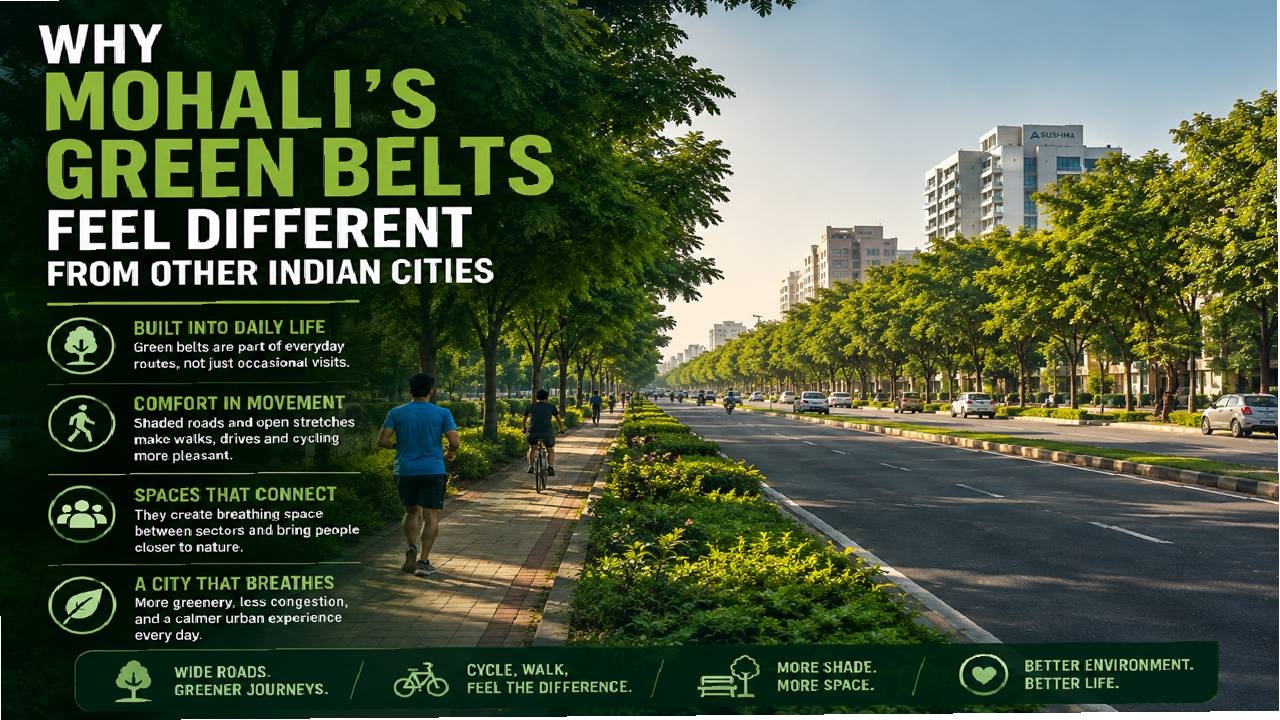
Unlike older Indian cities built around congestion and narrow movement, Mohali’s wider roads and planned sectors unintentionally created ideal conditions for cycling. Long stretches with smoother traffic flow, broader lanes, green medians, and relatively lower chaos make the city feel more cycle-friendly than many surrounding urban areas.
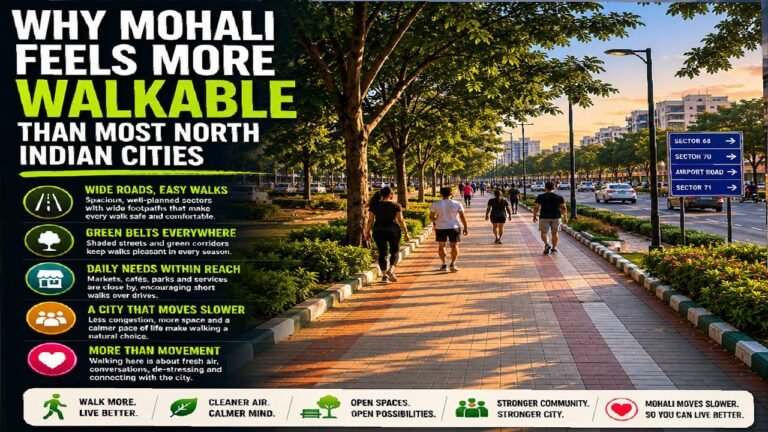
Why Mohali Feels More Walkable Than Most North Indian Cities
In most North Indian cities, walking often feels like compromise. You walk because traffic is impossible.Because parking is…
Continue readingThat physical environment changed behavior over time.
People started seeing cycling as practical, social, and mentally relaxing instead of only athletic.
You can especially notice this during early mornings.
Groups wearing cycling helmets stop briefly near tea stalls after long routes. Riders gather near parks before continuing together. Some people cycle alone with earphones in while others treat it like a social activity built around community rides and weekend routines.
The roads start functioning differently before the city fully wakes up.
And unlike gym culture, cycling creates movement across the city itself.
People interact with Mohali while exercising.
They notice quieter roads, morning fog near green belts, changing traffic patterns, sunrise light across sectors, and empty stretches that feel completely different from daytime city life.
That experience became part of the appeal.
For many residents, cycling is no longer just about fitness.
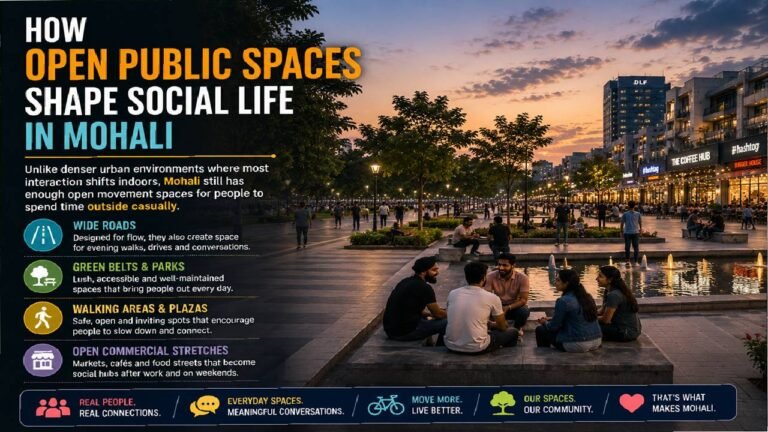
How Open Public Spaces Shape Social Life in Mohali
Unlike denser urban environments where most interaction shifts indoors, Mohali still has enough open movement spaces for people…
Continue readingIt’s also about reclaiming outdoor time.
Especially after increasingly screen-heavy routines and indoor lifestyles, cycling offers a way to move through the city physically instead of only consuming it digitally.
And Mohali naturally supports that rhythm better than most cities nearby.
The roads feel open enough to continue riding longer.
The sectors connect smoothly.
The traffic pressure feels lower during early hours.
That combination created consistency.
Now cycling groups, weekend rides, fitness communities, and casual riders have become common parts of Mohali’s public landscape.
Even people who don’t cycle regularly recognize the pattern.
The city wakes up with cyclists in it.
That’s why cycling culture feels like more than a temporary fitness trend in Mohali.
It reflects how residents increasingly want outdoor routines that feel flexible, social, and connected to the city itself. And Mohali’s roads quietly made that possible.

Comments