A lot of public spaces in cities are planned intentionally.
Sector 68 doesn’t feel like one of them.
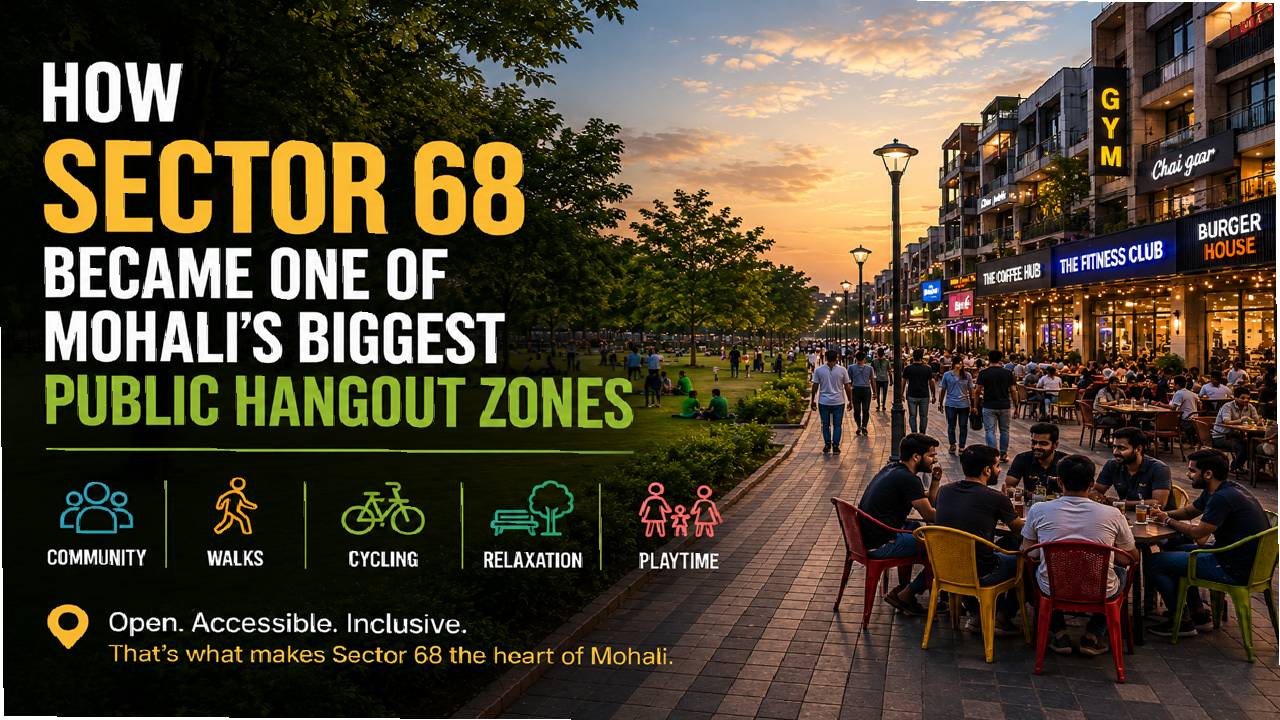
Nothing about it was designed to become a “hangout zone” in the traditional sense. But over time, the area slowly developed its own kind of gravity — especially for young people, students, office crowds, gym-goers, and late-evening movement across Mohali.
Today, Sector 68 feels less like a single sector and more like a constantly active social pocket inside the city.
Part of it comes from location.
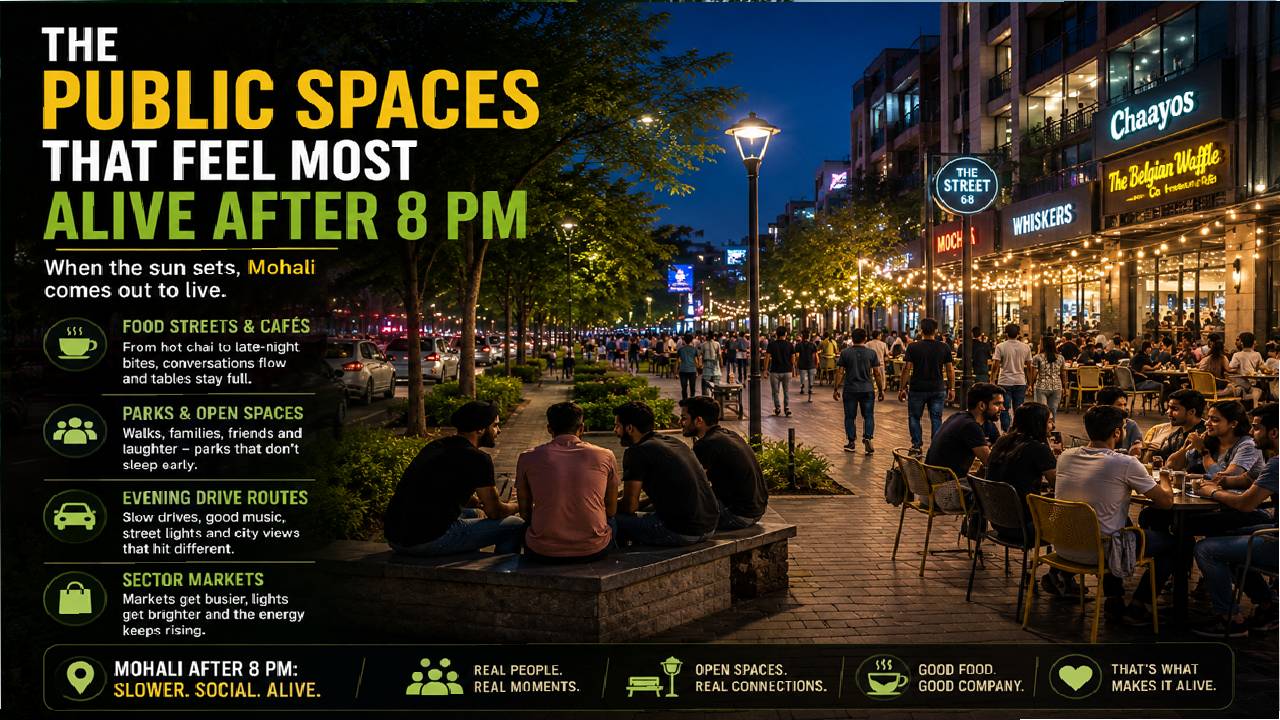
The sector naturally connects different parts of Mohali, which means people are already moving through it daily. But unlike purely residential sectors that go quiet after sunset, Sector 68 keeps holding activity into the evening.
Gyms remain busy.
Food spots stay active.
People gather outside cafés instead of inside them.
Cars continue circulating through service roads late into the night.
The sector never fully switches off.
That constant movement changed the atmosphere over time.
People stopped visiting Sector 68 only for specific errands.
They started coming simply to spend time there.
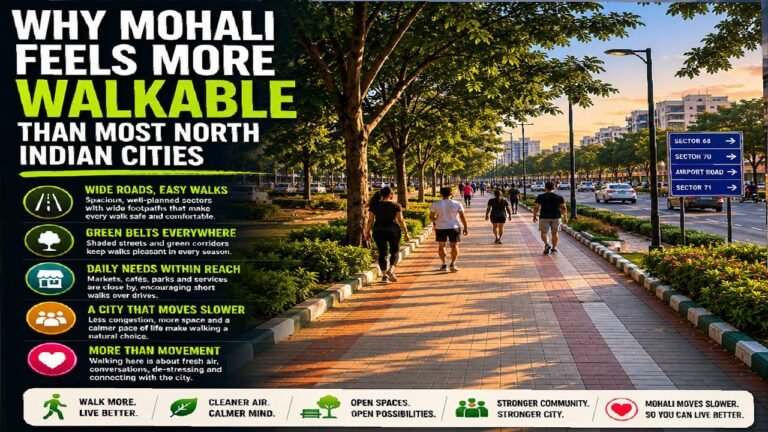
Why Mohali Feels More Walkable Than Most North Indian Cities
In most North Indian cities, walking often feels like compromise. You walk because traffic is impossible.Because parking is…
Continue readingThat’s usually how public hangout zones form in modern cities.
Not through monuments or tourist attractions.
Through repeated behavior.
And Sector 68 has built a very specific kind of behavior around itself — casual urban socializing.
Friends meeting after work without formal plans.
Students stopping after coaching classes.
Groups standing around parked cars longer than expected.
People taking slow rounds through nearby roads before heading home.
The interesting thing is that most of these interactions happen in between destinations.
Outside shops.
Near parking areas.
On sidewalks.
Around food counters.
The public life exists around the sector as much as inside it.
That’s what makes the space feel socially active even when nothing major is happening.
Unlike destination-heavy nightlife areas in bigger cities, Sector 68 feels more everyday and local. People don’t arrive dressed for an “event.”
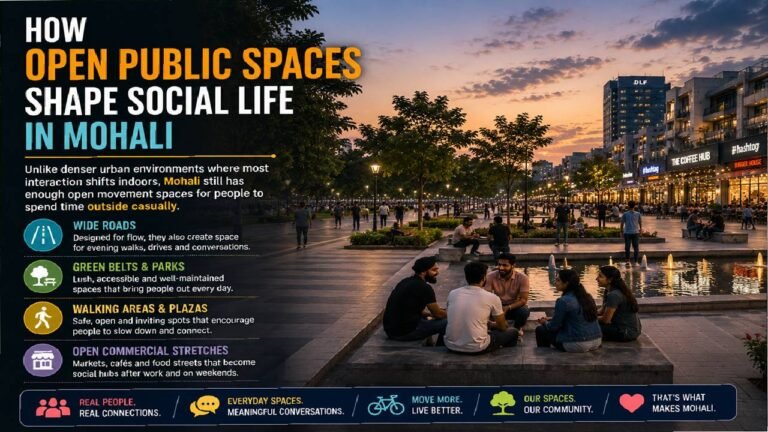
How Open Public Spaces Shape Social Life in Mohali
Unlike denser urban environments where most interaction shifts indoors, Mohali still has enough open movement spaces for people…
Continue readingThey arrive casually.
That relaxed atmosphere became part of its identity.
Another reason the sector works socially is because it attracts mixed age groups at the same time. School students, college crowds, working professionals, gym communities, families, and late-night food seekers all overlap within the same area during evening hours.
That overlap creates energy.
The space always feels like something is happening, even if nothing officially is.
And in a city like Mohali — where sectors can sometimes feel quiet or isolated after dark — that kind of visible public activity naturally attracts more people.
The sector feeds its own momentum.
More people arrive because other people are already there.
Over time, that transformed Sector 68 into one of Mohali’s most recognizable social zones.
Not because of one landmark.
Not because of planned nightlife.
But because the area accidentally developed what modern cities increasingly struggle to create:casual public life.

Comments