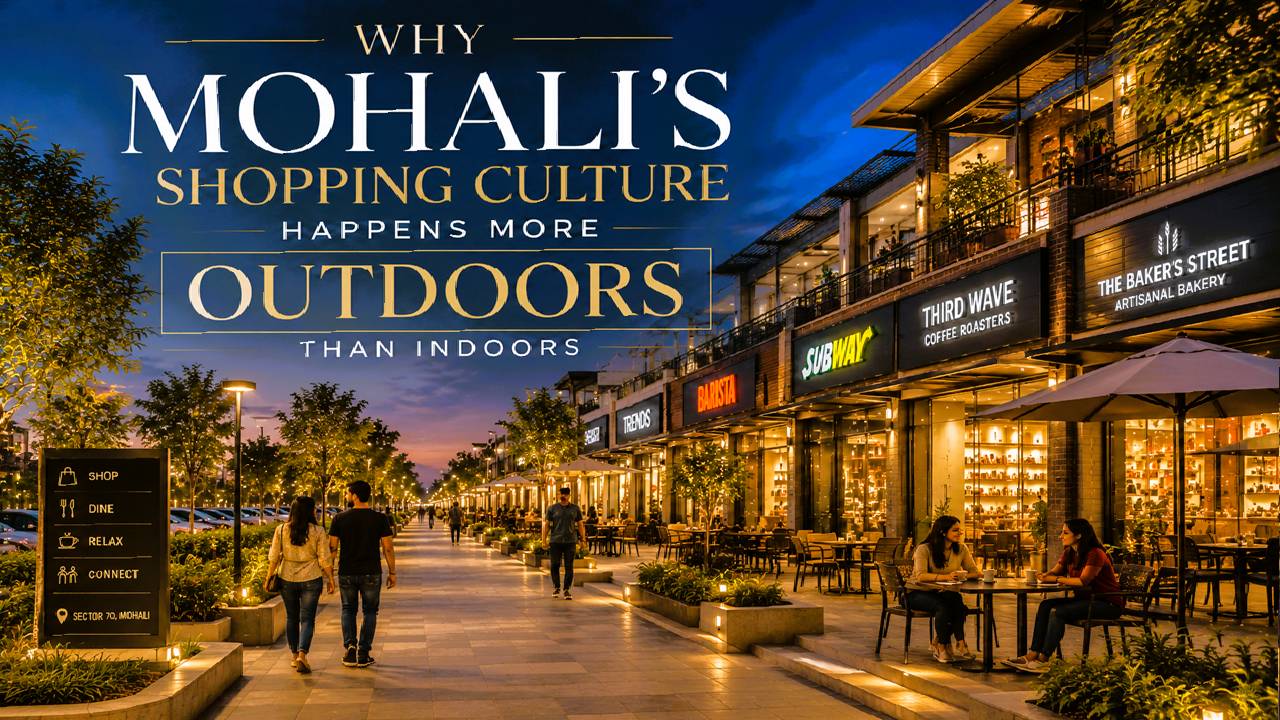
On most evenings in Mohali, some of the city’s busiest shopping activity isn’t happening inside a mall.
It’s happening on footpaths.
Outside bakeries.
Around market plazas.
Between parked cars.
Near street-food counters.
Across sector markets filled with people who may not have planned to buy anything at all.
That observation reveals something interesting about how Mohali shops.
Despite the arrival of modern retail spaces and lifestyle malls, the city’s shopping culture remains overwhelmingly outdoor.
People don’t just visit markets to purchase things.
They use them as places to spend time.
And that changes everything.
In many large cities, shopping has gradually moved indoors. Air-conditioned malls became the center of retail life. Shopping, entertainment, food, and social activity all shifted into controlled environments.
Mohali developed differently.
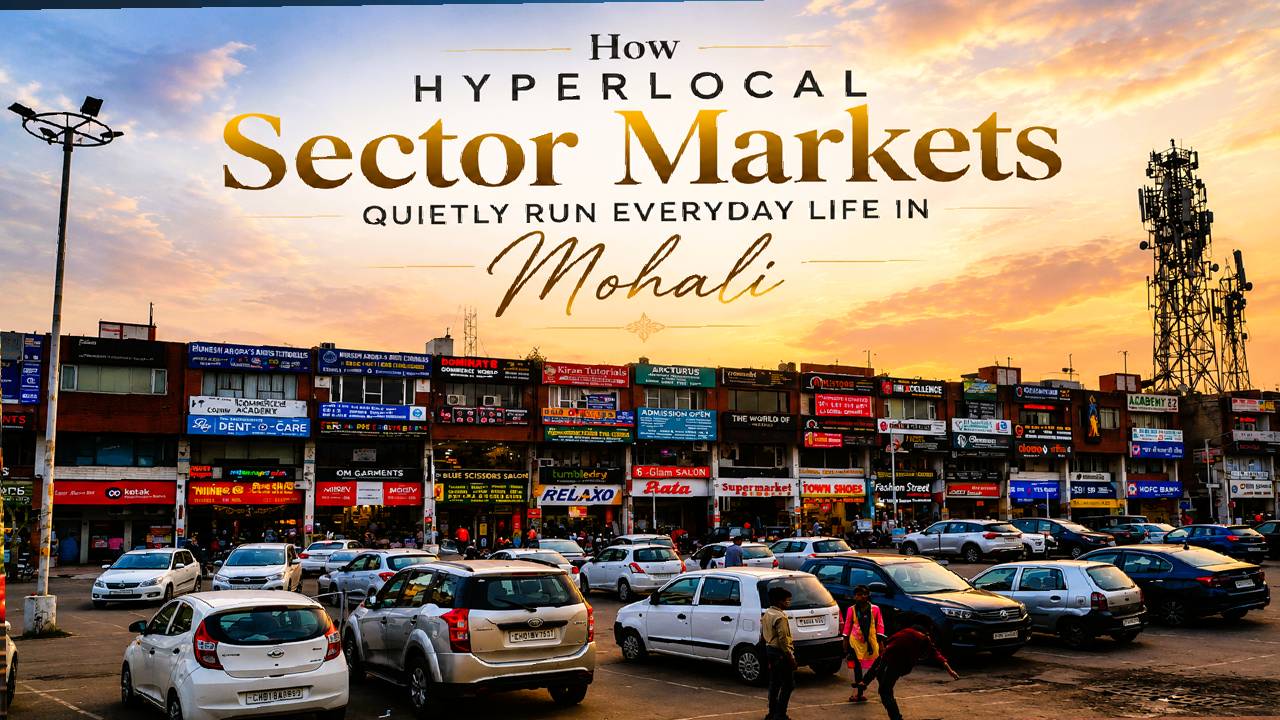
The city grew around sector markets, open commercial belts, neighborhood shopping clusters, and public-facing retail spaces. As a result, residents became accustomed to shopping in environments that were connected to the street rather than separated from it.
That habit still exists today.
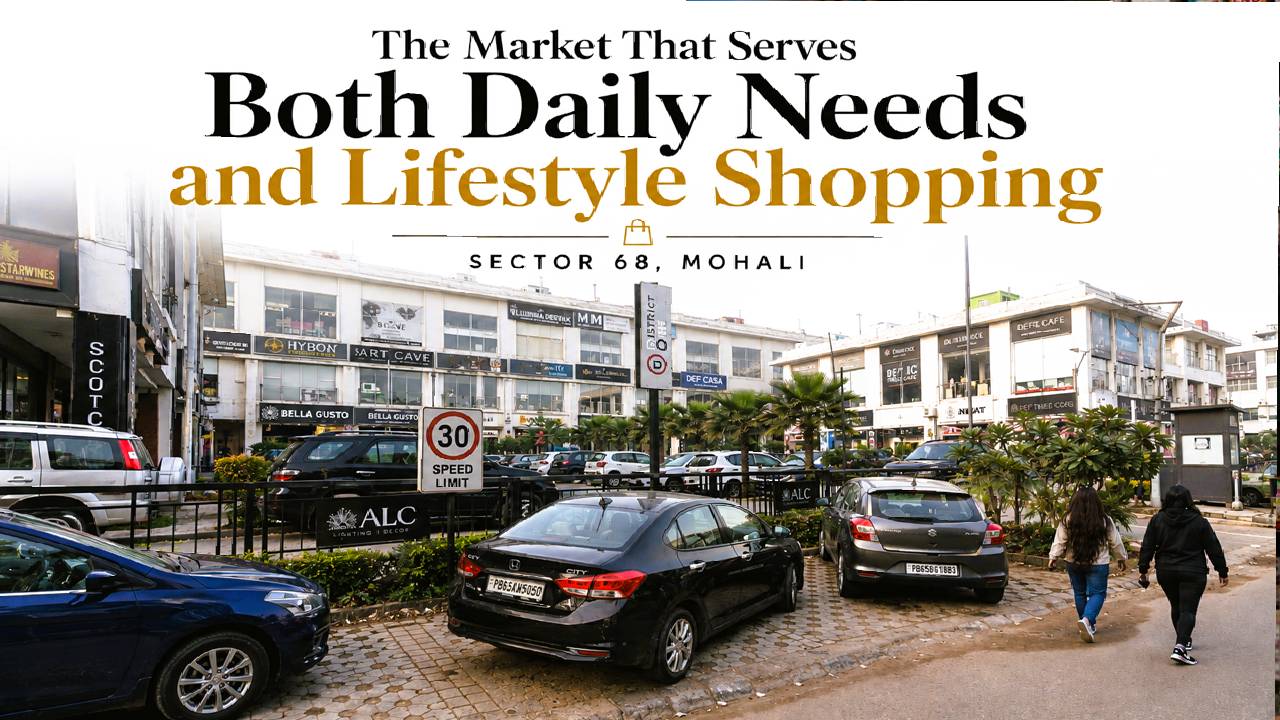
A typical evening in 3B2, Sector 70, Sector 68, or many local markets involves far more than transactions.
How Aerocity Is Building Mohali’s Next Shopping & Lifestyle Hub
For years, Mohali’s shopping map was relatively easy to understand. If you wanted established retail, you went to…
Continue readingPeople walk around.
Stop for snacks.
Meet acquaintances.
Browse shops casually.
Spend time outdoors.
Shopping becomes part of a larger social routine.
The market acts as a public space.
This is one reason Mohali’s sector markets continue thriving even as newer retail formats expand.
They offer something that malls often struggle to replicate — spontaneity.
You might leave home to buy one item and end up spending an hour moving through the market.
You run into people unexpectedly.
You discover a new food outlet.
You stop for tea.
Plans change.
The experience feels less structured and more organic.
That outdoor culture is also supported by the city’s layout.
Mohali’s wide roads, open commercial fronts, sector-based planning, and relatively accessible parking allow markets to spill naturally into public life. Unlike dense urban centers where outdoor shopping can feel stressful, many Mohali markets remain comfortable enough for people to linger.
And people do.
How Sector 82 Became Mohali’s Fastest Growing Retail Zone
Ten years ago, very few people would have described Sector 82 as one of Mohali’s important shopping destinations.…
Continue readingThat’s why some of the busiest areas in the city are not enclosed retail destinations but open commercial streets.
The social behavior is different.
Families combine shopping with dinner.
Friends meet without fixed plans.
Young people use markets as casual gathering spaces.
Residents often treat commercial areas as extensions of their neighborhoods.
The boundary between shopping and socializing becomes blurred.
Even newer retail destinations in Mohali have recognized this preference.
Many modern commercial developments increasingly incorporate outdoor plazas, open seating areas, pedestrian zones, and public-facing food streets.
Because that’s how the city naturally behaves.
People want retail.
But they also want openness.
They want movement.
They want visibility.
They want to feel connected to the city around them while they’re spending time there.
That’s why Mohali’s shopping culture remains unique.
It isn’t defined by what people buy.
It’s defined by where they spend time. And more often than not, that place is outdoors.

Comments