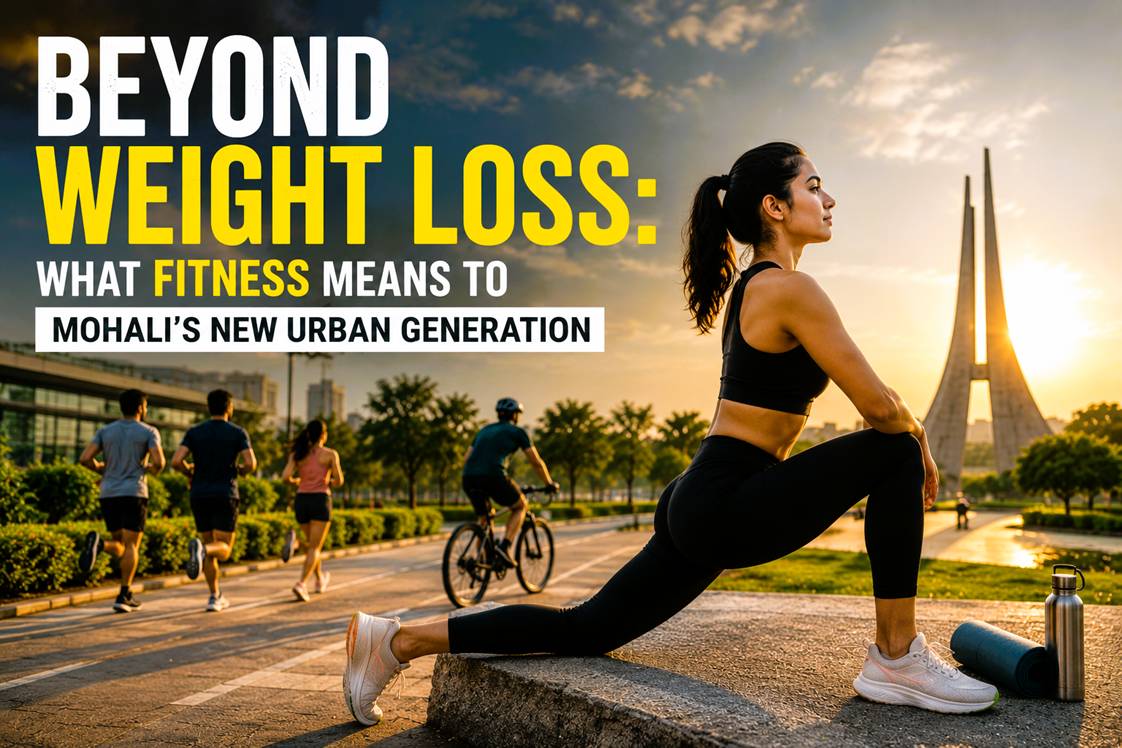
Ask most young people in Mohali why they started focusing on fitness, and very few will say it is only about losing weight anymore.
Some want to feel more confident.
Some are trying to reduce stress.
Some are fixing unhealthy routines after years of screen-heavy work life.
Others simply want more energy to get through the day without feeling constantly tired.
For Mohali’s younger generation, fitness has become much bigger than physical appearance.
It is slowly turning into a lifestyle, a coping mechanism, and in many cases, a form of self-care.
This shift is visible across the city.
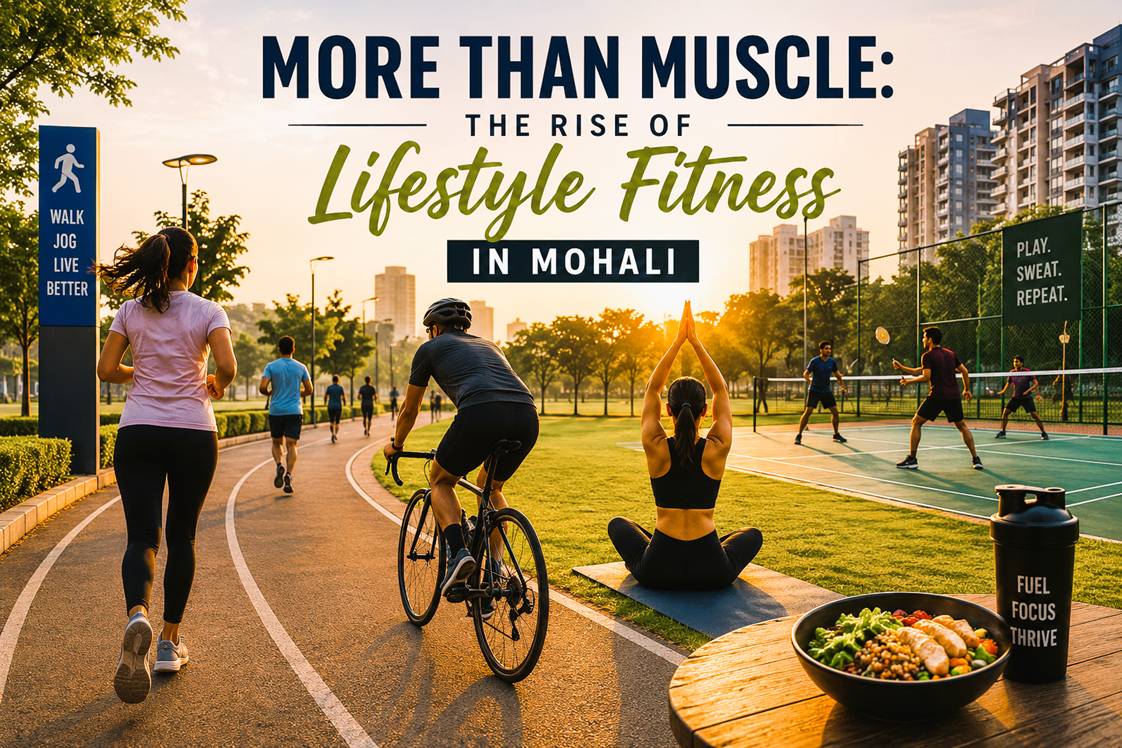
Morning parks are fuller than before. Running clubs are attracting young professionals every weekend. Yoga and pilates spaces are expanding rapidly. Cycling communities continue growing around Airport Road and Aerocity. Even sports like badminton and pickleball are becoming regular after-office activities for people in their 20s and 30s.
The goal is not always transformation.
Many people simply want to feel healthier mentally and physically while handling modern urban life.
Mohali’s Instagram Generation Doesn’t Just Visit Places — They Curate Their Life Around Them
Spend one evening around Mohali’s newer café pockets or busy social spaces and you’ll notice something interesting very…
Continue readingAnd honestly, that change says a lot about the pressure younger generations are dealing with today.
Long office hours.
Laptop-heavy jobs.
Constant phone usage.
Late-night schedules.
Stress and burnout.
Most young professionals spend more time sitting than previous generations ever did. Naturally, fitness is no longer viewed as an optional hobby. It is becoming one of the few ways people feel they can regain control over their routine.
That is why fitness culture in Mohali now feels very different from older gym culture.
Earlier, most fitness conversations revolved around bodybuilding, strict dieting, or dramatic physical changes. Today, younger residents openly discuss:
mental wellness,
sleep quality,
consistency,
mobility,
stress management,
and healthier daily habits.
The mindset has become more balanced.
Many people are no longer chasing “perfect bodies.” They are chasing routines they can realistically sustain while managing work, relationships, and personal life.
That is also why the city’s wellness ecosystem is expanding in multiple directions at the same time.
Some people still prefer gyms.
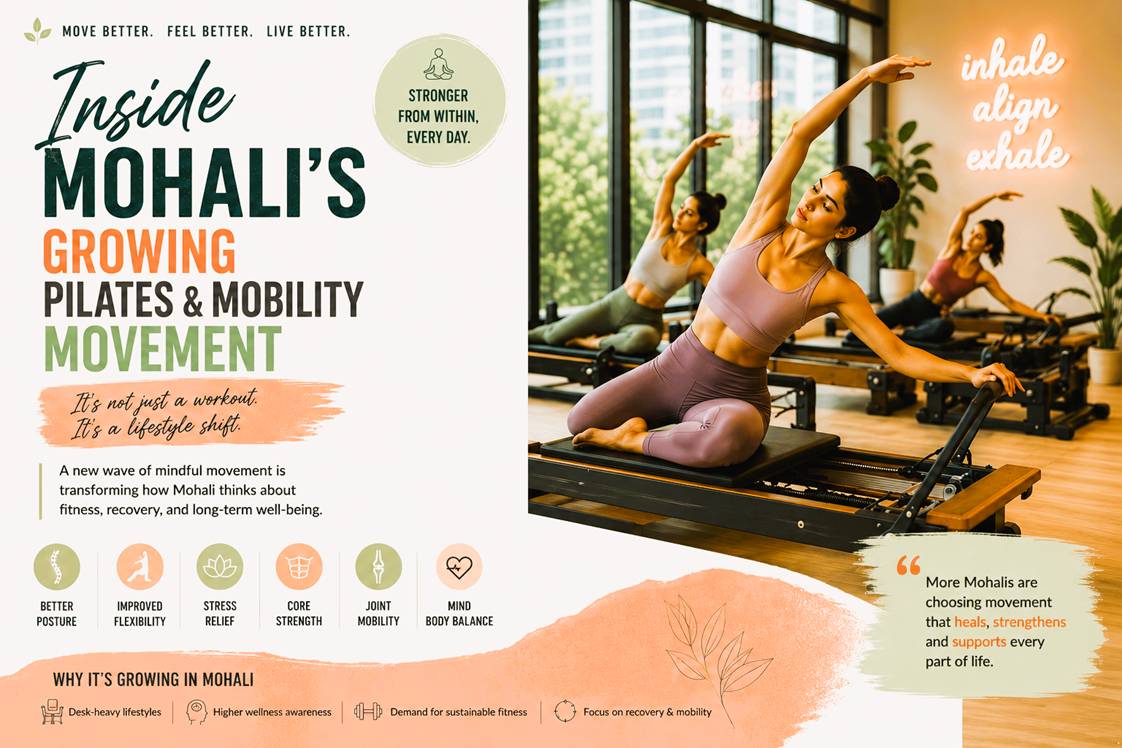
Others are joining yoga sessions.
Some are choosing sports.
Many simply walk every evening or cycle on weekends.
How Mohali Turned Into One Of Punjab’s Most Fitness-Conscious Urban Communities
A few years ago, spotting someone carrying a yoga mat or wearing running gear in Mohali was still…
Continue readingThe definition of fitness itself has changed completely.
Social media has definitely influenced this shift, but the deeper reason is emotional. Younger generations today are far more aware of burnout, anxiety, unhealthy routines, and the long-term effects of stress than before.
Fitness is becoming one of the easiest ways to create structure inside chaotic schedules.
And Mohali’s environment supports this lifestyle well.
The city still has enough parks, open roads, sports spaces, and organized sectors for people to stay active regularly without feeling overwhelmed by traffic or distance. That accessibility makes healthy routines easier to maintain consistently.
What makes Mohali interesting right now is that wellness culture still feels grounded here.
People are not trying to become influencers every time they go for a run.
Most are simply trying to feel better.
And perhaps that is the biggest reason fitness culture is growing so naturally across the city.
Because for Mohali’s new urban generation, fitness is no longer only about changing how the body looks. It is about improving how life feels.

Comments