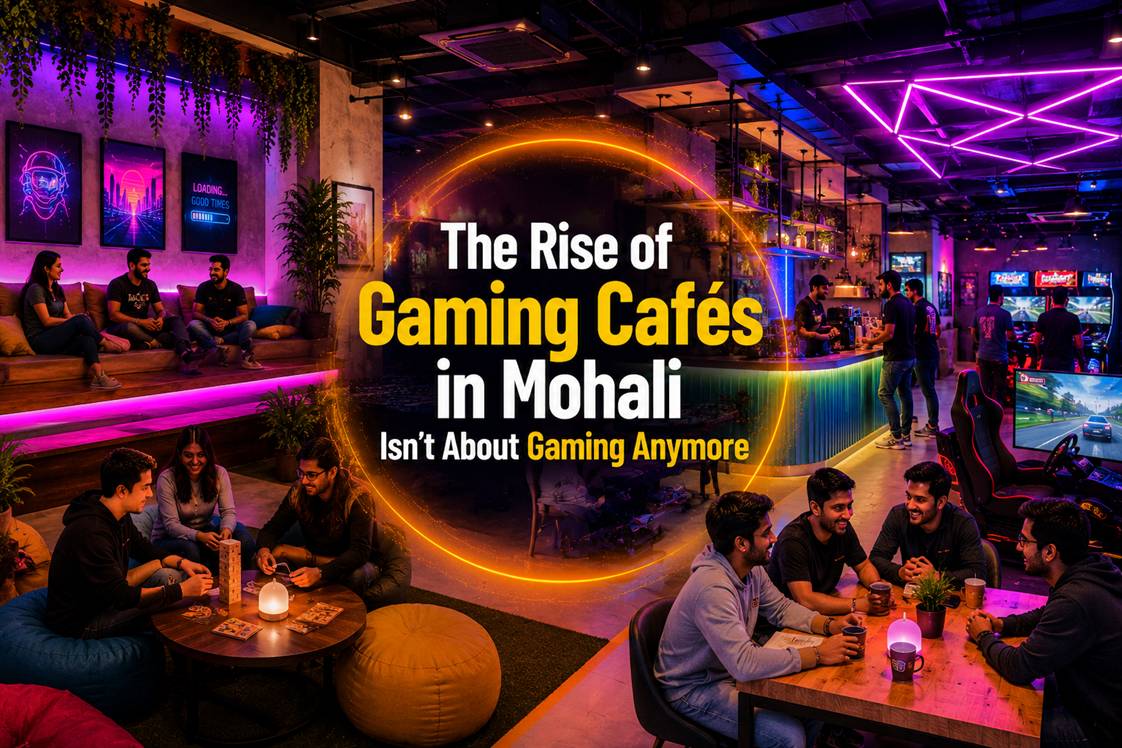
At some point, Mohali’s gaming cafés quietly stopped being only about gaming.
Yes, people still scream over EA FC goals. Valorant teammates still blame each other after losing rounds. Somebody still aggressively hits the keyboard after getting eliminated too early. But if you spend enough time inside these places now, you realize something else is happening.
Most people aren’t coming only for the games anymore.
They’re coming for the atmosphere around them.
Over the last few years, gaming cafés across Mohali and the tricity have slowly transformed into modern social spaces — especially for younger crowds who want entertainment that feels interactive, affordable, and less performative than traditional nightlife.
The interesting part is that many regular visitors don’t even spend the entire time gaming.
Some people come just to sit with friends. Some watch tournaments happening on nearby screens. Some rotate between conversations, snacks, gaming sessions, and scrolling Instagram reels for hours. Entire evenings disappear inside these places without anybody realizing how much time passed.
And somehow, that’s exactly the appeal.

Mohali’s New Weekend Entertainment Isn’t Planned Anymore — It’s Whatever Pop-Up Event Everyone Suddenly Shows Up To
Somebody suddenly uploads an Instagram story from a rooftop flea market. Another person shares a café hosting a…
Continue readingUnlike clubs or expensive cafés where people constantly feel pressure to “do something,” gaming cafés feel emotionally casual. Nobody expects perfect outfits. Nobody cares if conversations randomly stop for ten minutes because somebody entered a final round. The vibe is less about impressing people and more about existing comfortably inside shared chaos.
That’s why these spaces work so well in Mohali.
The city already had the ideal audience for them — college students, young professionals, hostel groups, and highly online friend circles looking for places to spend long evenings without spending aggressively. Gaming cafés filled a gap between café culture and nightlife culture.
Now they’ve become their own category entirely.
Walk into one on a weekend evening and it rarely feels like a traditional “gaming center.” It feels closer to a digital adda.
One table is deeply invested in a FIFA rivalry that has apparently existed for three years. Another group is loudly discussing cricket while waiting for their next Valorant match. Somebody is live-streaming. Someone else is eating fries while pretending to coach teammates who absolutely did not ask for advice.
The energy constantly moves.
And unlike older internet cafés that felt isolated or silent, Mohali’s newer gaming spaces are designed like entertainment venues. Neon lights. Loud playlists. LED setups. Group seating. Food counters. Tournaments. Streaming screens. Everything is built to make people stay longer than they originally planned.
Social media accelerated this culture massively.
Why Mohali’s Gen-Z Is Choosing Karaoke Nights, Open Mics & Activity Cafés Over Clubs
The loudest nights in Mohali are no longer happening inside clubs. They’re happening inside karaoke rooms, tiny cafés,…
Continue readingGaming cafés now appear regularly in reels, stories, and group photos across Mohali’s younger crowd. Not because gaming suddenly became niche or elite — but because these places photograph well socially. RGB lighting, reaction clips, tournament celebrations, and late-night gaming setups all became part of the city’s modern entertainment aesthetic.
But beneath all the visuals, the real reason these places are growing is much simpler:
People want social spaces that don’t feel forced.
Gaming cafés allow people to hang out without constantly needing conversation. The games themselves remove awkwardness. Silence doesn’t feel uncomfortable. Competition naturally creates interaction. Even strangers end up bonding over random matches, shared frustrations, or impossible comeback wins.
For many young people in Mohali, especially after college or work hours, these cafés now function the same way parks, tea stalls, or street corners once did for older generations.
They’ve become repeat gathering spaces.
Places where the same groups keep returning every week because the routine itself becomes comforting.
And maybe that’s why gaming culture in Mohali feels different from simple “e-sports hype.” The city isn’t just consuming games anymore. It’s building social life around them.
Because today, inside Mohali’s gaming cafés, the screens may still matter. But the real entertainment is happening around them.

Comments