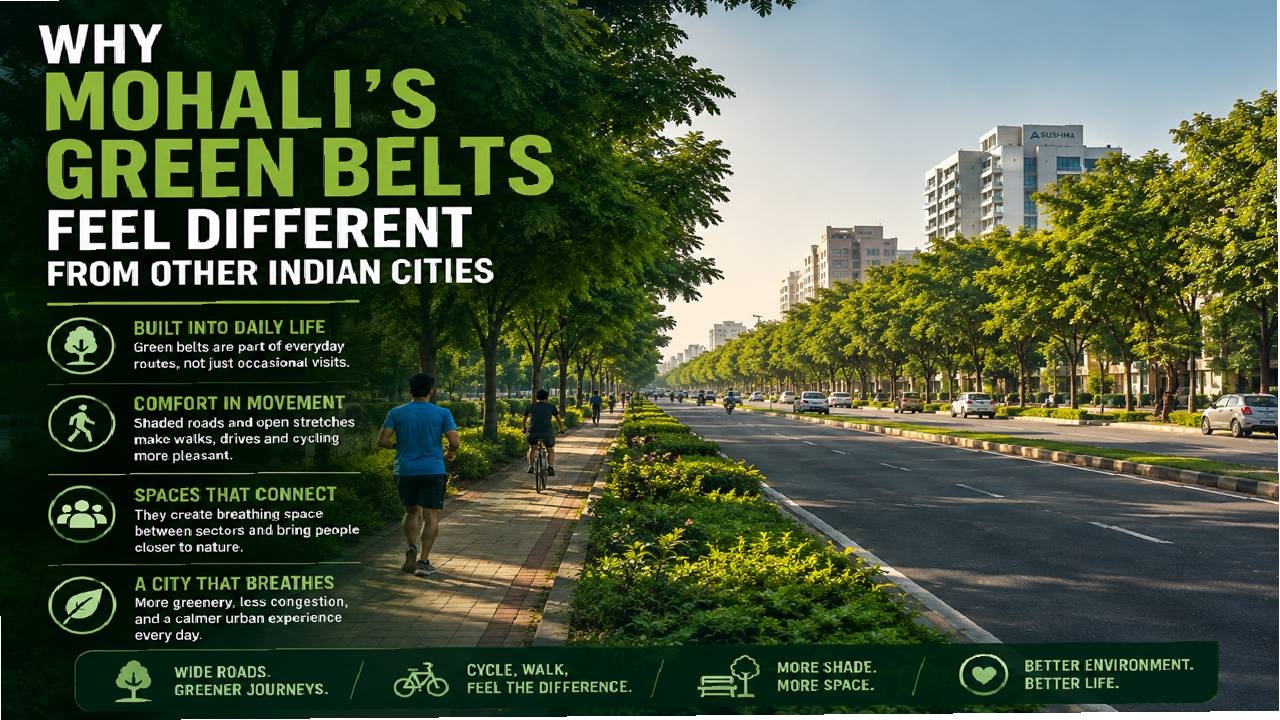
Most Indian cities have greenery. But in many places, it feels disconnected from everyday life — small parks between buildings, isolated gardens, or random stretches of trees surrounded by traffic and concrete.
Mohali feels different because the greenery is built into the movement of the city itself.
The green belts running across sectors, roads, and residential areas are not separate spaces people occasionally visit. They are part of daily routine. People drive through them, walk beside them, cycle around them, and subconsciously use them as breathing space between urban activity.
That changes how the city feels on a daily basis.
Even during busy hours, Mohali rarely feels visually overcrowded in the same way many Indian cities do. Wide roads combined with long tree-lined stretches create openness that residents slowly get used to without realizing it.
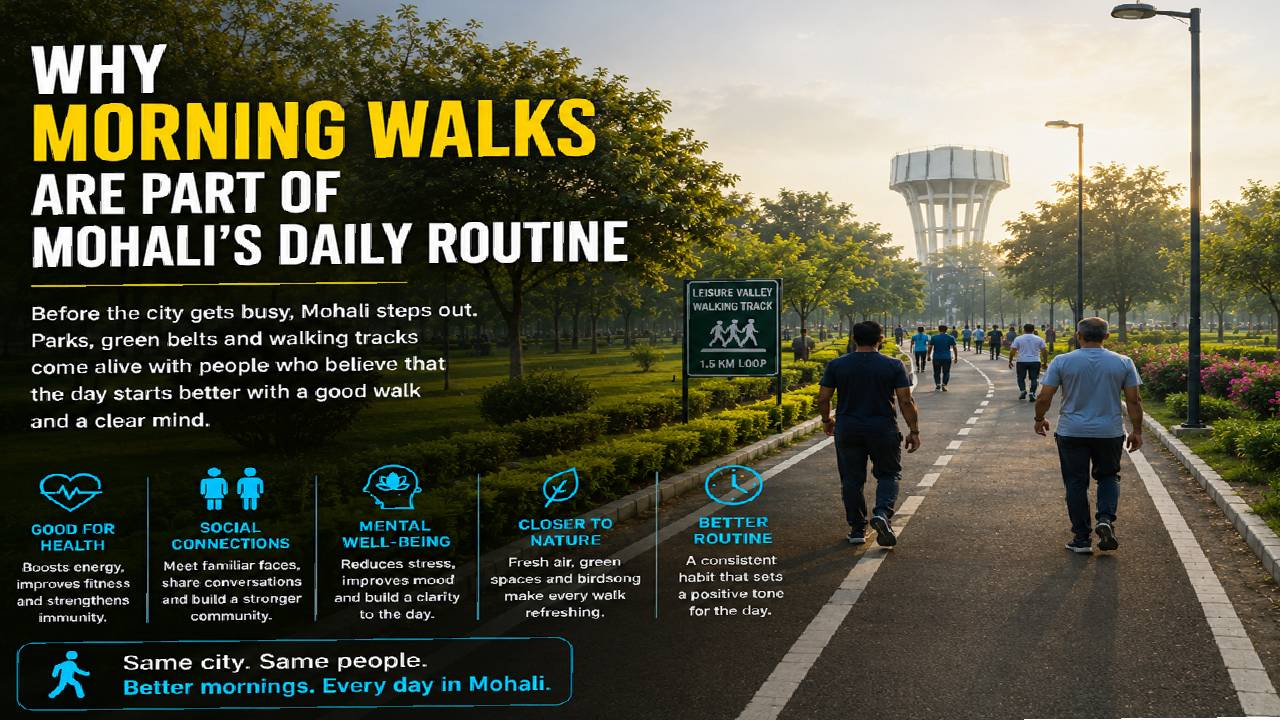
The effect becomes most visible during mornings and evenings.
Why Mohali Feels More Walkable Than Most North Indian Cities
In most North Indian cities, walking often feels like compromise. You walk because traffic is impossible.Because parking is…
Continue readingPeople walk along shaded roads instead of staying limited to parks. Cyclists prefer routes near green belts because the roads feel calmer and visually softer. Families take evening rounds through internal sector stretches simply because the environment feels comfortable enough to spend time outdoors.
Over time, the greenery stopped functioning as decoration.
It became part of Mohali’s outdoor culture.
That’s what makes the city’s green belts important. They influence behavior.
In many cities, public movement feels stressful — constant noise, dense traffic, exposed roads, and little visual relief. Mohali’s green belts soften that experience. They create pauses between sectors, reduce the feeling of congestion, and make outdoor movement feel slower and more relaxed.
Even people who don’t actively use parks still interact with greenery daily because it exists across major roads and residential movement patterns.
That familiarity creates emotional attachment.
How Open Public Spaces Shape Social Life in Mohali
Unlike denser urban environments where most interaction shifts indoors, Mohali still has enough open movement spaces for people…
Continue readingResidents begin associating certain stretches with morning calm, evening drives, cycling routes, or quieter moments after work. The city becomes mentally mapped through roads, trees, and shaded spaces instead of only landmarks or commercial areas.
And because the green belts are spread across the city instead of concentrated in one location, the greenery feels continuous rather than occasional.
That continuity matters.
It changes how people experience distance, traffic, weather, and even routine movement.
For younger residents especially, these roads and green stretches have quietly become part of Mohali’s identity. They’re where people walk after dinner, cycle before office hours, slow down during drives, or spend time outside without needing a formal destination.
That’s why Mohali’s green belts feel different from greenery in many Indian cities.
They don’t feel separate from urban life. They feel woven into it

Comments