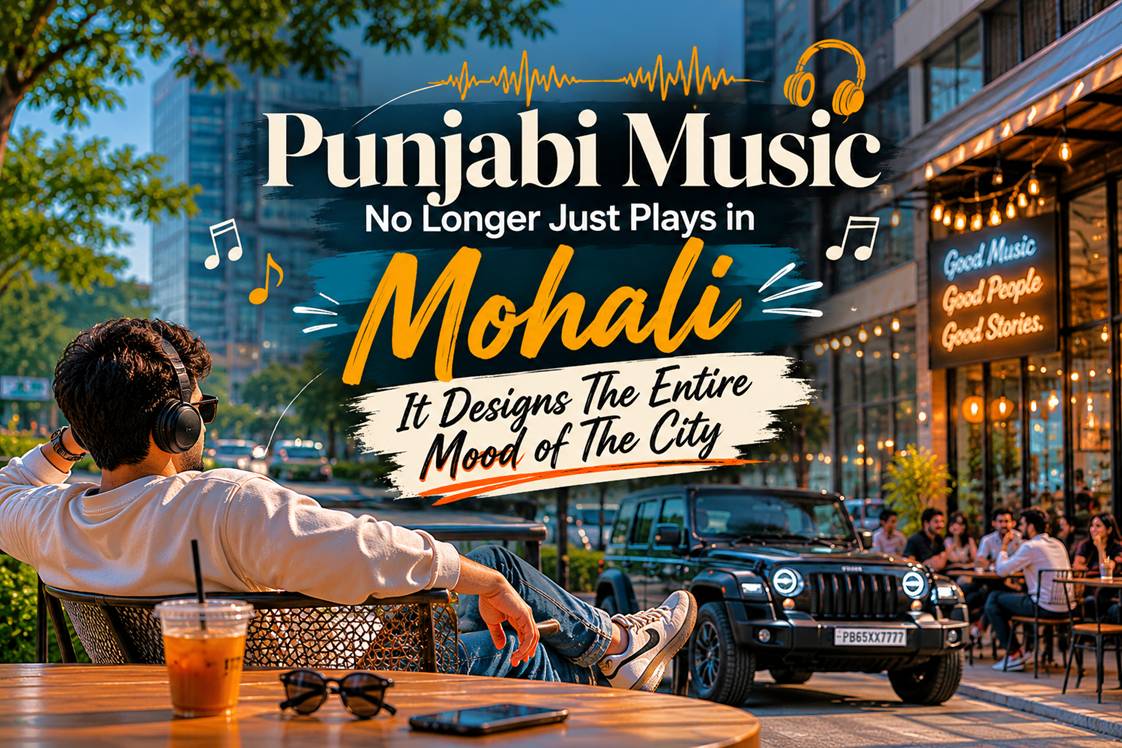
You hear Punjabi music in Mohali before you even properly experience the city.
At traffic lights.
Inside cafés.
Outside gyms.
From passing Thars.
In university parking lots.
At weddings.
Inside gaming cafés.
During late-night drives.
Even in random sector markets where somebody’s speaker is always louder than necessary.
In Mohali, Punjabi music is not background sound anymore.
It’s atmosphere.
The city doesn’t just listen to Punjabi music — it moves with it.
That’s what makes Mohali’s entertainment culture feel so emotionally charged compared to many other urban spaces. Music here isn’t separated from daily life. It shapes behavior. It influences mood. It changes how weekends feel. It controls the energy inside cafés, gyms, drives, parties, and even casual evening outings.
Somewhere over the last decade, Punjabi music stopped being “something people play” and quietly became the emotional operating system of the city.
And the interesting part is how deeply integrated it feels now.
A new song release doesn’t stay limited to streaming apps anymore. Within hours, it spreads everywhere across Mohali. Cars start blasting it. Reels begin using the audio. Cafés quietly add it to playlists. Gym trainers suddenly become emotionally attached to lyrics they didn’t know yesterday. Somebody inevitably starts singing the hook line badly during a drive by midnight.
The city absorbs music unusually fast.
And unlike older generations where music genres stayed separated, Mohali’s younger crowd consumes Punjabi music as part of lifestyle identity itself. Songs don’t just soundtrack moments anymore — they create them.
A slow romantic track changes the mood of a drive instantly.

Mohali’s New Weekend Entertainment Isn’t Planned Anymore — It’s Whatever Pop-Up Event Everyone Suddenly Shows Up To
Somebody suddenly uploads an Instagram story from a rooftop flea market. Another person shares a café hosting a…
Continue readingAggressive Punjabi beats completely transform gym energy.
Wedding tracks start appearing weeks before functions even begin.
One viral song can suddenly dominate half the city’s Instagram stories for an entire month.
You can actually track social mood shifts through playlists here.
That’s why Punjabi music feels larger than entertainment in Mohali. It functions almost like shared emotional language. People may have different routines, jobs, or friend circles, but everybody somehow understands the same songs at the same time.
And nowhere is this more visible than inside cars.
Mohali’s driving culture and Punjabi music are practically inseparable now. The aux cable became social power. Certain songs automatically belong to certain roads. Some tracks only feel correct after 11 PM. Some are permanently attached to winter drives, while others somehow become “summer evening songs” without anybody officially deciding it.
Entire friendships quietly build memories around playlists.
The city’s cafés adapted to this culture too.
Today, playlist selection inside Mohali cafés matters almost as much as food or interiors. One wrong vibe changes the entire energy of the place. Which is why so many cafés constantly balance romantic Punjabi tracks, upbeat commercial music, nostalgic songs, and viral reel audio depending on crowd timing.
Music has become environmental design.
Even gyms in Mohali operate differently because of Punjabi music culture. Workout intensity, crowd mood, trainer energy — everything changes depending on what’s playing through the speakers. Some songs genuinely feel impossible to skip because they’ve become emotionally attached to ambition, confidence, nightlife, or status itself.
And then there’s wedding culture.
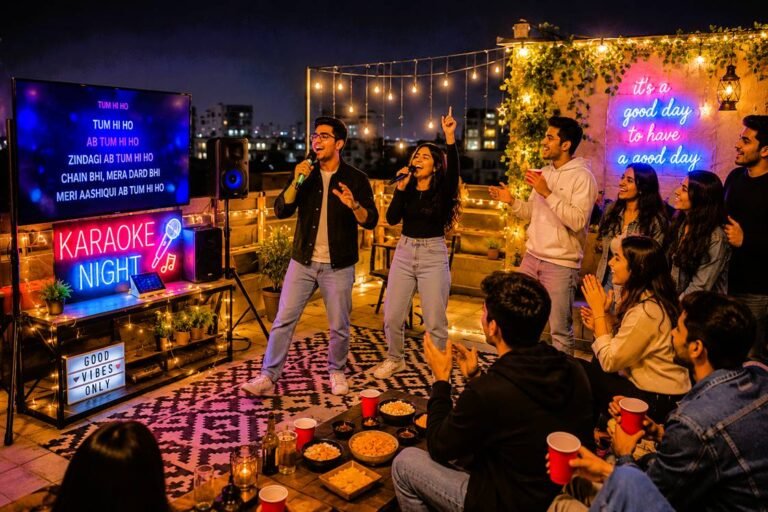
Why Mohali’s Gen-Z Is Choosing Karaoke Nights, Open Mics & Activity Cafés Over Clubs
The loudest nights in Mohali are no longer happening inside clubs. They’re happening inside karaoke rooms, tiny cafés,…
Continue readingWhich honestly deserves its own category entirely.
Punjabi weddings in Mohali no longer feel like occasional events. They feel like seasonal entertainment festivals where music controls everything — entries, dances, reels, after-parties, car processions, and even emotional family moments.
A single wedding season can make one song dominate the entire city for weeks.
Social media amplified all this massively.
Now songs don’t spread only through radio or YouTube. They spread through reels, gym clips, café stories, road-trip videos, and nightlife content. Music became visual identity as much as audio identity.
People don’t just ask:
“Have you heard the song?”
They ask:
“Bro reel dekhi?”
That shift changed everything.
Because today, Punjabi music in Mohali isn’t simply entertainment people consume passively.
It’s mood architecture.
It designs how nights feel.
How drives feel.
How parties feel.
How cafés feel.
How weekends feel.
And maybe that’s why Mohali’s entertainment culture feels impossible to separate from its music anymore.
Because in this city, Punjabi songs don’t just play in the background. They quietly become part of people’s personalities.

Comments